
Creating heavy-duty outdoor floor tiles from sliced foam pool noodles and two common pantry items is a creative and eco-friendly way to repurpose materials, providing a durable and colorful solution for outdoor spaces. This project transforms simple foam noodles into tough, water-resistant tiles that are perfect for patios, garden paths, or poolside areas, impressing both family and neighbors with their unique look and surprising strength.
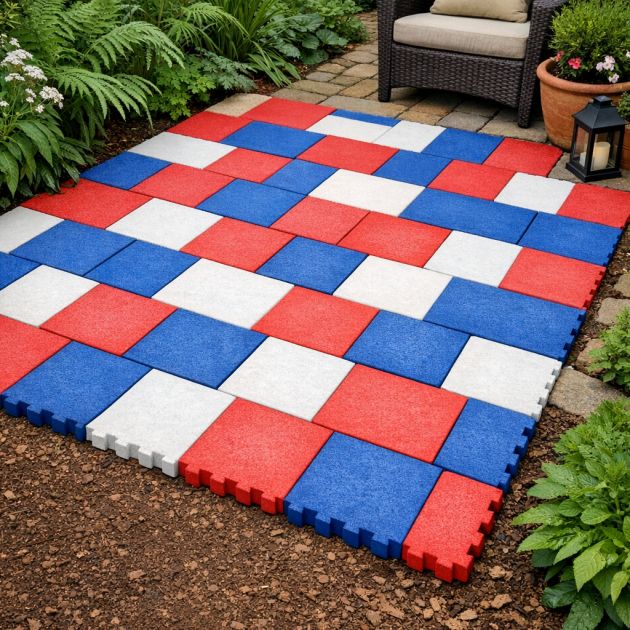
These vibrant floor tiles can be styled to add a pop of color to your outdoor seating area. Coordinate them with patio furniture in neutral tones to let the red, white, and blue stand out. Arrange them in a geometric pattern for a cohesive look, or scatter them for a more eclectic style. Their playful aesthetic pairs well with modern or rustic outdoor decor, enhancing the visual appeal of your garden or backyard.
Outdoor Foam Noodle Floor Tiles
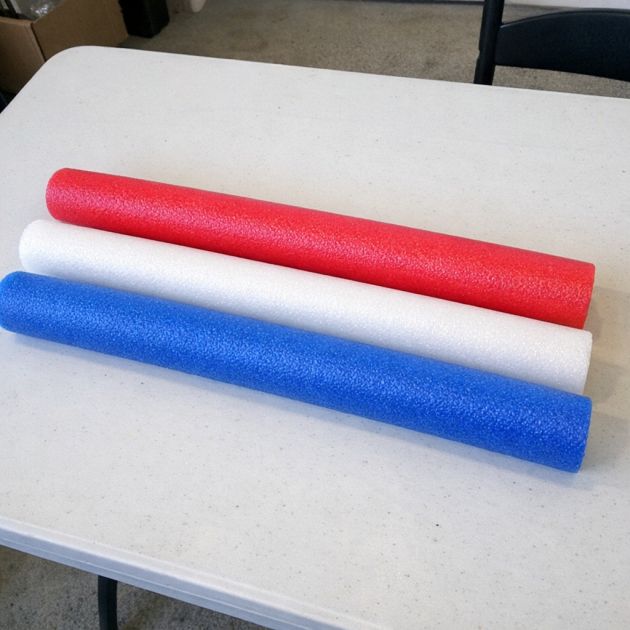
Materials
3 red foam pool noodles
3 white foam pool noodles
3 blue foam pool noodles
Parchment paper
Baking soda (1 cup)
Cornstarch (1 cup)
Directions
Cut each foam pool noodle into 1-inch thick slices using a sharp knife.
Lay out parchment paper on a flat, heat-resistant surface.
Arrange noodle slices in a tight, single layer on the parchment paper.
Sprinkle a mixture of baking soda and cornstarch evenly over the noodle slices.
Cover the slices with another sheet of parchment paper.
Using an iron set to a medium heat, slowly iron over the parchment paper to flatten the noodle slices. Apply firm pressure to ensure they bond together.
Allow the flattened noodle tiles to cool completely.
Trim any uneven edges to achieve a uniform tile shape.
Repeat the process to create multiple tiles as needed for your outdoor space.
Place the finished tiles in the desired outdoor area, ensuring they are tightly fitted together.
Variations & Tips
For a more subdued color palette, consider using foam noodles in shades of green and beige, which blend seamlessly with natural surroundings. You can also experiment with different shapes by cutting the noodles into hexagons or triangles before flattening them, creating unique tiled patterns. Adding a layer of waterproof sealant or UV-protective spray can further enhance the durability of the tiles, making them suitable for even more challenging outdoor environments.