
I love a project that starts with an everyday kitchen tool and ends up looking like something you would spot in a boutique garden shop. In this one, I turn a simple metal kitchen strainer with a long handle into a rustic hanging planter by crocheting jute yarn through the holes of the basket. The result has that wonderfully textural, handmade look, and because the strainer already has a sturdy bowl shape, the hard part of building the planter is essentially done for you.
This is a nice project for anyone who knows a few basic crochet motions or is willing to learn as they go. I especially like it for apartment dwellers and small-space gardeners, since the finished planter is compact, lightweight, and easy to hang near a sunny window or on a porch hook. It also has that clever upcycled quality I always admire in good kitchen improvisation: using the tool you already have in a completely new way.
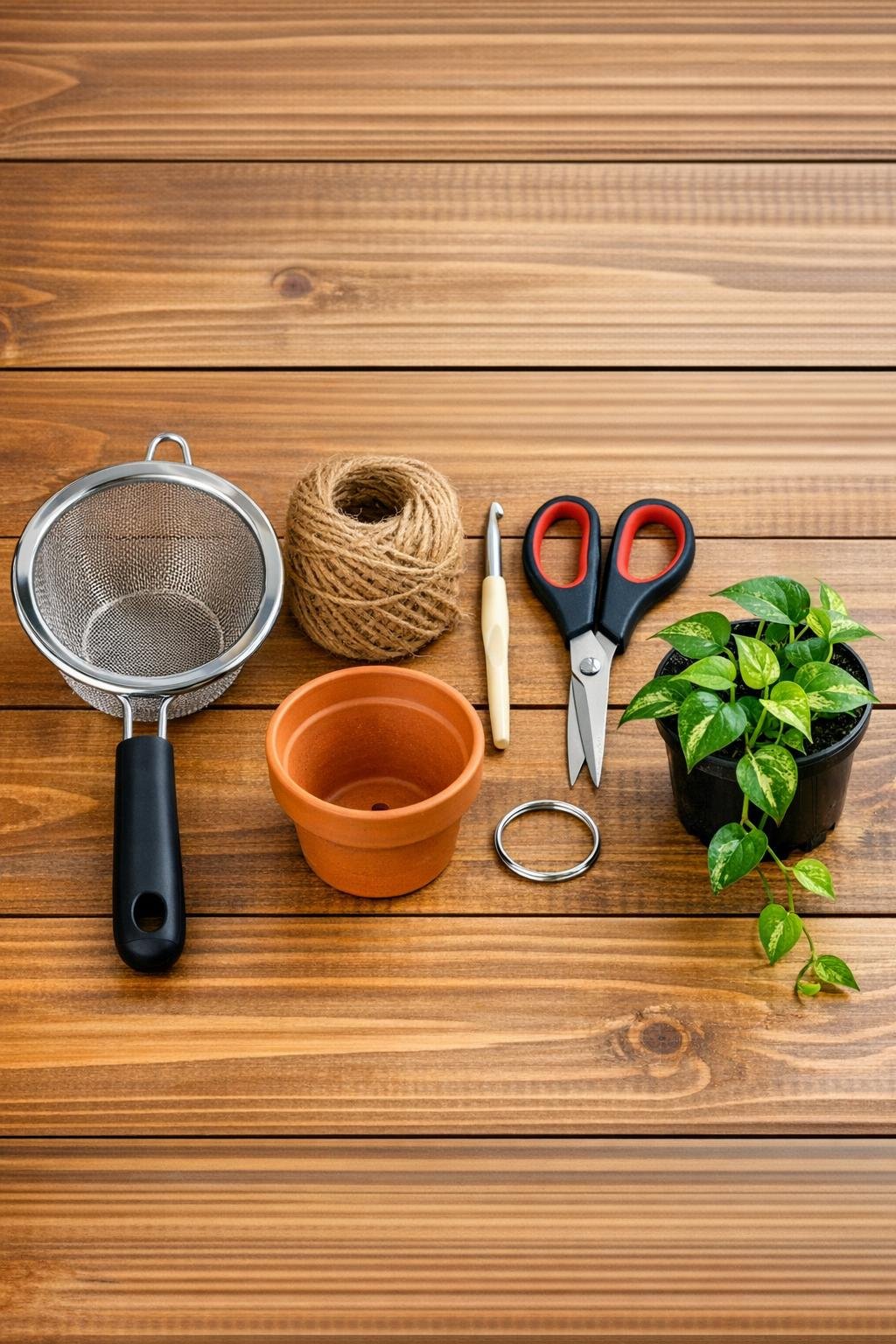
Materials
1 silver metal kitchen strainer with a long black handle, about 6 to 7 inches across
Instructions
1. Cut a starting tail of jute about 10 inches long, then tie it securely around the metal rim near the base of the strainer basket so your work has a firm anchor point.
2. Insert the crochet hook through one hole in the strainer, pull a loop of jute through, and begin making single crochet stitches through each hole around the basket to create the first round.
3. Continue stitching through every hole you can reasonably reach, keeping the tension snug but not so tight that the strainer pulls out of shape. If the holes are staggered, work in a spiral rather than worrying about perfect rows.
4. When the basket is mostly covered, crochet 2 to 3 plain rounds above the rim by working into the previous jute stitches instead of the metal holes. This creates a soft upper edge that helps hold the pot in place.
5. Cut the yarn, pull the tail through the last loop, and weave the end through several nearby stitches with the hook to lock it in place.
6. Cut 3 lengths of jute yarn, 36 inches each, and tie them evenly around the rim or through sturdy stitches at three balanced points around the strainer basket.
7. Gather the three hanging cords together about 4 to 5 inches above the planter and knot them once so they begin to form a hanger. Thread the loose ends through the metal ring and knot again tightly right beneath the ring.
8. If you want the handle to remain visible as part of the design, leave it as is; if it feels visually heavy, tie a short piece of jute around the handle base to help it blend with the crocheted basket.
9. Set the 4-inch pot inside the crocheted strainer basket and check that it sits level. Adjust the hanging cords if one side dips lower than the others.
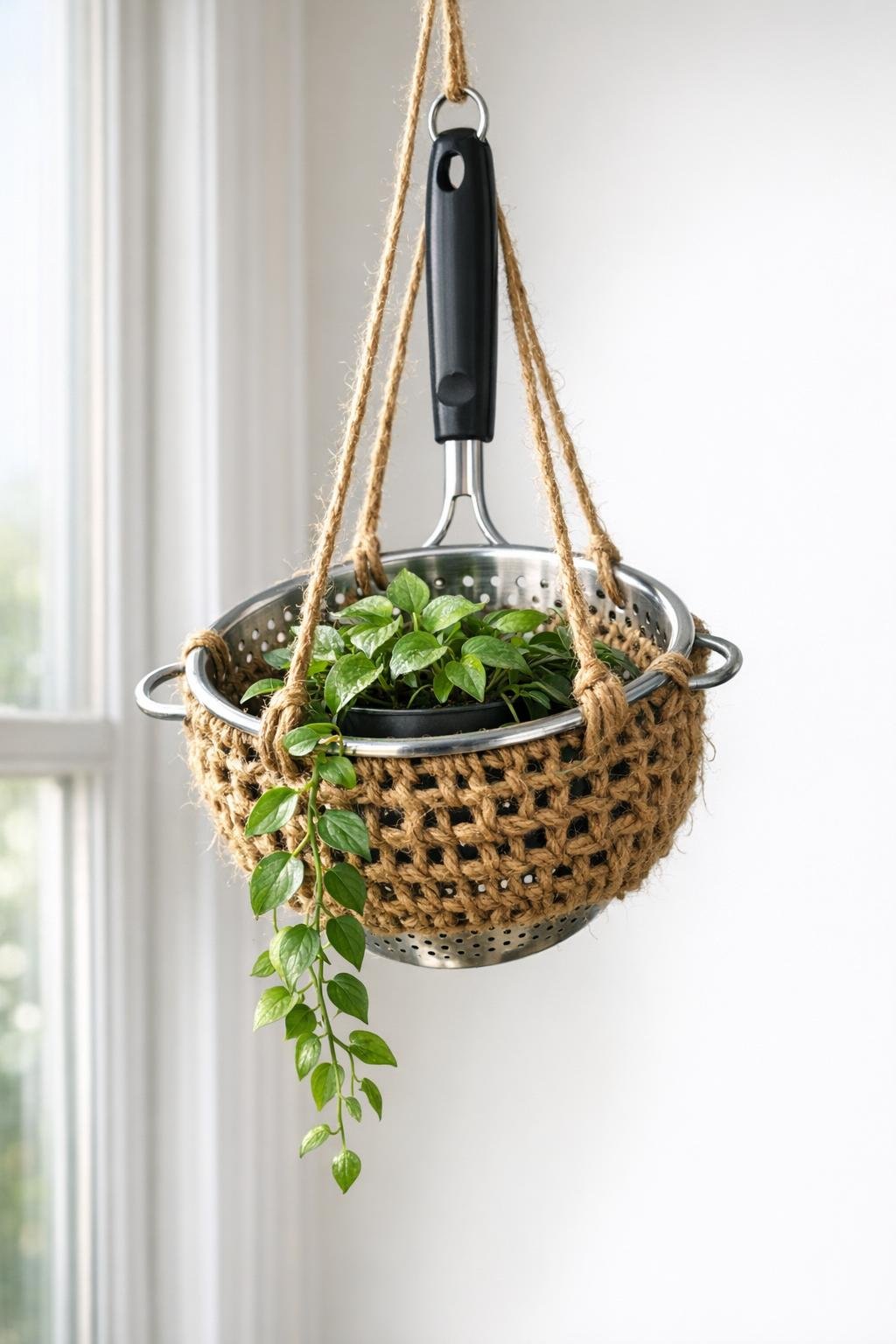
10. Place your trailing plant into the pot if needed, add a little soil to secure it, and hang the planter from a hook where the handle and crocheted jute can both be seen.
Variations & Tips
For a fuller look: Use two single crochet stitches in every third or fourth hole if your strainer is wide and you want more coverage across the basket.
For beginners: Don’t worry if the stitch pattern is not mathematically perfect. Jute has a forgiving texture, and once the plant is inside, the overall shape matters more than absolute uniformity.
Plant choice: I like trailing pothos, string of hearts, or small philodendron for this project because they soften the metal shape beautifully without adding too much weight.
Drainage tip: Keep the plant in its nursery pot rather than planting directly into the strainer. That way you can remove it easily for watering and let excess water drain in the sink first.
Handle styling: The black handle is part of the charm in this version because it keeps the original kitchen-tool identity visible. If you prefer a more uniform rustic finish, wrap the handle in jute with a simple spiral tie.
Durability note: Jute can stretch a bit over time, especially in humid spaces. After hanging, check the cords again in a day or two and retighten the top knot if needed.