
This DIY project combines creativity and practicality by transforming simple plastic Easter eggs and concrete into unique and stylish home decor. The idea is to create small decorative planters or holders that can serve various functions around the house. This project is perfect for those who enjoy crafting and want to add a modern, industrial touch to their living space.
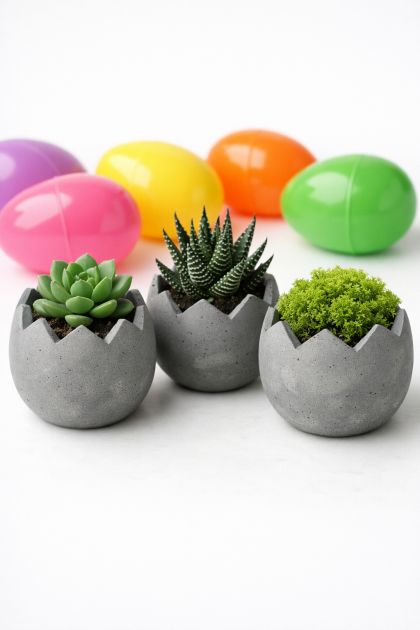
These concrete creations can be styled in a minimalist or industrial-themed home. Place them on a windowsill, shelf, or coffee table to add a pop of color and texture. Pair them with small succulents or air plants for a natural and contemporary look. They also work well as decorative containers for small items like paperclips or jewelry.
Concrete Easter Egg Planters
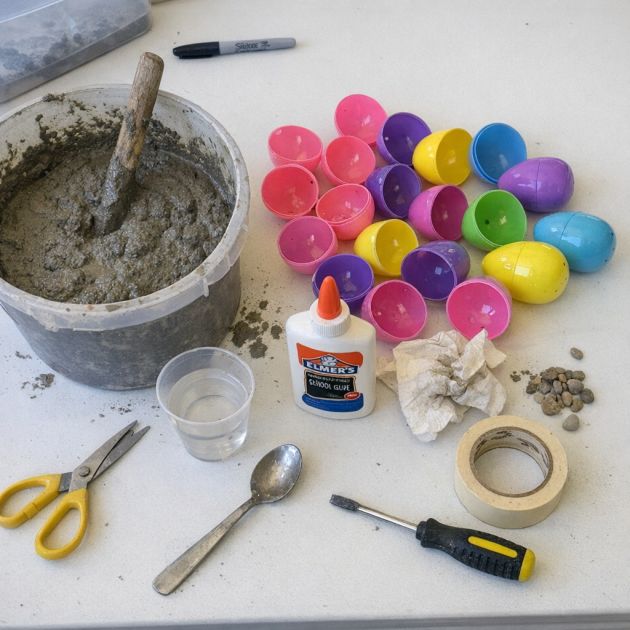
Materials
Plastic Easter eggs (medium-sized, colorful)
Quick-setting concrete mix (1 cup)
Cooking oil or non-stick spray (to coat the eggs)
Small bowl or container for mixing
Stirring stick or small spatula
Sandpaper (optional, for smoothing edges)
Directions
Start by coating the inside of each plastic Easter egg half with cooking oil or non-stick spray. This will make it easier to remove the concrete once it sets.
In a small bowl or container, mix the quick-setting concrete according to the package instructions. Aim for a consistency similar to thick pancake batter.
Carefully pour the wet concrete into each oiled egg half, filling them to about three-quarters full to allow room for expansion.
Tap the egg halves gently on the countertop to release any air bubbles and level the surface.
Allow the concrete to set according to the package instructions, typically 24 hours.
Once the concrete is fully set, gently remove the egg halves. If necessary, use sandpaper to smooth any rough edges.
Your new concrete planters are ready to be styled and displayed!
Variations & Tips
For a personalized touch, try adding dye to the concrete mix for colored planters or embedding small decorative stones or glass pieces into the surface before it sets. Another variation is to use larger plastic eggs or different shapes of molds for varied sizes and styles. You can also experiment with using plaster for a lighter weight option, which allows for more intricate designs.