
This DIY project transforms a 20-gallon galvanized metal trash can into an underground worm composting tower, a sustainable solution for reducing kitchen waste and enriching garden soil. By creating a subterranean habitat for worms, this system efficiently breaks down organic matter into nutrient-rich compost, perfect for enhancing soil health throughout the growing season. Ideal for eco-conscious gardeners, this project leverages natural processes to boost plant growth and improve soil structure.
This DIY seamlessly integrates into a rustic or cottage-style garden, tucked away among vegetable patches or herb borders. It works well near raised beds where it can directly feed nutrient-rich compost to tomatoes, peppers, and lettuce. For those with modern garden aesthetics, consider placing it in a sleek container garden with ornamental grasses or perennials. Its unobtrusive design allows it to blend into any garden setting, enhancing both functionality and visual appeal.
Galvanized Metal Trash Can Worm Composting Tower
Materials
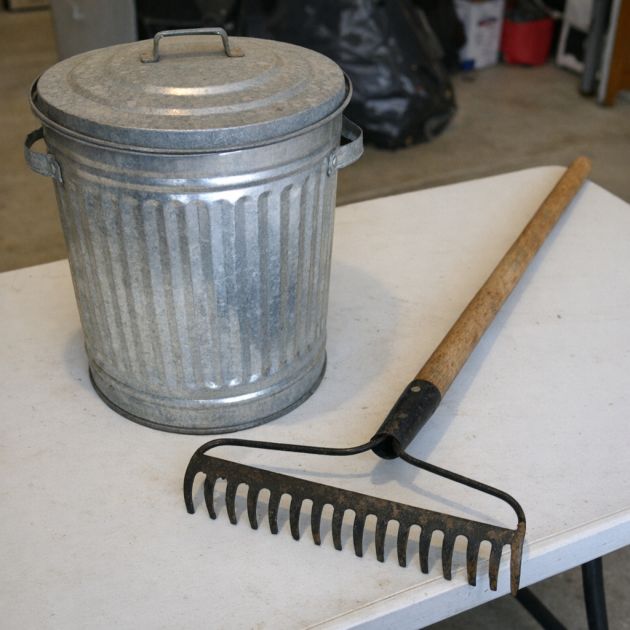
1 shiny 20-gallon galvanized metal trash can with lid
Drill with 1/2 inch drill bit
1 common yard item: a shovel
Soil to fill the trash can
Worms (red wigglers or other composting worms)
Organic waste (fruit and vegetable scraps)
Directions
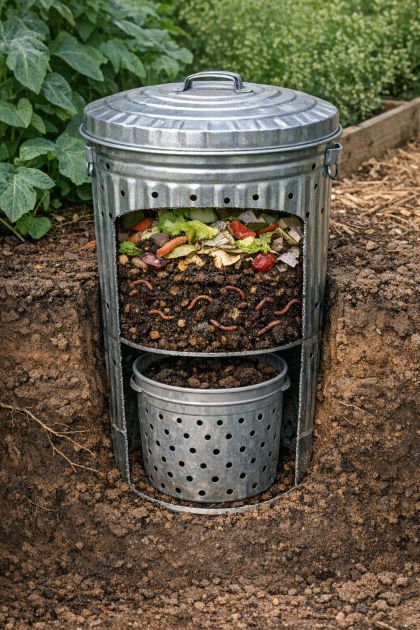
1. Use the drill with a 1/2 inch drill bit to create dozens of holes around the sides and bottom of the 20-gallon galvanized metal trash can. Space the holes approximately 3 inches apart to ensure adequate aeration.
2. Choose a location in your garden where the composting tower will not disturb existing plants, ideally near a vegetable bed or in an unused corner.
3. With the shovel, dig a hole deep enough to bury the trash can up to its lid, ensuring it will sit flush with the ground surface once installed.
4. Place the trash can into the hole, ensuring the drilled holes are below ground level to allow worms to move freely in and out.
5. Fill the trash can with a layer of soil, topped with a mixture of organic waste, and introduce the worms into their new environment.
6. Cover the trash can with its lid to prevent pests and odors, and regularly add organic waste, stirring occasionally to maintain aeration.
Variations & Tips
For colder climates, add a layer of straw or mulch around the trash can for insulation. Use a plastic barrel instead of a metal trash can for a lighter option. In arid regions, consider adding a small irrigation drip line to keep the compost moist. Plant specific adaptations include situating the tower near nitrogen-hungry plants like corn or squash, or adding coffee grounds to the compost for acid-loving plants such as blueberries.