
Creating a DIY garden fence using natural materials such as willow branches intertwined with sturdy steel T-posts is not only a functional home improvement project but also adds a rustic charm to your backyard. This sustainable approach to fencing can help define garden spaces, protect plants, and add a natural aesthetic to your outdoor living area.
Incorporating this DIY willow fence into your backyard can enhance the natural landscape and provide a seamless blend between your garden and outdoor space. The rustic design complements a variety of garden styles, from cottage gardens to minimalist spaces. Using natural willow branches as a primary material brings an organic element to your design, highlighting the beauty of your garden's flora.
Rustic Willow and Steel Garden Fence
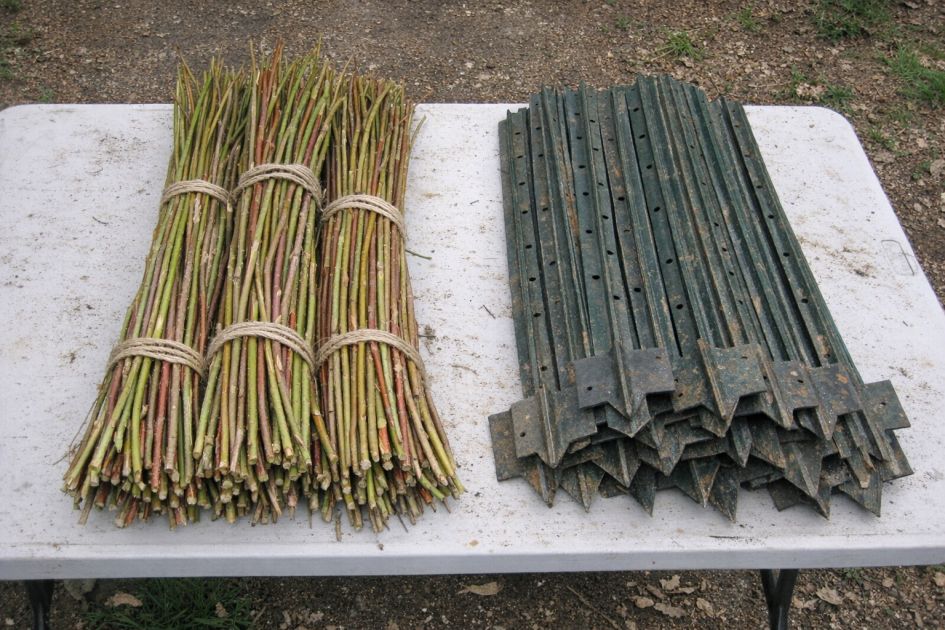
Materials
Flexible willow branches, approximately 6-8 feet long
Steel T-posts, 6 feet tall
Post driver or sledgehammer
Measuring tape
Pruning shears
Work gloves
Directions
Plan your fence layout by measuring the area where you want to install the fence. Mark the positions for your steel T-posts, spacing them about 4-5 feet apart.
Using a post driver or sledgehammer, drive the steel T-posts into the ground at the marked positions. Ensure they are firmly anchored and standing upright.
Select flexible willow branches that are long enough to weave through the T-posts. Trim any excess leaves or smaller branches using pruning shears.
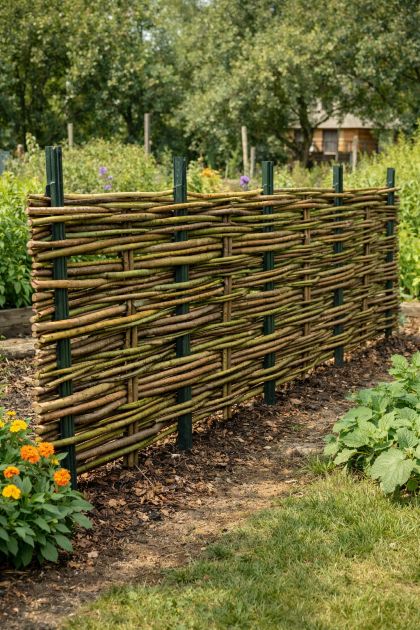
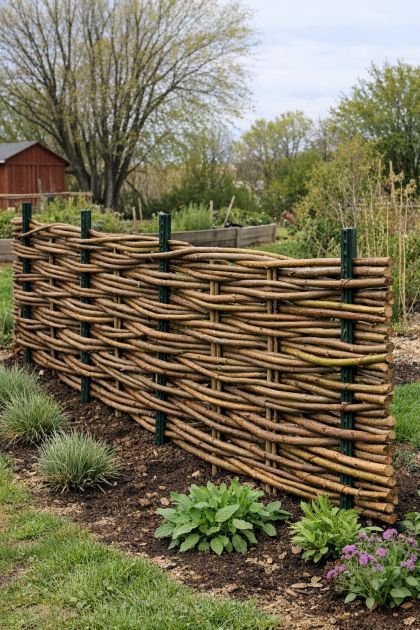
Starting at the bottom of the T-posts, weave a willow branch in and out between the posts, creating a horizontal pattern. Continue adding more branches, overlapping slightly to ensure coverage and stability.
Work your way up the posts, weaving the willow branches snugly. Use additional branches as needed to fill gaps and maintain a consistent appearance.
Periodically step back to assess the fence's appearance and make adjustments to the weaving as necessary.
Once the desired height and coverage are achieved, trim any protruding ends to create a clean, finished look.
Variations & Tips
For variations, consider using different types of branches or vines to achieve unique textures and colors. You can also experiment with the spacing between the T-posts for a denser or more open weave. For added stability, consider securing the branches with natural twine or wire at key points. This project can be adapted for different sizes and shapes, allowing you to create custom designs that fit your specific garden layout.