
Transforming old plastic six-pack rings and other household items into a chic faux-woven rattan patio coffee table is an innovative way to upcycle and reduce waste. This unique DIY project not only breathes new life into discarded materials but also creates an eye-catching centerpiece for any patio or outdoor space. Neighbors will be amazed by the stylish and sustainable design, often mistaking it for a high-end purchase.
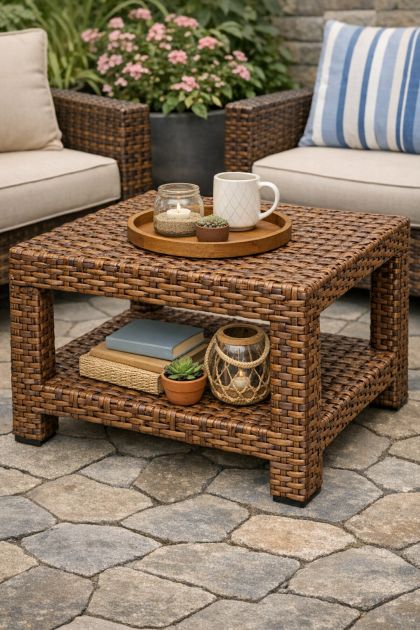
This DIY faux-woven rattan patio coffee table pairs beautifully with bohemian or coastal outdoor decor. Consider surrounding it with plush, neutral-toned outdoor cushions and a jute rug to enhance the natural aesthetic. Incorporate potted plants and string lights to create a cozy and inviting ambiance. The table’s texture and design make it a versatile piece that complements various styles, from modern minimalism to rustic charm.
Faux-Woven Rattan Patio Coffee Table
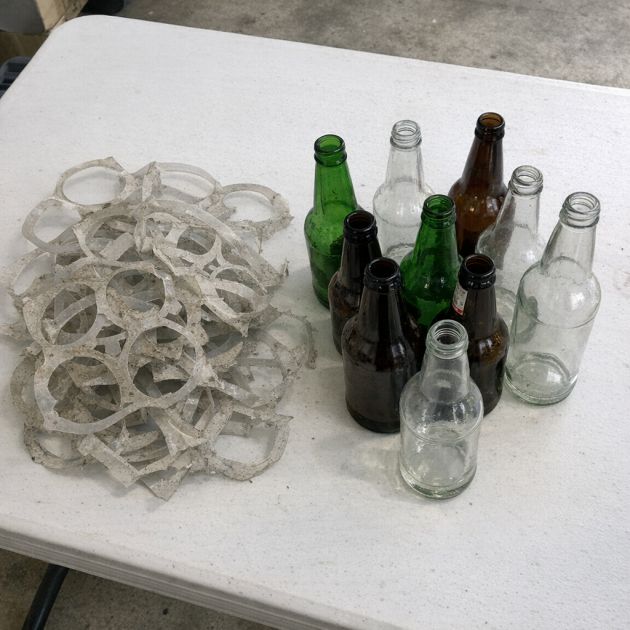
Materials
Old plastic six-pack rings (enough to cover the table surface)
Baking sheet
Aluminum foil
Heat-resistant gloves
Wooden or metal frame for the table (dimensions to your preference)
Clear epoxy resin (enough to coat and secure the surface)
Sandpaper (medium and fine grit)
Directions
Preheat your oven to 300°F (150°C).
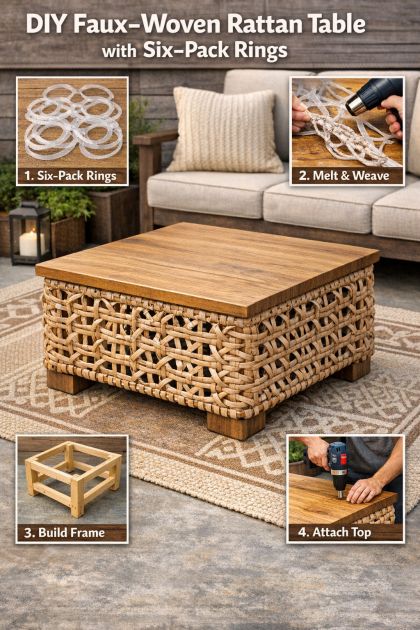
Line a baking sheet with aluminum foil and spread out the plastic six-pack rings in a single layer.
Place the baking sheet in the oven and allow the rings to melt partially, monitoring closely to prevent overheating.
Using heat-resistant gloves, carefully remove the sheet and allow the melted rings to cool slightly before shaping them into a woven pattern.
Secure the woven plastic onto the top of your table frame using epoxy resin, spreading it evenly to ensure a strong hold.
Once the resin is fully cured, sand the surface with medium grit sandpaper, followed by fine grit, to achieve a smooth finish.
Style and place your new faux-woven rattan table in your outdoor space, ready to impress.
Variations & Tips
For a personalized touch, consider adding a layer of colored spray paint to the melted plastic before securing it with resin. This can create a vibrant or subtle hue that matches your existing decor. Alternatively, experiment with different weaving patterns or incorporate additional materials like small pieces of driftwood or shells for a coastal vibe. Remember, the key to this DIY is creativity and sustainability, so feel free to adapt the design to suit your style and available materials.