
Many of us have a surplus of plastic bottles, and upcycling them into something useful is both environmentally friendly and rewarding. This DIY project transforms ordinary plastic bottles into a nifty self-watering planter system using just two other common household items. Not only will you be reducing plastic waste, but you’ll also create a functional and stylish planter that makes plant care easier.
This self-watering planter system can be styled to suit various home decors. Place it on a sunny windowsill with other small plants for a green oasis, or use it as a modern centerpiece on your dining table. To enhance its appearance, consider painting the exterior with neutral tones or metallic spray paint, which can complement contemporary or minimalist interiors.
3-Material DIY Self-Watering Planter System
Materials
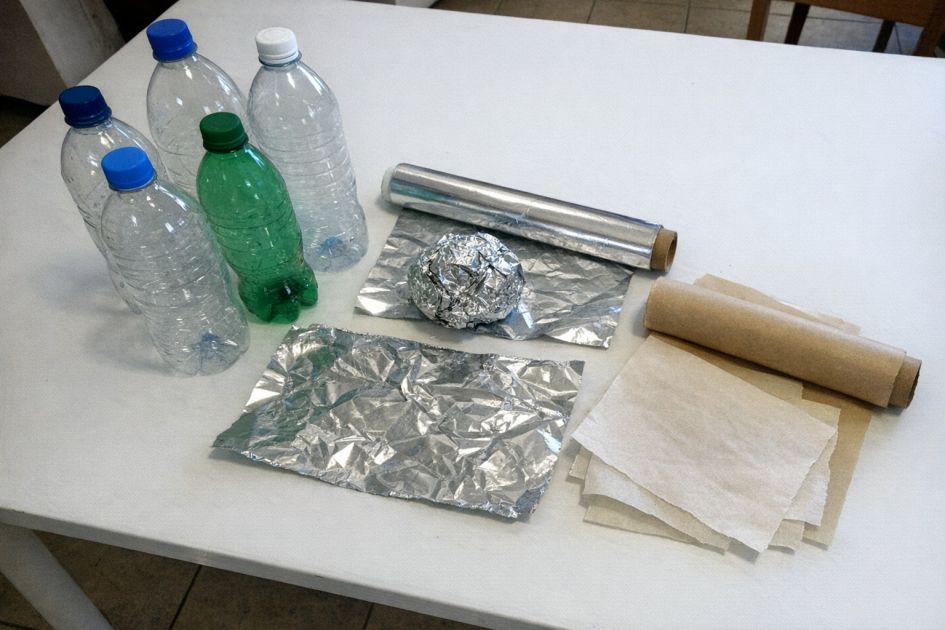
3 clear plastic water bottles
1 baking sheet
Parchment paper
Potting soil
Small plants or seeds
Directions
Preheat your oven to 275°F (135°C).
Remove the labels and caps from the plastic bottles and thoroughly clean them.
Line a baking sheet with parchment paper to prevent sticking.
Place the plastic bottles on the baking sheet, ensuring they are spaced apart.
Put the baking sheet in the oven for about 10 minutes or until the bottles have melted and shrunk considerably, forming a base for the planter.
Carefully remove the baking sheet from the oven and allow the melted plastic to cool and harden.
Once cooled, use scissors to cut the bottles into two separate pieces: the top (with the neck) and the bottom parts.
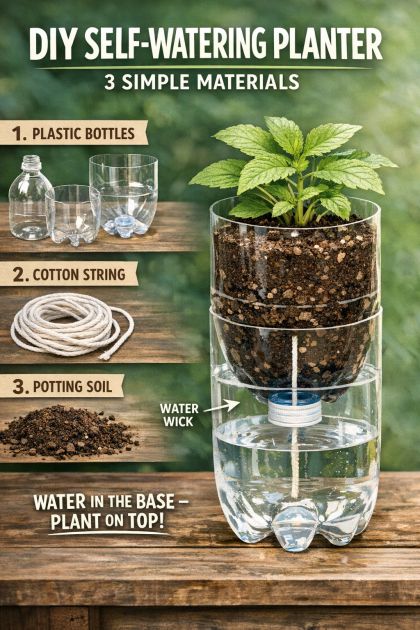
Invert the top part and insert it into the bottom part to create a planter with a self-watering reservoir.
Fill the top part with potting soil and plant your seeds or small plants.
Add water to the bottom reservoir, ensuring the soil stays moist through the neck of the inverted bottle.
Variations & Tips
Consider using different sizes of plastic bottles to create planters of varying heights, perfect for a tiered plant display. You can also personalize your planters by painting them or adding decorative elements like twine or washi tape. For a more rustic look, wrap the base with burlap or jute string. Experiment with different types of plants, such as succulents or herbs, to find what works best with your decor and lifestyle.