
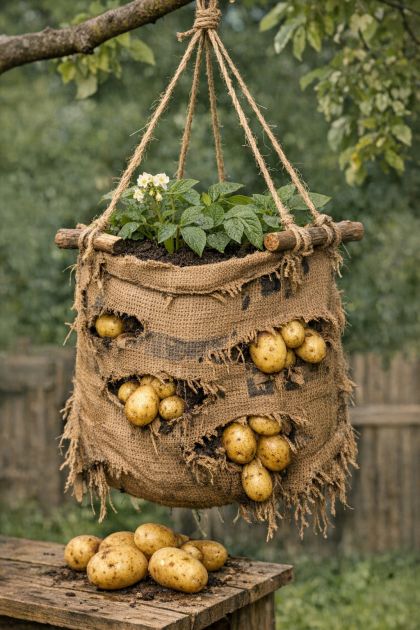
Repurposing torn brown burlap sacks into hanging potato grow bags is an ingenious and eco-friendly way to upcycle materials while enhancing your gardening experience. This simple DIY project allows gardeners to grow potatoes efficiently in small spaces, making it an ideal solution for urban gardening or those with limited yard space.
This DIY hanging potato grow bag is perfect for those who want to make the most of their vertical space. The breathable burlap material promotes excellent drainage and aeration, essential for healthy potato growth. This method reduces the risk of overwatering and root rot, common issues in traditional potato planting. Not only is it functional, but it also adds a rustic charm to your garden. You can hang these bags on fences, balconies, or even sturdy tree branches. Additionally, they are suitable for growing other tubers and root vegetables, such as sweet potatoes or carrots.
3-Material DIY Hanging Potato Grow Bag
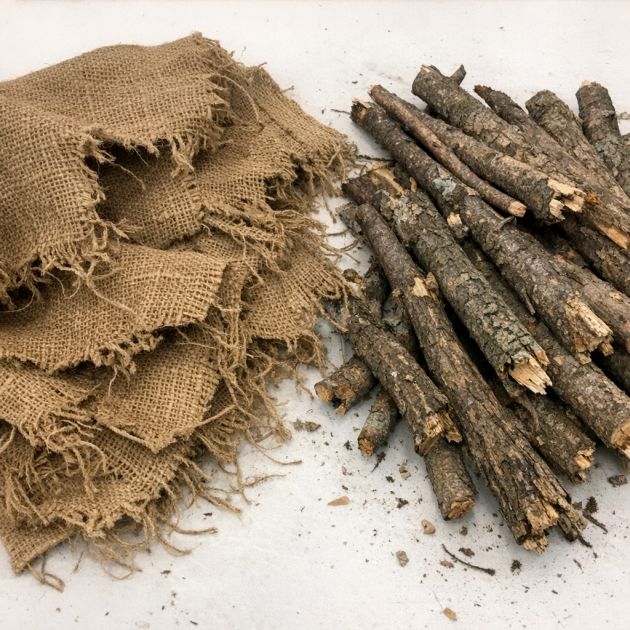
Materials
Torn brown burlap sacks (approximately 3 feet by 3 feet)
Coarse twine (10 feet)
Loose garden soil (enough to fill the burlap sacks)
Directions
Lay the torn brown burlap sacks flat on a neutral potting bench and cut them into large rectangles if not already rectangular.
Place a generous amount of loose garden soil in the center of each burlap sack, spreading it out to create an even layer.
Carefully gather the corners of the burlap sack together, bringing the edges up to form a bag shape.
Use the coarse twine to tightly wrap around the gathered corners, securing the sack into a closed bag. Make sure to leave enough twine to create a loop for hanging.
Ensure the soil is evenly distributed inside the bag and make small holes in the sides of the burlap for additional aeration if needed.
Plant your seed potatoes or tubers about 4 inches deep within the soil inside the bag.
Hang the completed burlap sack grow bag in a sunny location using the twine loop.
Variations & Tips
For a more decorative look, consider dyeing the burlap sacks with natural dyes before assembly. You can also use different types of twine or rope for a varied aesthetic. If you have limited hanging options, these bags can also be placed on the ground, supported by wooden stakes to maintain their shape. Consider adding a layer of straw or mulch on top of the soil for better moisture retention and to prevent soil erosion.