
This DIY project transforms vintage enamel colanders into charming herb planters, perfect for adding a touch of rustic elegance to your kitchen. By drilling drainage holes, you ensure healthy plant growth while repurposing beautiful kitchenware. Homeowners will appreciate this project for its blend of functionality and aesthetics, creating an inviting and practical green space on the kitchen windowsill.
These herb planters integrate seamlessly into farmhouse or vintage-inspired kitchens, complementing white or neutral-toned decor. The red trim on the colanders adds a pop of color that pairs well with red kitchen accents or accessories. Positioned on a kitchen windowsill, they catch natural light, enhancing the vibrancy of the herbs and adding an organic touch to the space.
Vintage Colander Herb Planters
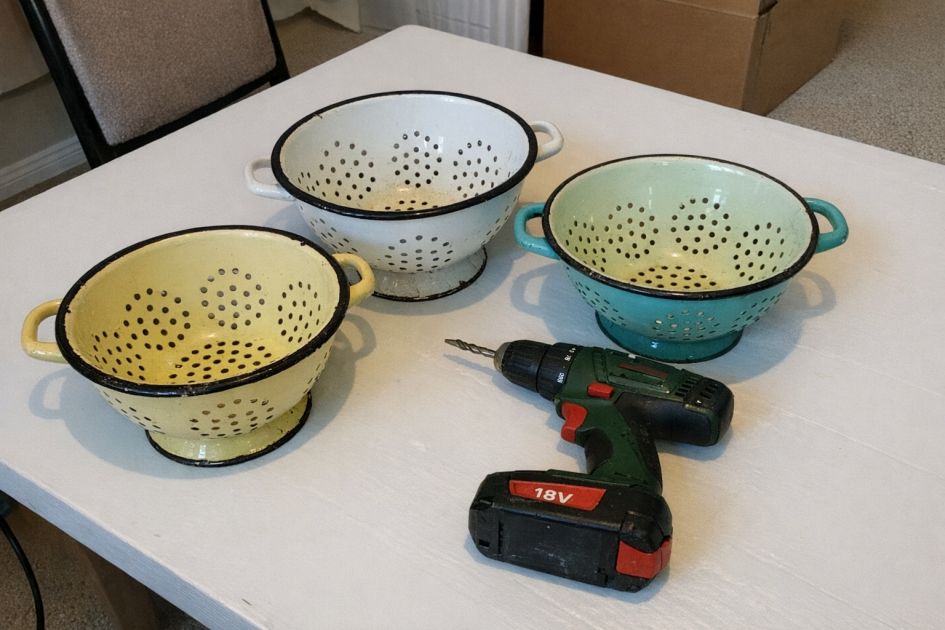
Materials
2 vintage enamel colanders with red trim
Electric drill with a small drill bit suitable for metal
Protective gloves
Safety goggles
Fine grit sandpaper
Potting soil
Herb plants of choice (e.g., basil, mint, parsley)
Waterproof tray or saucer
Directions
1. Put on protective gloves and safety goggles to ensure safety while drilling.
2. Place the enamel colander upside down on a stable surface.
3. Using the electric drill, carefully drill several small holes evenly spaced across the bottom of the colander for drainage.
4. Smooth any rough edges around the holes with fine grit sandpaper to prevent injury and protect the plants' roots.
5. Fill the colander with potting soil, leaving about an inch from the top.
6. Plant your chosen herbs in the soil, ensuring they are spaced appropriately for growth.
7. Place the colander on a waterproof tray or saucer to catch any excess water.
8. Position the planter on a sunny kitchen windowsill to allow the herbs to thrive.
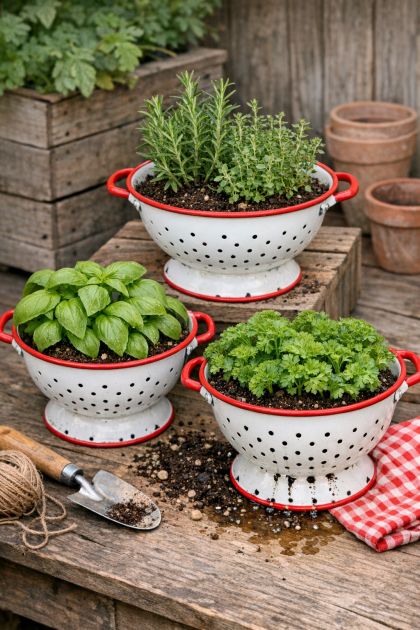
Variations & Tips
For a personalized touch, consider painting the colanders with a weather-resistant enamel paint in colors that match your kitchen theme. Alternatively, use different herbs or small flowering plants for variety. To enhance durability, apply a clear sealant to the drilled edges. For added visual interest, group several colanders of varying sizes together, or elevate one with a small stand to create a tiered effect. These planters can also be used outdoors on a patio or balcony, but ensure they are placed in a sheltered area to prevent rusting.