
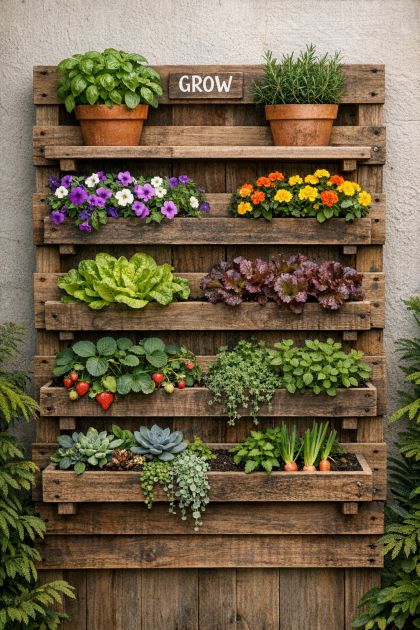
Transform discarded wooden pallets into a stunning vertical planter wall, perfect for adding a touch of greenery to your home or garden. Not only is this project a fantastic way to recycle old materials, but it also provides a functional and aesthetically pleasing way to display a variety of plants. This vertical planter is ideal for small spaces, allowing you to enjoy a lush garden without needing a large area.
Place your vertical planter wall on a balcony, patio, or even indoors in a well-lit area. Pair it with neutral or earth-toned decor to highlight the natural wood and vibrant plants. Use a mix of trailing and upright plants for a dynamic look, and consider coordinating plant pot colors with your existing decor palette for a cohesive aesthetic.
Wooden Pallet Vertical Planter Wall
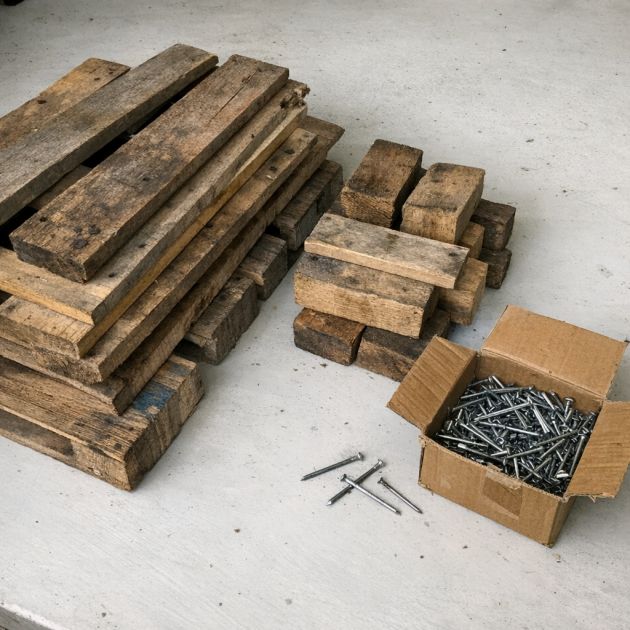
Materials
3 wooden pallets (standard size 40x48 inches)
Sandpaper (medium and fine grit)
Wood stain or paint (optional, for color)
6 plastic or metal pots (6-8 inches in diameter)
6 plant saucers that fit the pots
12 L-brackets with screws
Drill with screwdriver bits
Measuring tape
Saw (if resizing pallets is necessary)
Wood screws (1.5 inches)
Wall anchors (if mounting on drywall)
Directions
1. Start by sanding the pallets with medium grit sandpaper to remove any splinters or rough spots. Follow with fine grit sandpaper for a smooth finish.
2. If desired, apply wood stain or paint to the pallets to match your decor. Allow it to dry completely.
3. Position the pallets vertically and decide on the layout for attaching the pots. Typically, two pots per pallet, spaced evenly.
4. Use the drill to attach L-brackets onto the pallets where you want each pot to be held. Ensure they are level and secure.
5. Secure the plant saucers onto the L-brackets using wood screws. The saucers will hold the pots in place.
6. Mount the pallets onto the wall using wall anchors, if necessary, and ensure they are securely fastened.
7. Place a pot into each saucer, fill with your choice of plants, and enjoy your new vertical garden.
Variations & Tips
Consider adding a waterproof backing to the pallets to protect the wall from moisture if using the planter indoors. You might also experiment with the arrangement of the pots, perhaps clustering them more densely for a fuller look, or incorporating a mix of colorful flowering plants for seasonal interest. If you're skilled with tools, integrating a simple drip irrigation system could keep maintenance minimal and ensure even watering across all plants.