
Transform your garden with sustainable, stylish tree stake straps made from old leather belts and a couple of garage staples. This DIY project is perfect for gardeners looking to securely stake young trees without damaging their bark. By reusing old materials, you create an eco-friendly solution that adds a rustic charm to your garden. Ideal for spring and autumn planting seasons, these adjustable straps ensure your trees grow straight and strong, even in windy conditions.
These leather tree stake straps seamlessly blend into various garden styles, from rustic to modern. They're particularly suited for use with flowering trees, fruit trees, and ornamental shrubs. Place them in raised beds, along garden borders, or in large containers. Whether staking a young apple tree in a cottage garden or a decorative maple in a minimalist landscape, the natural leather complements any greenery while adding a touch of vintage appeal.
Leather Belt Tree Stake Straps
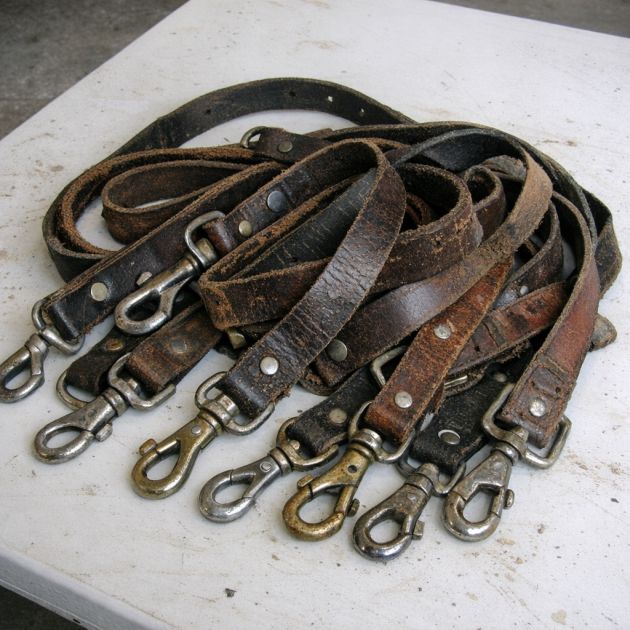
Materials
Old brown leather belts (2-3 belts depending on tree size)
Metal eyelets with washers (6 per strap)
Heavy-duty scissors or a sharp utility knife
Hammer
Measuring tape
Permanent marker
Directions
Measure the circumference of the tree trunk you need to stake. Add an additional 10 inches to this measurement to allow for adjustments.
Cut the leather belts into strips according to the measurement obtained. Each strip should be long enough to wrap around the tree trunk and secure to a stake.
Use a permanent marker to mark where the eyelets will be placed on each strip, ensuring they are evenly spaced and aligned for a secure hold.
Punch holes in the leather strips at the marked points using the scissors or a utility knife.
Install a metal eyelet in each hole using a hammer to ensure a firm fit.
Wrap the strap around the tree trunk, feed one end through the eyelet, and pull tight to secure.
Attach the other end of the strap to a garden stake, ensuring the strap is taut but not so tight as to damage the tree bark.
Variations & Tips
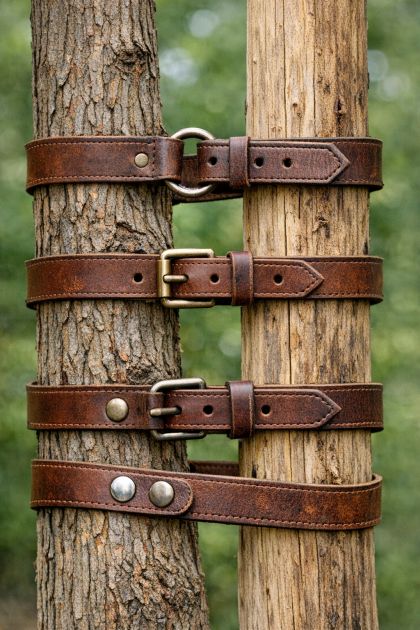
For a personalized touch, consider using belts of different textures or colors such as black or dyed leather to match different garden themes. In regions with heavy rainfall, swap leather for weather-resistant synthetic materials to prolong strap life. Integrate decorative buckles or stitching for an artistic flair. For trees with sensitive bark, line the inner side of the strap with a soft fabric or felt to prevent abrasion. Adapt strap length and width based on tree species and local climate conditions for optimal support.