
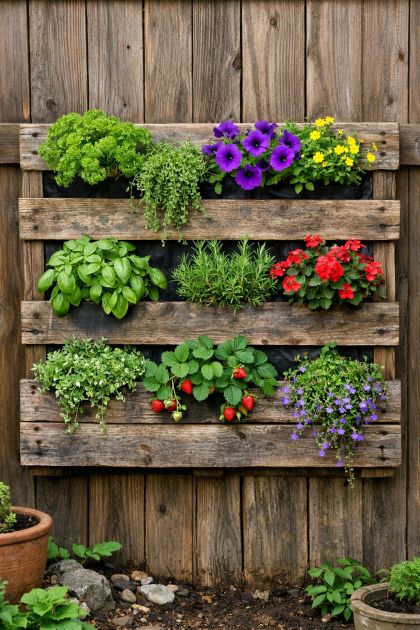
Transforming an ordinary wooden pallet into a vertical garden can greatly enhance your outdoor space, adding both greenery and character to your fence. This project is perfect for homeowners looking to maximize garden space in small yards or for those who want to add a touch of nature to their urban environment. The vertical garden provides a unique way to display plants and flowers, bringing life to otherwise unused vertical areas.
This vertical garden can seamlessly integrate into various home styles, including modern, farmhouse, and minimalist designs. It can be placed on a backyard fence, a balcony wall, or even an interior wall if you want to bring a bit of the outdoors inside. The natural wood of the pallet pairs well with rustic elements, while the greenery complements neutral and earth-tone palettes. Functional as both a decorative piece and a space saver, this garden is perfect for growing herbs, succulents, or colorful flowers.
Weathered Wooden Pallet Vertical Garden
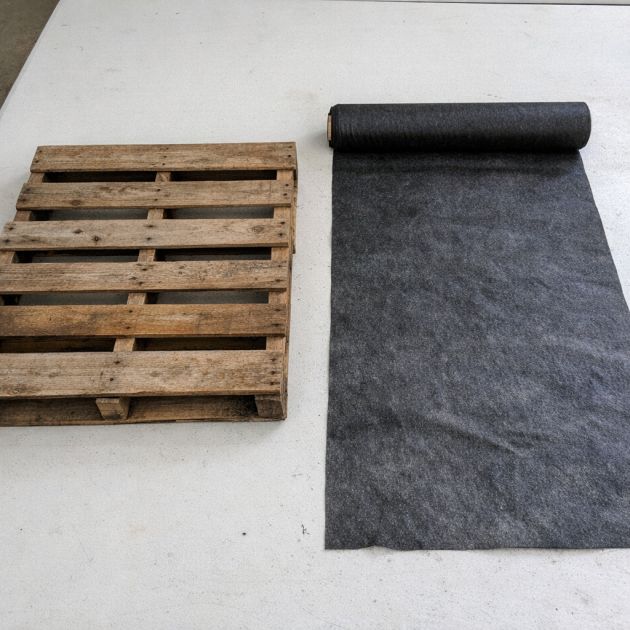
Materials
1 weathered wooden pallet
Black landscape fabric (enough to cover the interior of the pallet)
Heavy-duty staple gun with staples
Potting soil
A selection of plants (herbs, flowers, succulents)
Screws and wall anchors for mounting (if needed)
Scissors
Gloves
Directions
1. Start by laying the wooden pallet flat on the ground with the slats facing up. Inspect it for any loose nails or splinters and remove them for safety.
2. Cut the black landscape fabric to fit the interior of the pallet. Ensure it covers the back, bottom, and sides of each section where you plan to add soil.
3. Use the heavy-duty staple gun to secure the landscape fabric inside the pallet. Make sure it is taut and well-attached, especially at the corners and edges.
4. Once the fabric is secured, turn the pallet upright and decide on the position of your plants. Fill each section with potting soil, packing it gently to provide a stable base.
5. Plant your chosen plants into the soil-filled sections. Position them as desired, considering growth patterns and sun exposure.
6. If you're mounting the pallet on a wall or fence, use screws and wall anchors to securely attach it. Ensure it is mounted level and stable.
7. Water the plants thoroughly and regularly. Ensure proper drainage to prevent overwatering.
Variations & Tips
For a more durable project, consider using a weather-resistant sealant on the pallet to protect it from the elements. Alternatively, paint the pallet in a color that complements your home's exterior for a pop of color. You can also add small hooks to the bottom for hanging garden tools or decorations. Customize the plant selection based on your climate and sunlight availability, and consider using lightweight, trailing plants for a fuller appearance. To increase longevity, use a UV-resistant landscape fabric and ensure proper drainage.