
Transform your worn denim jeans into practical moisture-wicking plant wraps to help keep your garden plants hydrated. This simple DIY project uses readily available household materials and provides an eco-friendly solution to water retention issues. Perfect for dry seasons or gardens prone to rapid moisture loss, these wraps help maintain soil moisture and promote healthy plant growth.
These denim plant wraps integrate seamlessly into a rustic or cottage garden setting. Ideal for use with vegetables like tomatoes and peppers, herbs such as basil and mint, or flowers including marigolds and zinnias, they can be placed in raised beds, containers, or along garden borders. The denim's blue tones add a subtle, casual aesthetic that complements a natural garden environment.
Denim & Scrap Wicking Plant Wraps
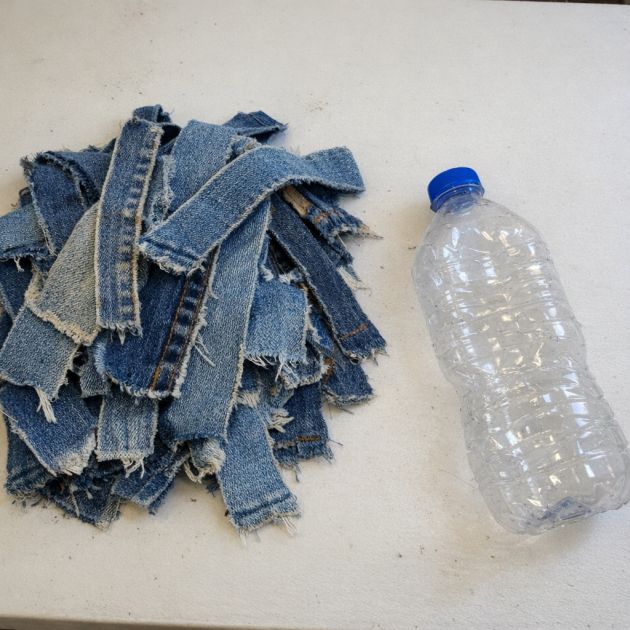
Materials
Worn denim jeans (cut into 2-inch wide strips)
Old cotton t-shirts or cotton fabric scraps
Scissors
Thread or twine (for tying)
Directions
1. Lay out your worn denim jeans on a flat surface and use scissors to cut them into strips approximately 2 inches wide.
2. Take an old cotton t-shirt or fabric scrap and cut it into strips of similar width.
3. Pair a denim strip with a cotton strip, aligning them lengthwise.
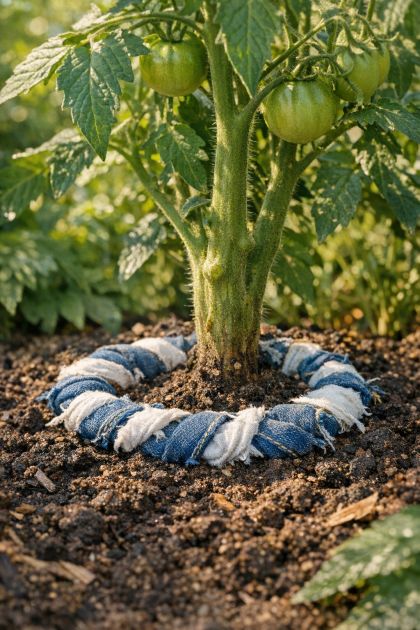
4. Starting from one end, roll the strips together into a tight coil, ensuring the denim and cotton are interwoven.
5. Secure the end of the coil using thread or twine, tying it firmly to prevent unraveling.
6. Dig a shallow trench around the base of your plant in the garden bed or pot.
7. Place the rolled denim and cotton coil into the trench, ensuring it is in contact with the soil and surrounding the plant's base.
8. Cover the coil lightly with soil, leaving the top exposed to absorb moisture from the air.
Variations & Tips
For a more colorful garden aesthetic, use brightly colored cotton fabric scraps instead of plain white, adding a pop of color to your plant wraps. In climates with high humidity, consider using synthetic fabric scraps in place of cotton for improved durability. For plant-specific adaptations, opt for narrower strips and a tighter coil for small herbs, while larger vegetables may benefit from wider strips and looser coils to accommodate their size.