
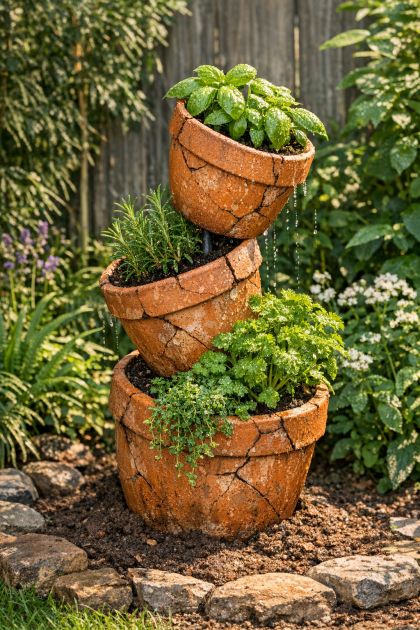
Repurpose those cracked terracotta pots and turn them into a cascading herb tower that will transform your garden space. This DIY project not only helps reduce waste by reusing broken pots, but it also provides a practical and visually appealing way to grow your favorite herbs. Perfect for small gardens or urban spaces, this herb tower is a functional and attractive solution for growing a variety of herbs seasonally.
This DIY cascading herb tower integrates seamlessly into a rustic or cottage-style garden. Ideal for container gardens, it can be placed on patios, balconies, or within a larger garden bed. The tower can host a variety of herbs such as basil, parsley, and thyme, allowing for fresh, accessible ingredients right outside your door. Its vertical design makes it a space-saving solution, and the weathered appearance of the cracked pots adds charm and character.
Cascading Herb Tower with Cracked Terracotta Pots
Materials
3 cracked terracotta pots (small, medium, large)
1 sturdy metal or wooden rod (approximately 3 feet long)
Handful of small stones or gravel
Potting soil suitable for herbs
Herb seedlings (e.g., basil, parsley, thyme)
Blue tarp for workspace protection
Directions
1. Lay the blue tarp on your workspace to protect the surface.
2. Thread the sturdy rod through the drainage hole of the largest terracotta pot, positioning it at an angle.
3. Fill the base of this pot with a layer of small stones or gravel for drainage.
4. Add potting soil on top of the gravel, leaving a few inches from the top.
5. Position the medium pot at an angle on top of the soil in the large pot, threading the rod through its drainage hole.
6. Repeat the drainage and soil layering in the medium pot.
7. Place the smallest pot on top, threading the rod through, and angle it appropriately.
8. Add gravel and soil to the smallest pot, preparing it for planting.
9. Plant herb seedlings in each pot, ensuring they have enough space to grow.
10. Water the plants gently, ensuring the soil is moist but not waterlogged.
Variations & Tips
To adapt this herb tower for different climates, consider selecting herbs suited to your local weather conditions, such as rosemary for dry climates or mint for wetter areas. For a more modern aesthetic, replace terracotta with similarly cracked ceramic pots in neutral tones. In colder climates, frost-resistant pots and cold-tolerant herbs like sage or chives can be used. Alternatively, replace the central rod with a decorative branch for a more organic look. Adjust the size of the pots based on the space available and the desired height of the tower.