
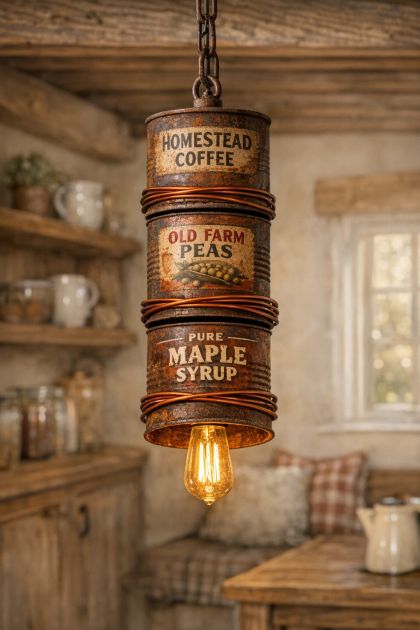
Transform your space with a rustic and unique light fixture that combines the charm of vintage tin cans with the elegance of copper wire. This DIY farmhouse pendant light fixture not only repurposes old tin cans but adds a touch of antique flair to any room. It's a simple yet striking project that makes a statement and invites intrigue and compliments from all who see it.
Hang this pendant light fixture in a cozy kitchen corner or above a rustic dining table to enhance the farmhouse aesthetic. Pair it with wood furnishings and earth-toned decor to complement the warm tones of the rusty tin cans and copper wire. The light fixture's vintage appeal serves as a focal point in a room, adding character and a sense of history to the space.
Rustic Tin Can Pendant Light
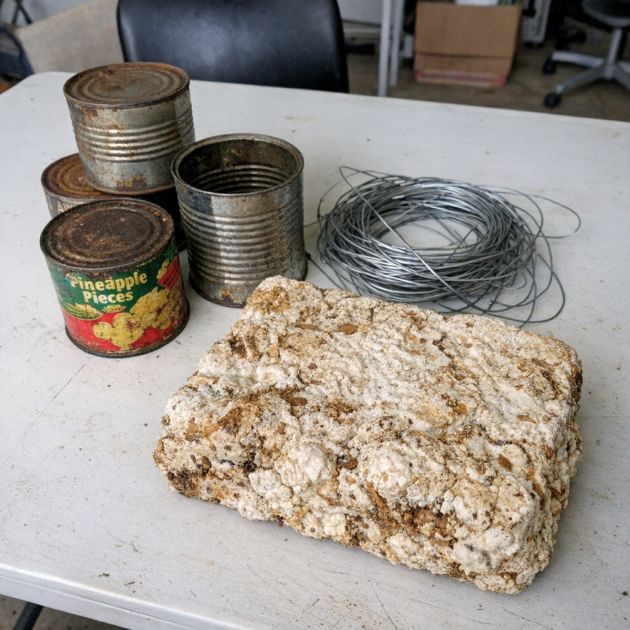
Materials
3 vintage tin cans with faded labels and rust
1 coil of copper wire (approximately 10 feet)
1 light bulb socket with wiring
1 unusual material: a vintage-style Edison bulb
Hammer
Nail
Wire cutters
Drill with metal bit
Directions
Clean the vintage tin cans, removing any debris while keeping the rusty patina intact for charm.
Use a nail and hammer to carefully punch a hole in the center of the bottom of each tin can.
Drill a larger hole where the nail hole is to fit the size of the light bulb socket.
Insert the light bulb socket through the hole, securing it tightly in the can's base.
Cut the copper wire into even lengths, and use them to create a decorative coil around each can, securing it at the top.
Connect the wiring from the socket to a power source, following safety guidelines.
Screw the vintage-style Edison bulb into the socket.
Stack the cans in a pyramid formation, ensuring stability, and hang the light fixture from the ceiling using additional wire if needed.
Variations & Tips
For a more personalized touch, consider painting the exterior of the cans with chalk paint for a shabby chic look, or use colored wire to match your room's palette. Alternatively, add small punched holes in the cans to create intricate patterns that cast decorative shadows when lit. Ensure these modifications maintain the core structure of the tin can stack and wire assembly for consistent results.