
Creating a solar dehydrator is an eco-friendly way to preserve food without the use of electricity. This DIY project transforms inexpensive materials into a solar oven, perfect for drying fruits, herbs, and vegetables. Ideal for gardeners wanting to make the most of their harvest, this project leverages the sun's power to dehydrate produce, reducing waste and extending food shelf life. It's a simple, sustainable solution for seasonal abundance.
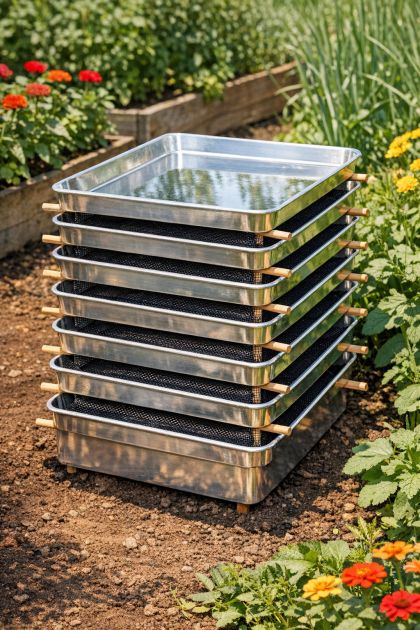
This DIY solar dehydrator seamlessly integrates into a rustic or cottage garden setting. Place it near raised vegetable beds or herb gardens to easily access fresh produce ready for drying. It complements an outdoor kitchen area or garden workstation, offering a functional yet aesthetic addition. Its minimalist, metallic look contrasts beautifully with lush greenery, making it a conversation piece in modern or eclectic garden designs.
3-Material DIY Stacked Dehydrator Solar Oven
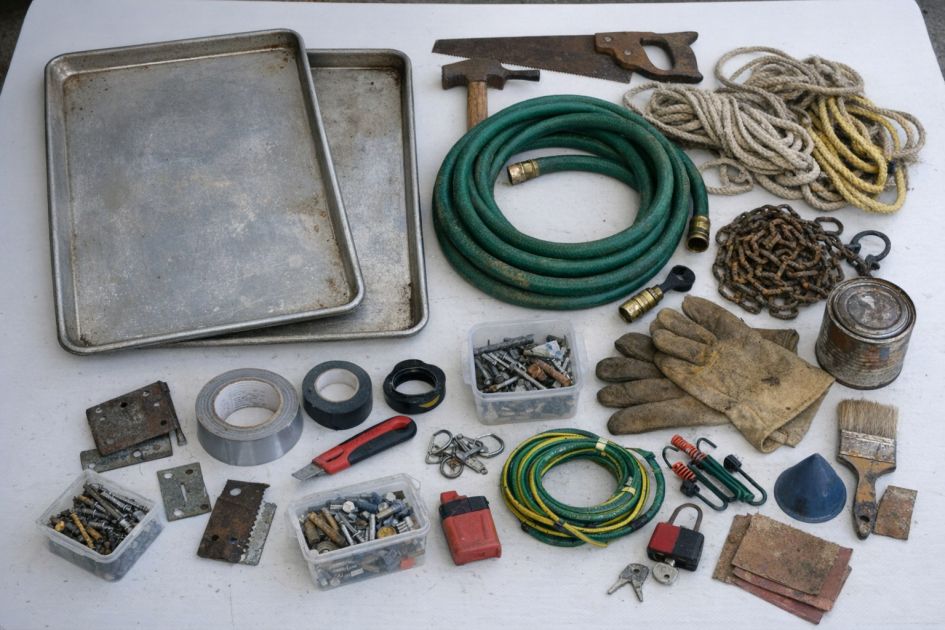
Materials
8 aluminum baking sheets
Wooden dowels (8-10 inches long, 1/2 inch diameter)
Black mesh fabric (enough to cover all baking sheets)
Drill with metal bit
Scissors
Marker or pencil
Directions
Stack the 8 aluminum baking sheets on a flat cement surface.
Use the marker to mark spots for holes on the corners and center of each baking sheet.
Drill holes through the stacked sheets at the marked points to allow airflow.
Cut the black mesh fabric into pieces that fit over each baking sheet.
Securely attach a piece of black mesh fabric over each baking sheet using the holes and wooden dowels to hold them in place.
Stack the sheets with mesh facing upwards in a staggered formation using the dowels to separate them, allowing air circulation.
Place the stacked dehydrator in a sunny spot in the garden, ensuring maximum sun exposure.
Variations & Tips
For a more robust structure, consider using thicker aluminum sheets or stainless steel trays. In wetter climates, add a clear plastic cover to protect against rain while allowing sunlight to pass through. Adapt the size of the dehydrator by increasing the number of sheets or altering the dowel length to accommodate larger batches. For specific plants, like delicate herbs, use finer mesh to prevent small leaves from falling through the layers.