
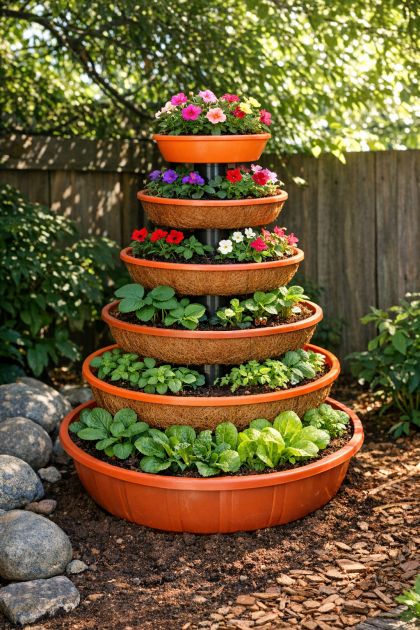
Repurpose basic gardening supplies to create a tiered wicking planter tower that optimizes water usage and maximizes planting space. This DIY project is perfect for gardeners looking to add vertical interest to their garden, utilize limited space effectively, and create a self-watering system ideal for busy gardeners or areas with water restrictions. The tiered design also allows for easy access and maintenance, making it a practical addition to any garden setting.
This DIY tiered wicking planter tower complements a variety of garden styles, from modern urban balconies to rustic cottage gardens. Its versatile design suits vegetables like lettuce and radishes, herbs such as basil and mint, and small flowers like marigolds and pansies. Place it in raised beds for easy access, set it within container gardens for a striking focal point, or use it along borders to add height and depth. The orange and terracotta hues of the saucers blend naturally with earthy tones, adding warmth and vibrancy to any garden.
3-Material Tiered Wicking Planter Tower
Materials
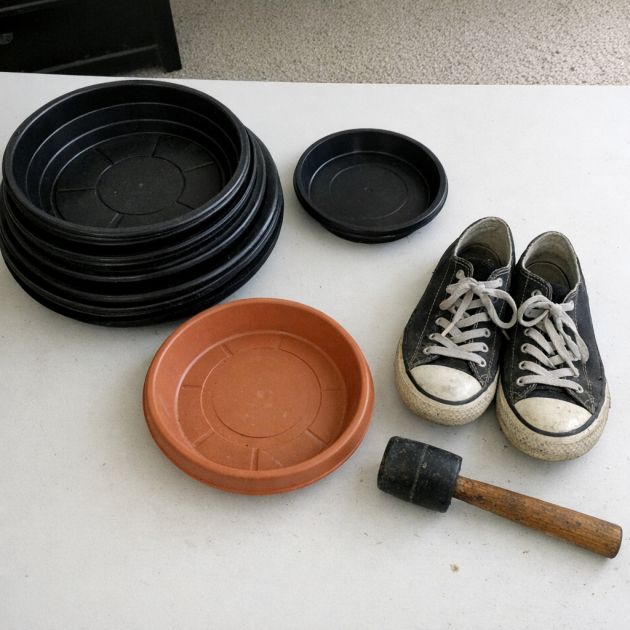
8 plastic plant saucers (orange and terracotta, 12-inch diameter)
1 PVC pipe (24 inches long, 1-inch diameter)
1 coconut coir liner or capillary mat (cut to fit saucers)
Drill with a 1-inch drill bit
Potting soil
Various small plants or seeds
Directions
Drill a 1-inch hole in the center of each of the 8 plastic plant saucers.
Cut the coconut coir liner or capillary mat into circles that fit snugly inside each saucer.
Place the PVC pipe vertically in your desired garden location, ensuring it is stable and upright.
Slide the first saucer down the PVC pipe until it rests on the ground; this will be the base.
Place a coir circle in the base saucer, then fill it with potting soil and plant your first layer of plants.
Slide the second saucer down the pipe, resting it on the soil of the first saucer, slightly offset to allow some soil exposure.
Repeat the process with each subsequent saucer, ensuring each layer has coir, soil, and plants, offsetting each saucer slightly to create a tiered effect.
Once all saucers are stacked and planted, water thoroughly to initiate the wicking process.
Variations & Tips
Consider swapping the plastic saucers for glazed ceramic ones for a more upscale look, ensuring they are still lightweight enough to stack. For those in cooler climates, use cold-tolerant plants like kale or violas to extend the growing season. In warmer regions, opt for drought-resistant succulents or herbs such as thyme and oregano. You can also experiment with different colors and sizes of saucers to customize the aesthetic, or incorporate a drip irrigation system connected to the PVC pipe for automated watering.