
Creating a rotating seedling hardening station using a 5-gallon bucket is an efficient way to prepare your plants for outdoor conditions. By gradually exposing seedlings to sunlight and wind, this DIY project helps in acclimatizing them to their future environment, ensuring stronger and healthier growth. This setup is particularly useful during the spring when transitioning seedlings from indoors to an outdoor garden.
This DIY project seamlessly integrates with various garden settings, from rustic to modern. It can be placed in raised beds or alongside other container gardens, making it versatile for growing vegetables, herbs, or flowers. The rotating feature ensures even sunlight exposure, helping plants like tomatoes, peppers, and basil to thrive. Its compact design makes it suitable for small urban gardens or larger country yards, adding both functionality and a touch of innovation.
Rotating Seedling Hardening Station Using 5-Gallon Bucket
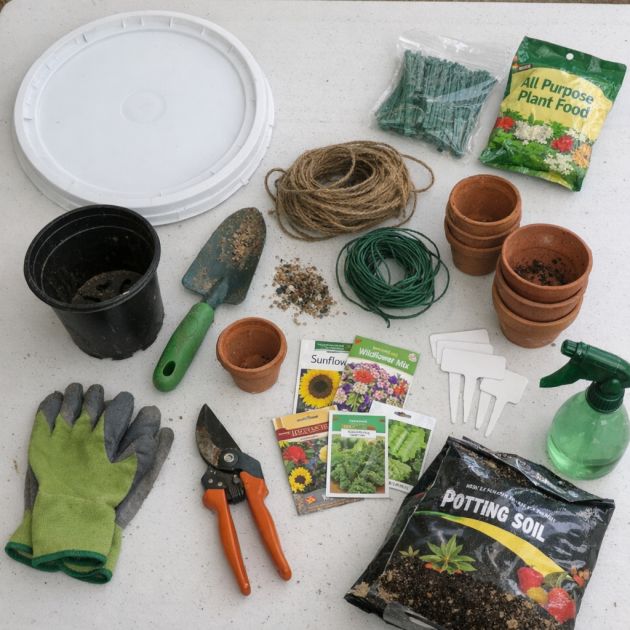
Materials
1 white plastic bucket lid (fits a 5-gallon bucket)
1 orange 5-gallon bucket
1 lazy Susan turntable (diameter slightly less than bucket lid)
Cordless drill with a 1/4-inch drill bit
Marker for marking drill points
Ruler or measuring tape
Directions
Place the white plastic bucket lid on a stable surface, such as a table or the ground.
Using the marker and ruler, mark evenly spaced points around the center of the lid to drill holes. These should be roughly 1 inch apart in a circular pattern.
With the cordless drill and 1/4-inch drill bit, carefully drill holes at each marked point on the lid to allow for proper drainage and ventilation.
Position the lazy Susan turntable on top of the orange 5-gallon bucket.
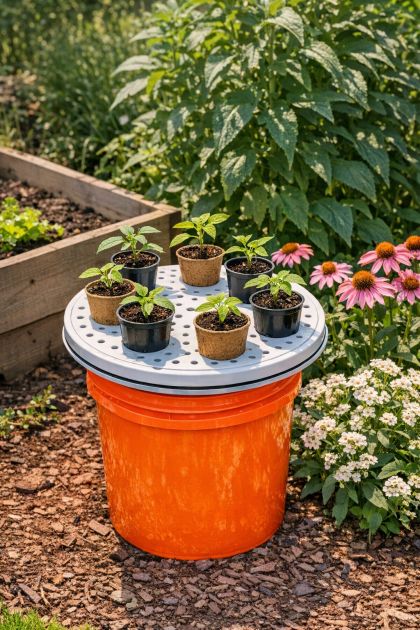
Place the perforated white bucket lid on top of the lazy Susan. Ensure it sits securely and can rotate freely without obstruction.
Position seedlings on the bucket lid, ensuring they are stable and evenly distributed for balanced rotation.
Test the rotation by gently spinning the lazy Susan to ensure smooth movement.
Variations & Tips
To adapt this project for different climates, consider using a lid with fewer holes for cooler, windier environments to protect seedlings from harsh conditions. Alternatively, swap the lazy Susan with a solar-powered rotating platform for an eco-friendly upgrade. For plant-specific adaptations, herbs like rosemary and thyme benefit from this setup due to their need for full sun exposure. In arid climates, adding a shallow water reservoir beneath the lazy Susan can provide additional humidity and support to the seedlings.