
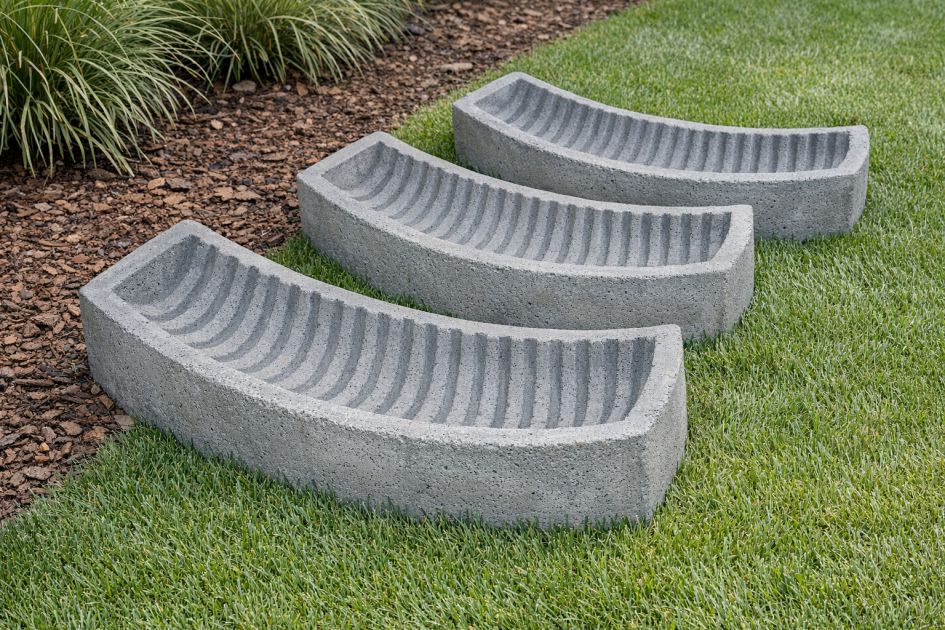
Creating heavy grooved yard bases using ribbed plastic kiddie pools and cement is a cost-effective and innovative way to add unique sculptural elements to your garden or yard. This DIY project transforms simple materials into durable and visually striking bases that can support garden sculptures, bird baths, or even serve as standalone art pieces. The process is straightforward, making it accessible for anyone looking to enhance their outdoor space with a creative twist.
These cement bases can be styled in a variety of outdoor settings. Place them in a garden to support plants or sculptures, or use them as standalone decorative pieces. Their neutral grey color complements both vibrant and muted garden palettes. For a cohesive look, coordinate with similarly textured cement pots or pathways. Consider placing them near water features or amongst greenery for a harmonious aesthetic.
Grooved Cement Yard Bases
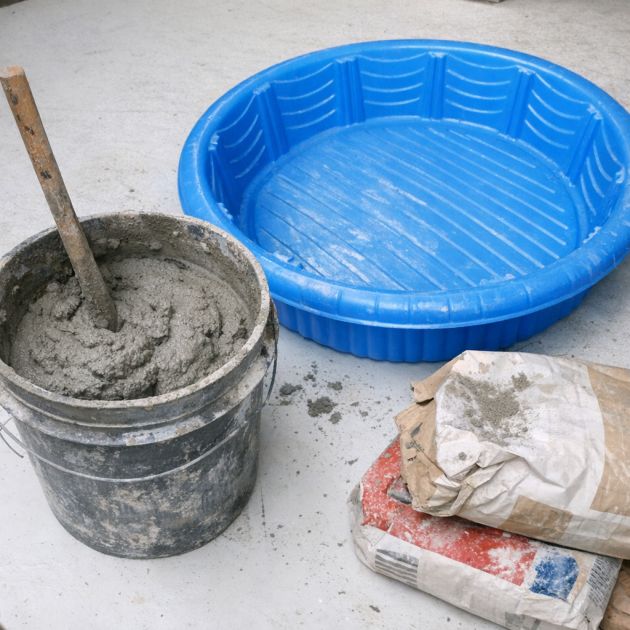
Materials
1 ribbed plastic kiddie pool (bright blue, cut into sections)
50 lb bag of thick cement mix
1 household item (e.g., large mixing bowl or bucket)
Directions
Cut the ribbed plastic kiddie pool into several curved sections, ensuring each piece has a distinct ribbed pattern.
Lay the cut sections on a dry, flat surface of grass, ensuring they are stable and won't collapse under weight.
Mix the thick cement according to the package instructions until it reaches a thick, pourable consistency.
Carefully pour the cement into each of the curved kiddie pool sections, filling them to the top edge.
Use the household item to gently press into the cement, creating grooves or patterns if desired.
Allow the cement to set and cure completely, following the cement mix's recommended curing time.
Once cured, remove the plastic kiddie pool sections to reveal the grooved cement bases.
Variations & Tips
For a different aesthetic, consider adding colored pigment to the cement mix to create bases in earth tones or vibrant hues. You can also experiment with the depth and spacing of the grooves using different household items to press into the wet cement, creating more intricate patterns. Additionally, incorporating small stones or glass pieces into the cement before it sets can add a decorative, mosaic-like quality to the finished bases.