
Transforming an outdoor space with a floating deck can significantly enhance your yard's appeal and functionality. This project is perfect for homeowners looking to create a cozy, easy-to-maintain outdoor area without the hassle of traditional decking materials and installation methods. Using interlocking composite tiles, you can craft a beautiful and durable deck that is both stylish and practical.
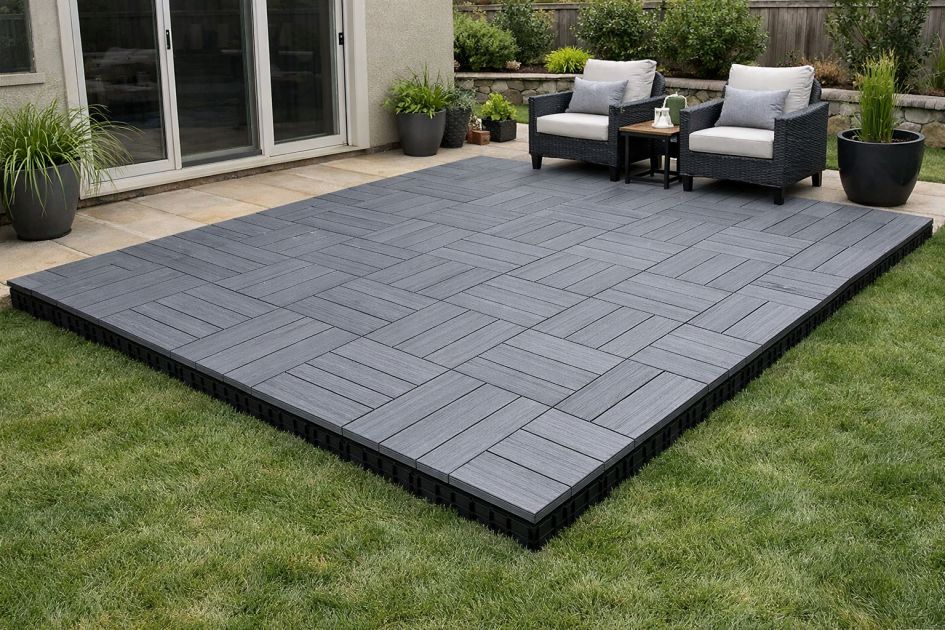
This DIY floating deck seamlessly integrates into modern and minimalist outdoor settings. The gray wood-grain composite tiles offer a sleek and contemporary look, complementing a variety of patio furniture styles and outdoor decors. The neutral color palette is versatile, allowing you to incorporate vibrant outdoor cushions or subtle potted plants for a personalized touch.
Interlocking Composite Tile Floating Deck
Materials
Gray wood-grain composite tiles, 12"x12" (enough to cover desired area)
Interlocking black plastic grid base, compatible with composite tiles
Rubber mallet
Measuring tape
Utility knife
Level
Weed barrier fabric (optional)
Directions
Measure the area where you plan to install the floating deck to determine the number of tiles needed.
Clear the area of any debris and level the ground as much as possible. Consider laying down a weed barrier fabric if desired.
Lay out the plastic grid bases over the grass, snapping each piece together to form a solid foundation. Use a rubber mallet to ensure they are securely connected.
Begin placing the gray wood-grain composite tiles on top of the grid base, snapping them into place. Make sure the tiles are aligned and the grain patterns are consistent.
Continue snapping tiles together until the entire area is covered.
Use a utility knife to trim tiles to fit around edges or obstacles as needed. Ensure all cuts are straight and measurements are accurate.
Check the level of the deck with a level tool, making adjustments as needed by adding or removing soil beneath the grid base.
Once all tiles are securely in place and level, give the deck a final inspection to ensure all connections are tight and the surface is even.
Variations & Tips
For a more customized look, consider using composite tiles in different colors or patterns to create a unique design. You could also incorporate accent tiles to form a border or central motif. To enhance durability, select high-quality composite materials with UV protection and weather resistance. Adding outdoor lighting around the deck can improve nighttime usability and ambiance. If you prefer a natural look, consider using interlocking wooden tiles instead of composite, but ensure they are treated for outdoor use.