
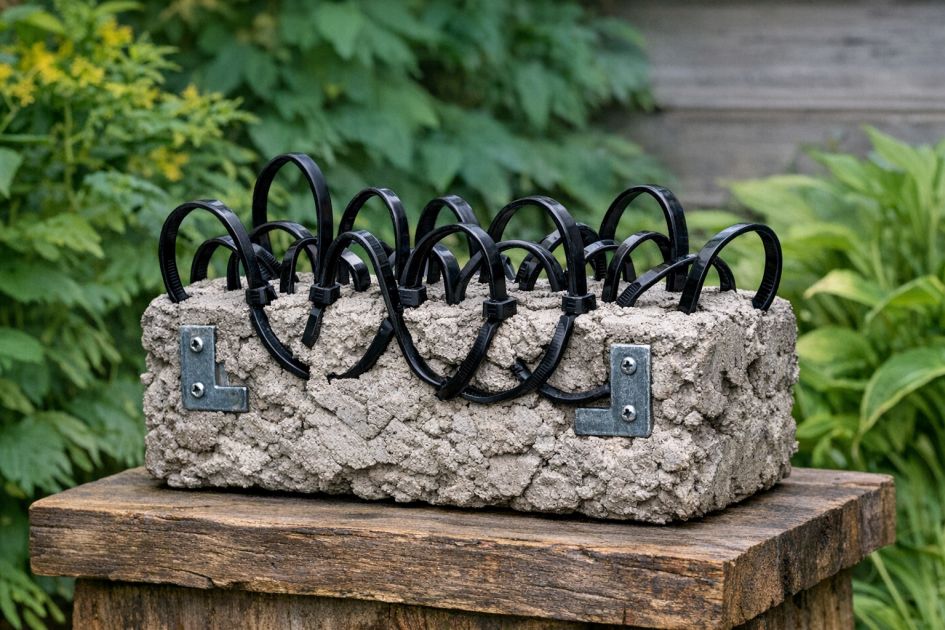
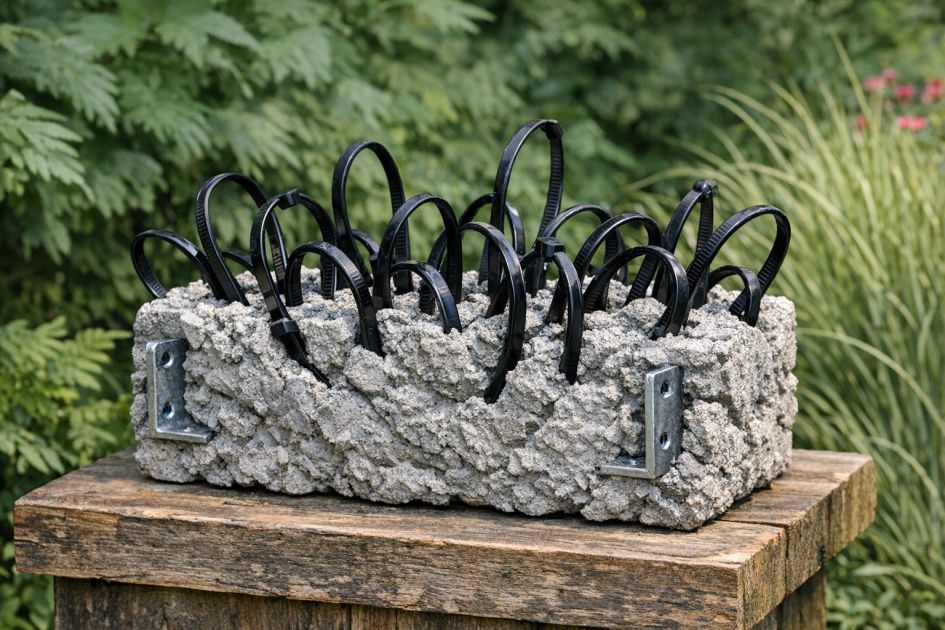
Discover the unexpected charm of creating heavy textured yard forms using only three basic materials. By submerging bundled thick plastic zip ties and two inexpensive hardware pieces into wet cement, you'll craft intriguing sculptural objects that add a touch of modern art to your outdoor space. This DIY project is not only budget-friendly but also incredibly rewarding, allowing you to transform common materials into unique decorative forms that will captivate and surprise your guests.
Place these heavy textured yard forms in a garden bed or along a pathway to create visual interest. The contrast of the cement's rough texture with the sleek black loops of the zip ties makes for a striking modern aesthetic. Pair with minimalist metal or stone garden furniture and neutral-toned plantings for a cohesive look. The dark color of the zip ties complements greenery, while the cement forms provide a neutral backdrop that adds sophistication to outdoor spaces.
Textured Cement Yard Sculptures
Materials
Thick black plastic zip ties, 50 count
Quick-setting cement, 1 bag
2 small L-brackets, galvanized steel
Directions
Prepare a shallow cardboard trough by cutting a box to the desired size, ensuring it's sturdy enough to hold wet cement.
Mix the quick-setting cement according to the instructions on the bag, aiming for a thick, pourable consistency.
Bundle the black plastic zip ties tightly using one of the L-brackets, ensuring the loops poke out irregularly.
Submerge the bundled zip ties into the wet cement in the cardboard trough, pressing down so that the loops remain visible and emerge from the surface.
Place the second L-bracket at a right angle to the first, ensuring it is also embedded in the cement for added stability.
Allow the cement to set completely according to the manufacturer's instructions, ensuring it is fully hardened before removing from the mold.
Once set, carefully peel away the cardboard trough to reveal the finished textured cement yard sculpture.
Variations & Tips
For a more personalized touch, consider adding color to the cement before pouring by mixing in concrete-safe pigments. Alternatively, you can experiment with different shapes of molds to create varied forms, such as circular or triangular bases. Try using zip ties of different colors to add a playful element or to coordinate with existing garden decor. For extra stability, especially in windy areas, consider embedding a small metal rod in the cement along with the L-brackets.