
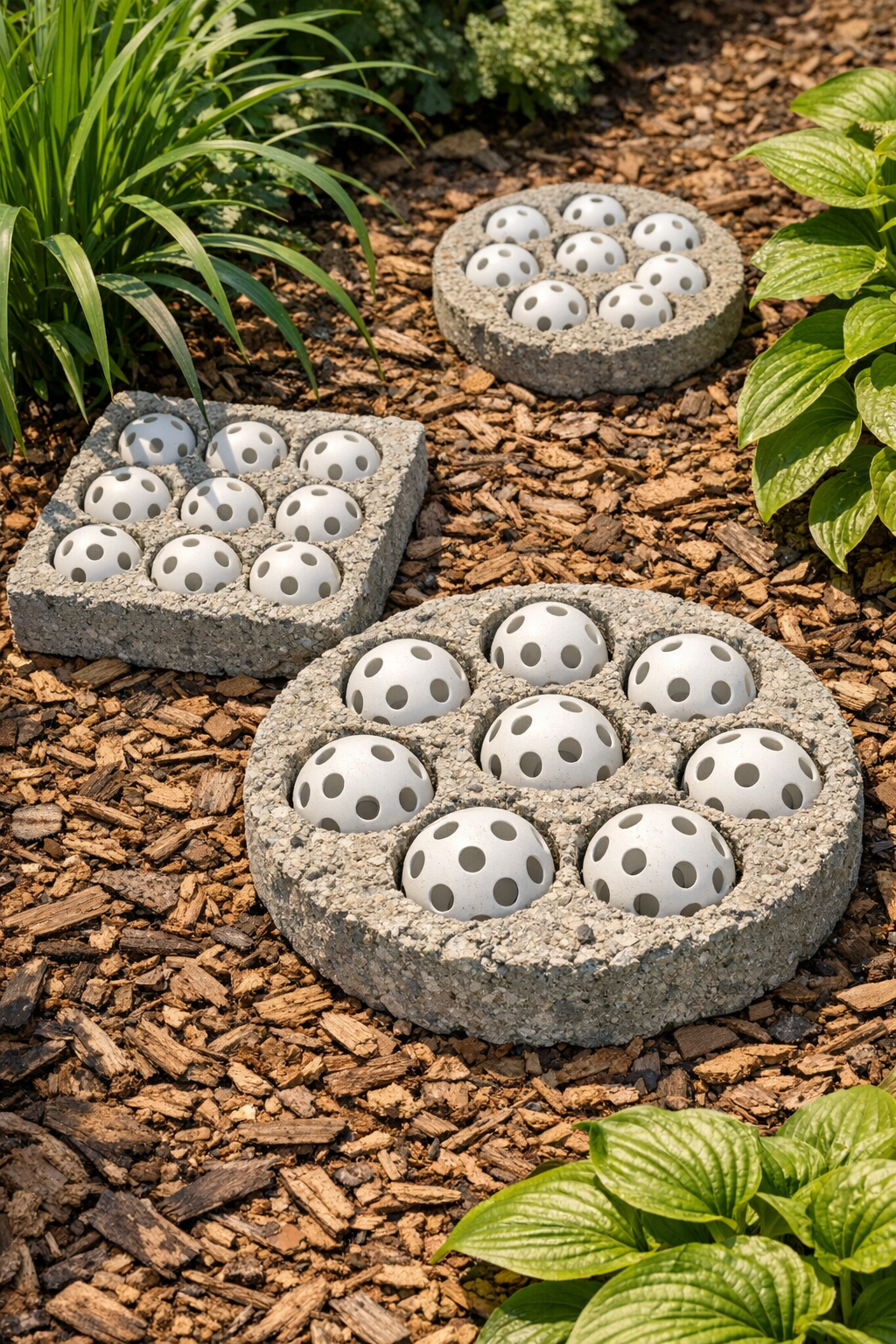
There’s something mighty satisfying about turning a few plain supplies into a piece of garden décor that looks like it came from a fancy nursery or sculpture yard. This project uses plastic wiffle balls, cement, and water to make heavy perforated yard forms that have a lovely openwork look, almost like weathered stone lanterns or garden orbs. Once they’re set out among flowers, tucked beside a path, or grouped in a bed, they bring a lot of character without looking fussy.
I’m especially fond of projects like this because they remind me of the old Midwestern habit of making do with what you had on hand and still ending up with something beautiful. If you’re comfortable mixing a small batch of cement and don’t mind a little mess, this is a very approachable weekend project for gardeners, decorators, or anybody wanting a sturdy outdoor accent.
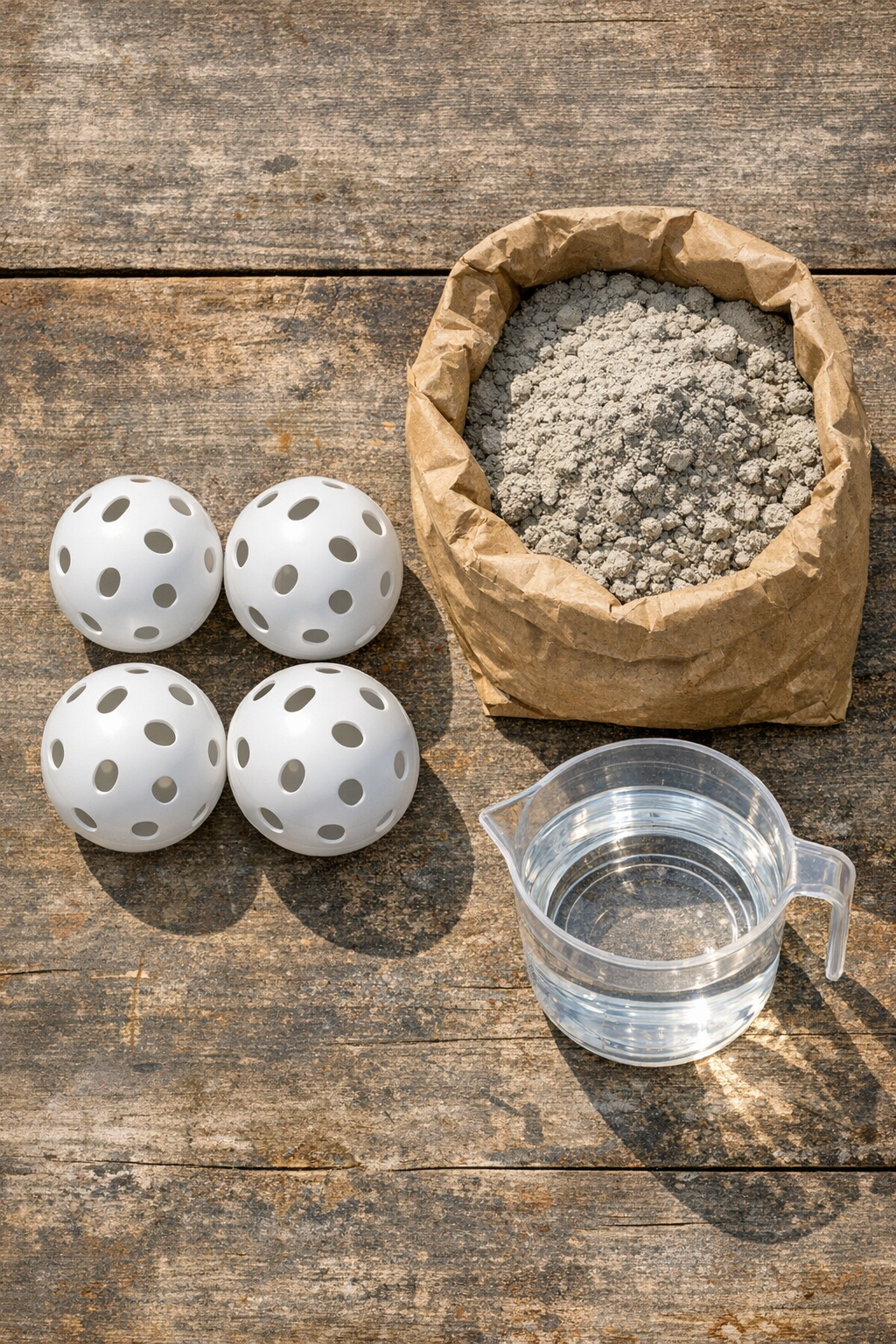
Materials
Instructions
1. Set up your work area outdoors or in a well-ventilated spot, and choose a flat surface where the cement pieces can sit undisturbed while they cure.
2. Pour 8 cups of fast-setting cement mix into a sturdy mixing bucket or tub, then add 2 cups of water a little at a time and stir until it forms a thick, scoopable paste like stiff oatmeal.
3. Let the mixture rest for 1 to 2 minutes if needed, then adjust with the remaining water a tablespoon at a time until it holds its shape without slumping flat.
4. Scoop a mound of wet cement onto your work surface for the first form, making it roughly 6 to 7 inches wide and 3 to 4 inches high.
5. Press one wiffle ball gently but firmly into the center of the wet cement mound until it is about halfway embedded, leaving the top half exposed.
6. Pack additional cement up around the lower half of the ball with your hands or a small trowel, shaping it into a rounded base and pressing the mix into some of the ball’s holes so the form locks together.
7. Smooth the outside lightly, but don’t overwork it; a slightly rough stone-like texture looks natural and helps the finished piece blend into the garden.
8. Repeat the same process with the remaining cement and wiffle balls, spacing each piece apart so they do not touch as they set.
9. Leave the forms undisturbed until the cement firms up, usually 2 to 4 hours for fast-setting mix, then check that each piece feels solid before moving it.
10. Cure the pieces for 24 to 48 hours in a dry place so they gain strength, then set them in your garden beds, along a walkway, or in pots as heavy decorative yard accents.
Variations & Tips
Make a larger statement: Use bigger wiffle balls and proportionally more cement if you want bolder garden pieces, but keep the cement thick so the forms hold their shape.
Cluster them in odd numbers: I like these best in groups of three or five, the same way my mother grouped crocks on the porch steps; it gives a more natural, collected look.
Play with texture: Pat the outside with a gloved hand, a stiff brush, or even a rough rag before the cement sets if you want more of an aged stone finish.
Use them as pot toppers: Smaller versions look charming in large flowerpots where a little weight helps keep things from tipping in summer wind.
Mind the cure time: Even if they feel firm early on, let them cure fully before putting them out in the weather so they stay strong and resist chipping.
Keep the look rustic: These are prettiest when they’re not too perfect. A few uneven edges and a hand-shaped finish give them that old farm garden charm I’ve always loved.