
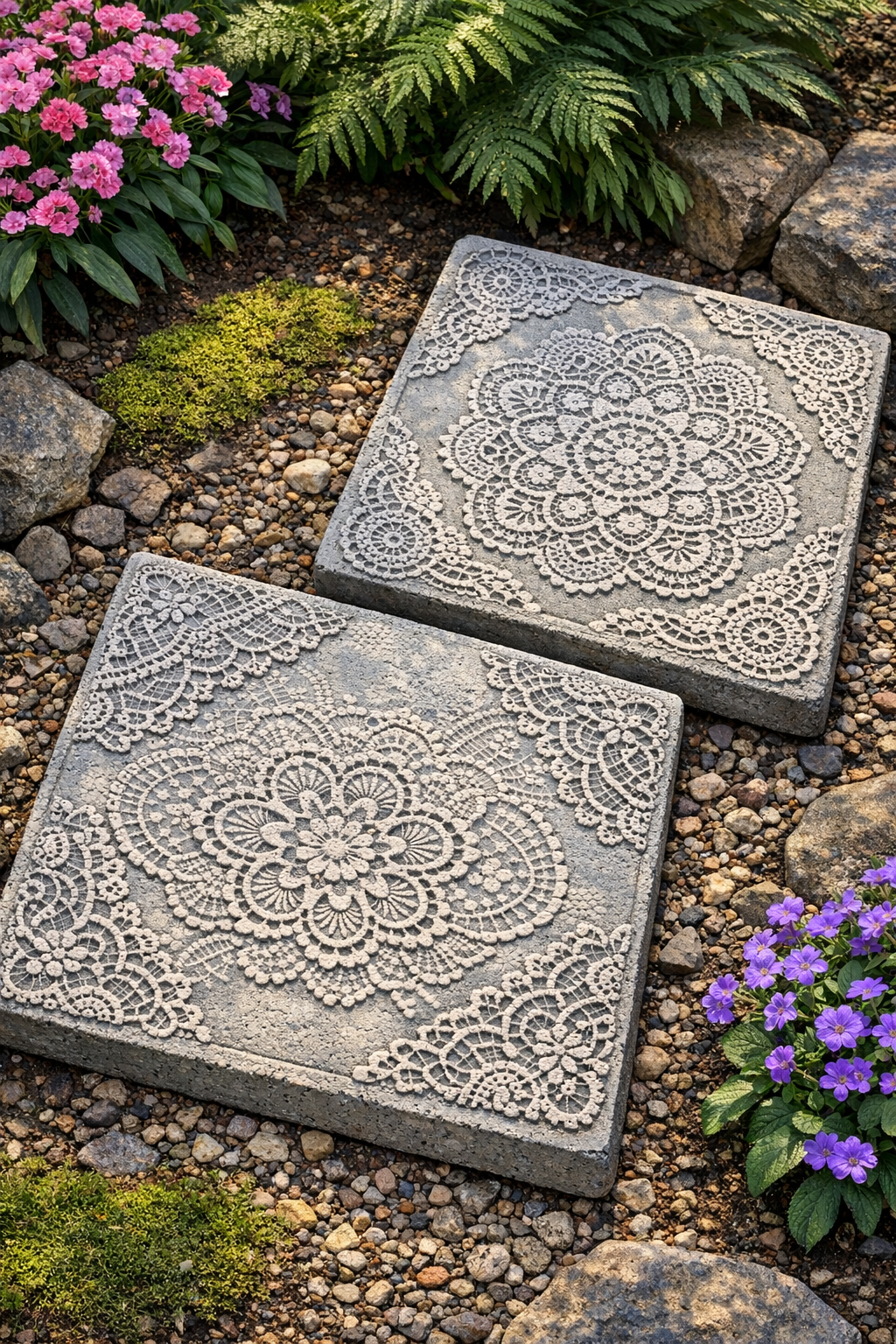
There’s something deeply satisfying about turning two humble things into a patio piece that looks like it came from a garden shop. This project uses an old vinyl lace tablecloth and wet cement to make heavy embossed stepping forms with all that pretty raised pattern pressed right into the surface. It reminds me of the kind of thrifty, make-do creativity I grew up around, where nothing useful was wasted if it still had one good job left in it.
If you want an outdoor project that feels approachable but gives a truly striking result, this is a good one. These embossed patio forms are wonderful for garden paths, tucked between flower beds, or set as decorative accents near a porch or birdbath, and you don’t need a workshop full of tools to pull it off.
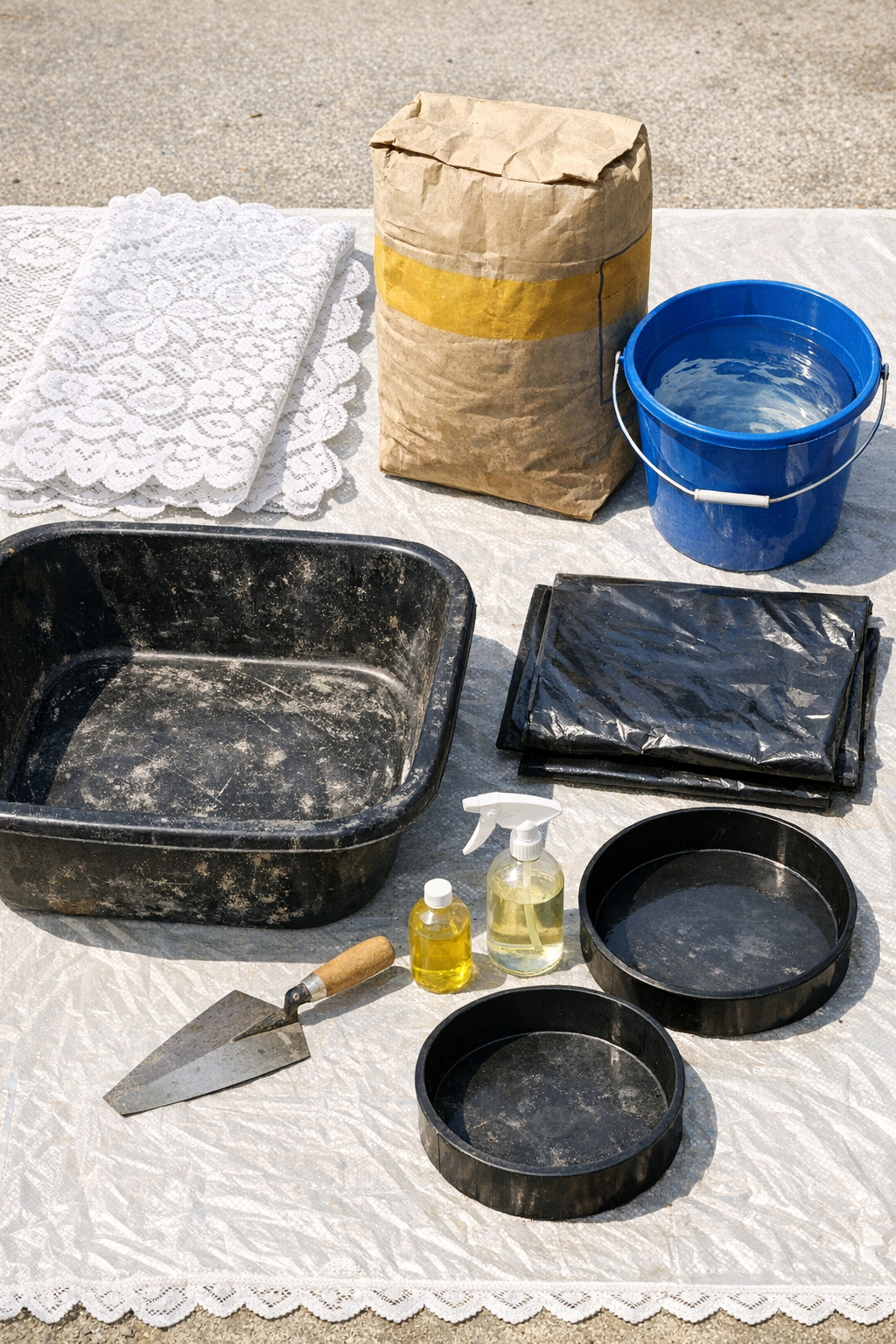
Materials
Instructions
1. Set your molds on a flat, level surface outdoors, and lightly coat the inside with cooking oil or mold release so the cement will release cleanly later.
2. Cut or fold the vinyl lace tablecloth into two pieces slightly larger than your molds, and smooth each piece flat with the lace side ready to press into the cement.
3. Mix the concrete in your tub with water a little at a time until it reaches a thick brownie-batter consistency that holds its shape when scooped.
4. Fill each mold with about 2 inches of wet cement, then tap the sides and bottom of the molds several times to settle the mix and release air bubbles.
5. Use the trowel to smooth the tops evenly, making sure the surface is level and free of ridges before adding the lace.
6. Lay one vinyl lace piece over each mold and gently smooth it down with the trowel so the pattern presses into the wet cement without shifting.
7. Press firmly but evenly across the whole surface, especially around the edges, so the lace leaves a deep, clear impression in the cement.
8. Let the cement firm up for 30 to 60 minutes, then carefully peel back one corner of the vinyl to check the pattern; if the design looks soft, lay it back down and wait a bit longer.
9. Once the surface can hold the imprint, remove the vinyl completely and clean up any rough edges with the trowel while the cement is still slightly workable.
10. Cover the forms loosely with plastic and let them cure undisturbed for 24 to 48 hours, then unmold and allow them to finish curing for about 5 to 7 days before placing them on the patio or in the garden.
Variations & Tips
Shape choice: Round forms feel especially old-fashioned and pretty in a cottage garden, but square forms make a tidy walkway if you want a more orderly patio look.
Pattern depth: Thick vinyl lace usually gives the best embossing because it doesn’t collapse into the cement the way flimsier fabric can. If your tablecloth is very thin, press gently and check the imprint sooner.
Color option: If you like, you can add concrete tint to the mix for a warmer stone shade. Soft charcoal, terracotta, or sandstone colors all look handsome outdoors.
Surface tip: Work on a level surface from the start. If the molds sit unevenly, the finished forms will cure lopsided, and that’s hard to correct later.
Weather wisdom: I prefer making concrete pieces on a mild day out of direct hot sun. Too much heat dries the surface too quickly and can weaken the crispness of the pattern.
Placement idea: These are lovely nestled between thyme, creeping Jenny, or low sedum. That contrast between delicate lace and sturdy cement has a charm to it that never gets old.