
I love a thrift-store project that looks surprisingly polished when it’s done, and this one absolutely checks that box. For this patio hack, I turn an old folding metal TV tray stand into a crochet-style outdoor bar cart cover by weaving and looping thick jute twine right through the frame. The result has that breezy, summery texture that makes even a basic patio corner feel styled on purpose.
If you’ve got a sad little tray stand sitting in the garage or you spot one for a few dollars at the thrift store, this is a very doable weekend project. I’m always looking for ways to make outdoor spaces feel more finished without spending patio-furniture money, and this is the kind of build that works well for beginners because the frame does most of the hard part for you.
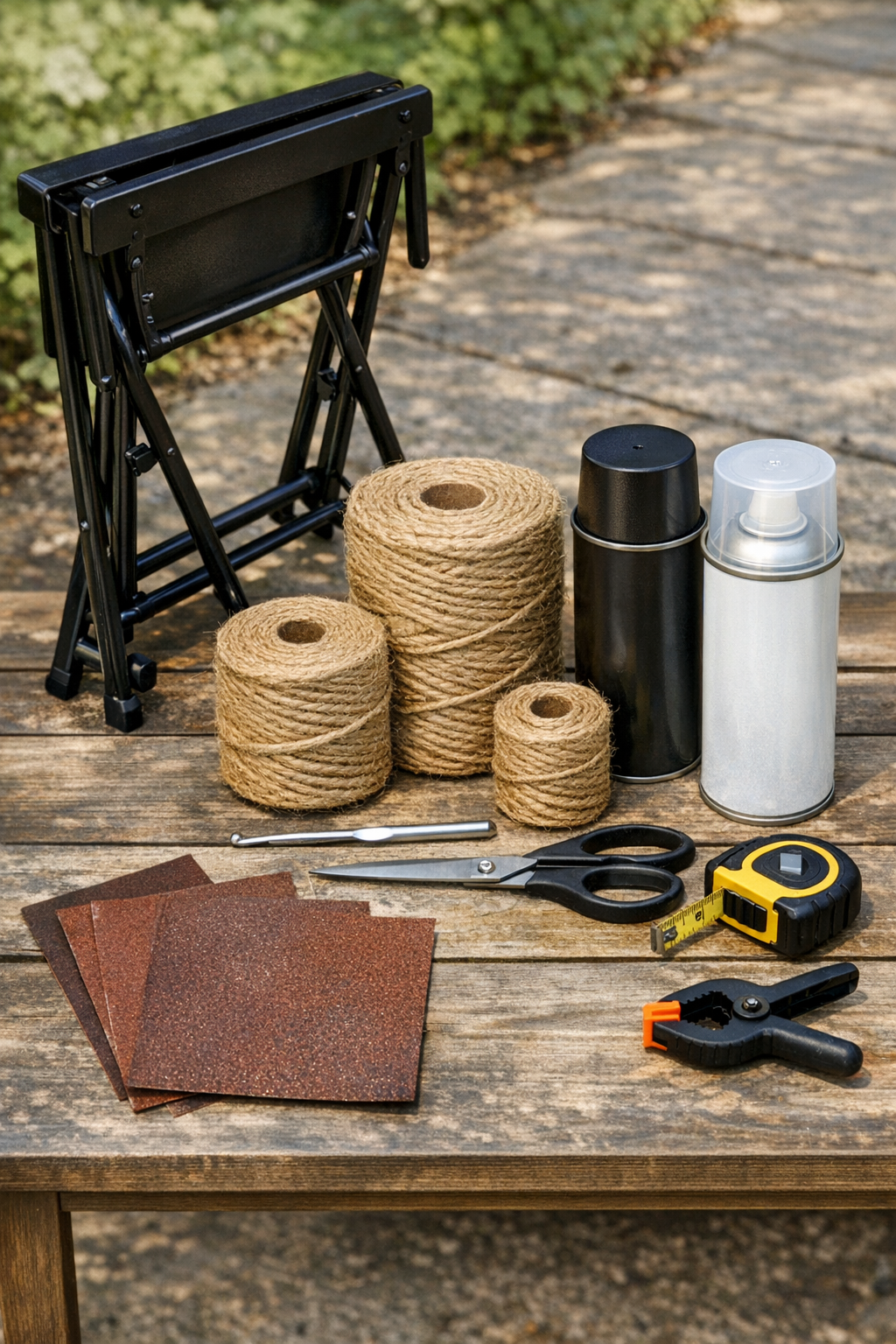
Materials
Instructions
1. Open the TV tray stand fully and check that it sits flat without wobbling. Tighten any loose screws or gently bend misaligned sections back into place before you start weaving.
2. Clean the metal frame with a damp cloth and let it dry completely. If there is rust or flaking paint, sand those spots smooth with 120-grit sandpaper.
3. If you want a cleaner finished look, spray-paint the frame in black, white, or bronze and let it dry according to the can directions. I like doing this the night before so I can start the twine work with a fully cured surface.
4. Measure the inside width and height of the stand’s side opening so you know the area you’ll be filling with jute. Cut a starter length of 6 mm jute twine about 8 feet long so it’s easier to handle than working directly from a huge spool.
5. Tie the twine securely to one lower corner of the frame with a double knot, leaving a 4-inch tail. Wrap the tail around the frame and tuck it under the first few loops to hide it.
6. Work vertical foundation strands first by stretching the jute up to the top rail, looping it around, and bringing it back down in evenly spaced rows about 3/4 inch apart. Clip the strands in place with clamps as you go so the spacing stays neat.
7. Once the vertical strands are in place, begin crocheting or looping the jute horizontally through them using the large crochet hook. Pull each loop snug but not overly tight so the panel stays flat instead of bowing the frame inward.
8. Continue across the panel row by row, weaving over and under the vertical strands to create an open, netted texture. Add more 8-foot lengths with tight square knots as needed, placing the knots near the frame where they are less visible.
9. Repeat the same weaving process on the second side of the stand if you want a fuller bar-cart look. For a lighter, airier version, cover just the two larger side openings and leave the narrower ends open.
10. Wrap the medium 3 mm jute around the outer edges of each finished panel to tidy the borders and cover any visible knots. Tie off each end with a double knot and tuck the tails behind the wrapped sections.
11. Lightly spray the finished jute panels with clear outdoor matte sealer if the cart will stay on a covered patio. Let the sealer dry fully before moving the stand so the twine keeps its shape.
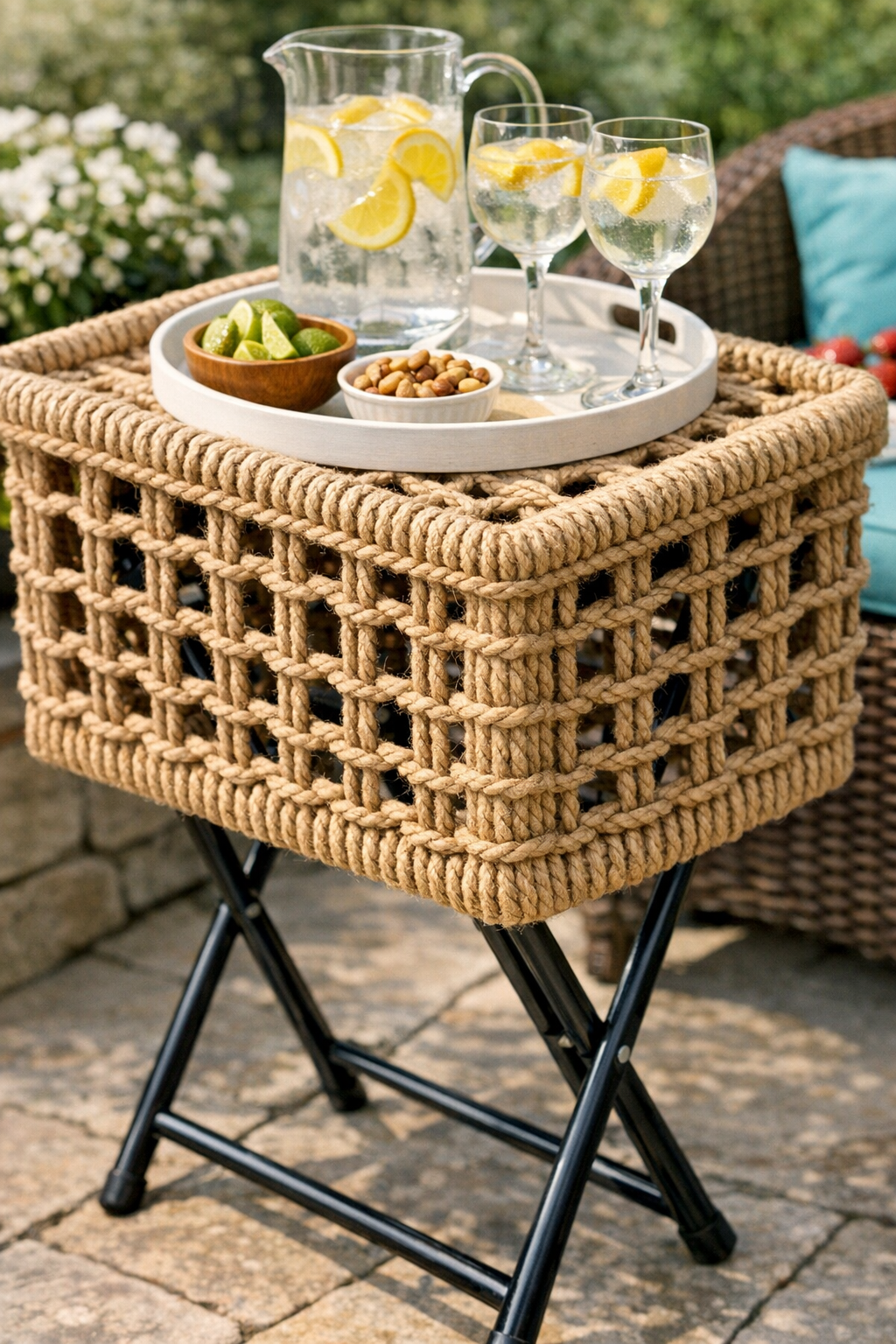
12. Set an outdoor-safe tray or fitted wood top across the stand to create the serving surface, then style the lower area with bottles, rolled towels, or a planter basket. Keep heavier items centered so the folding frame stays balanced and easy to move.
Variations & Tips
For a softer look: Use natural tan jute on a white-painted frame for a coastal feel. This is probably my favorite version for summer because it looks light even when the structure itself is pretty simple.
For more durability: Swap some or all of the jute for 5 mm polypropylene rope if your cart will live outdoors full-time. It gives a similar woven look but handles moisture better than natural fiber.
If you don’t crochet: You can still make this by hand-weaving and looping the twine through the vertical strands without formal crochet stitches. The frame and the thick rope are forgiving, which is ideal when you’re squeezing in a project after work.
To make it more functional: Zip-tie a removable tray, wood shelf, or acrylic panel to the top so glasses and pitchers sit securely. I’d do this if you plan to actually use it for weekend hosting instead of just décor.
To keep it neat: Cut twine in manageable lengths instead of dragging the full spool through every row. It takes a little more joining, but it saves a lot of frustration and makes the weaving go much faster.
For apartment patios or small decks: Cover only one or two sides of the stand and use the open area for easy storage access. It still gives you the same trendy wrapped look without making the piece feel bulky.