
An outdoor rug can change the whole feeling of a porch, but I’ve never cared much for paying a hefty price for something that’s going to sit in sun, dust, and muddy boots. This painted seagrass mat project is one of those practical little makeovers I truly love: simple, affordable, and handsome enough to make the front porch feel tended and welcoming.
It’s a fine project for beginners, too, because there’s no sewing, no carpentry, and no fancy equipment involved. If you can tape down a stencil and use a paintbrush or foam roller with a light hand, you can make this. It reminds me of the kind of no-nonsense porch spruce-up my neighbors would have admired back home—something sturdy, useful, and pretty all at once.
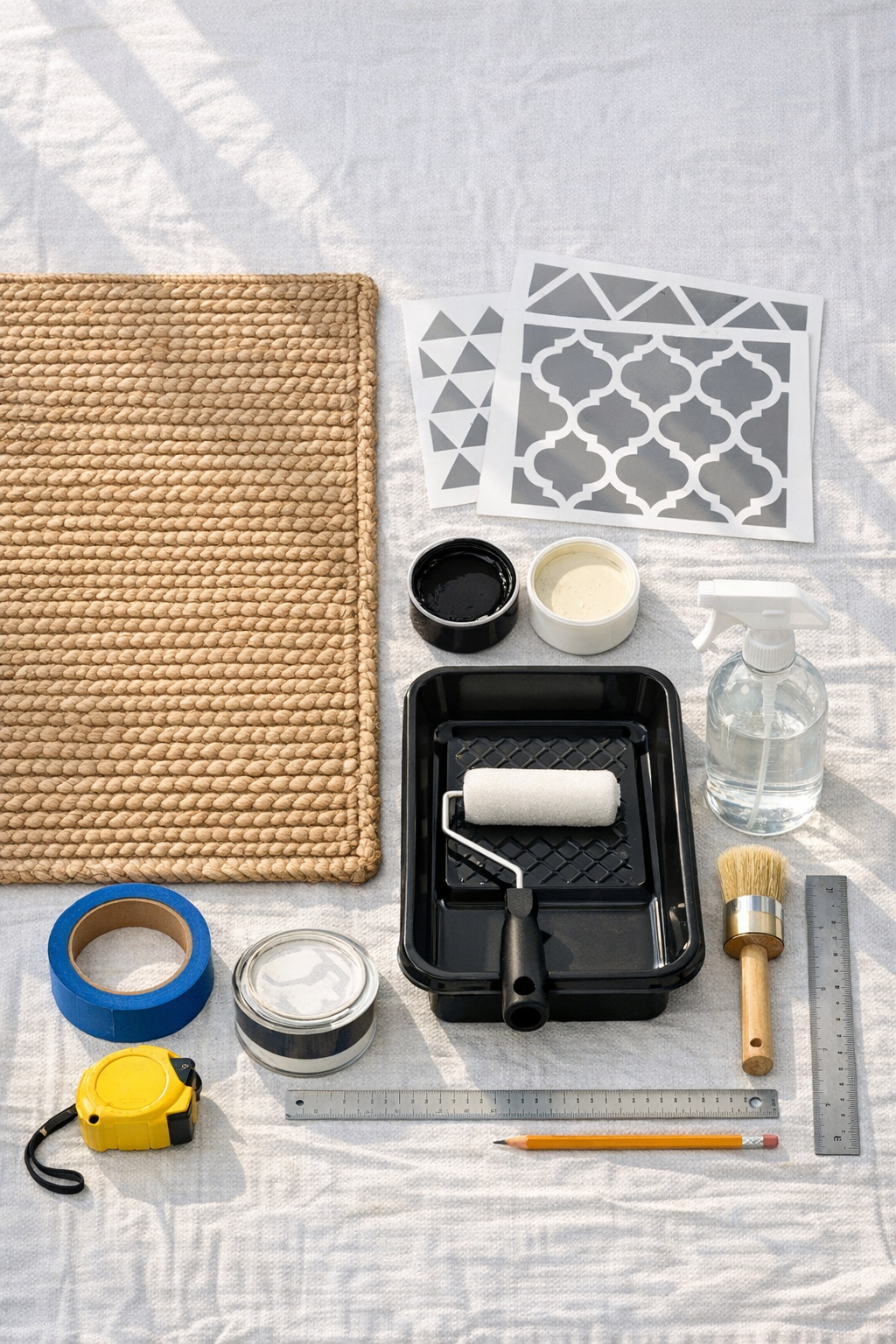
Materials
Instructions
1. Lay the drop cloth on a flat surface outdoors or in a well-ventilated work area, then place the seagrass mat on top and brush off any loose dust or fibers with a dry rag.
2. Measure the mat and decide where your stencil pattern will begin so the design looks centered from side to side and reasonably even at the edges.
3. Mark light guide points with pencil along the mat’s edges, then position the stencil and secure it with painter’s tape and binder clips or weights so it won’t shift while you paint.
4. Pour a small amount of exterior paint into the tray and load the foam roller lightly; you want the roller almost dry to keep paint from bleeding under the stencil.
5. Roll or pounce the paint over the stencil openings in thin layers, working straight up and down instead of sweeping sideways across the weave.
6. Lift one corner of the stencil to check coverage, then remove it carefully and set it down in the next position using your guide marks to keep the pattern lined up.
7. Repeat the stenciling across the full mat, allowing each section a few minutes to set before placing the stencil over nearby painted areas.
8. Use the stencil brush to touch up small gaps in the pattern, especially where the woven texture causes little skips in the paint.
9. If you’d like a two-color look, let the first color dry for 1 to 2 hours, then add the second color in selected parts of the stencil pattern with a nearly dry stencil brush.
10. Let the entire mat dry flat for at least 24 hours, or according to the paint label, until the surface no longer feels tacky.
11. Apply a thin, even coat of clear exterior sealer over the painted surface with the foam roller, then allow it to dry completely before moving the mat.
12. Place the finished rug on your porch in a covered or partly covered area, and give it another full day to cure before heavy foot traffic.
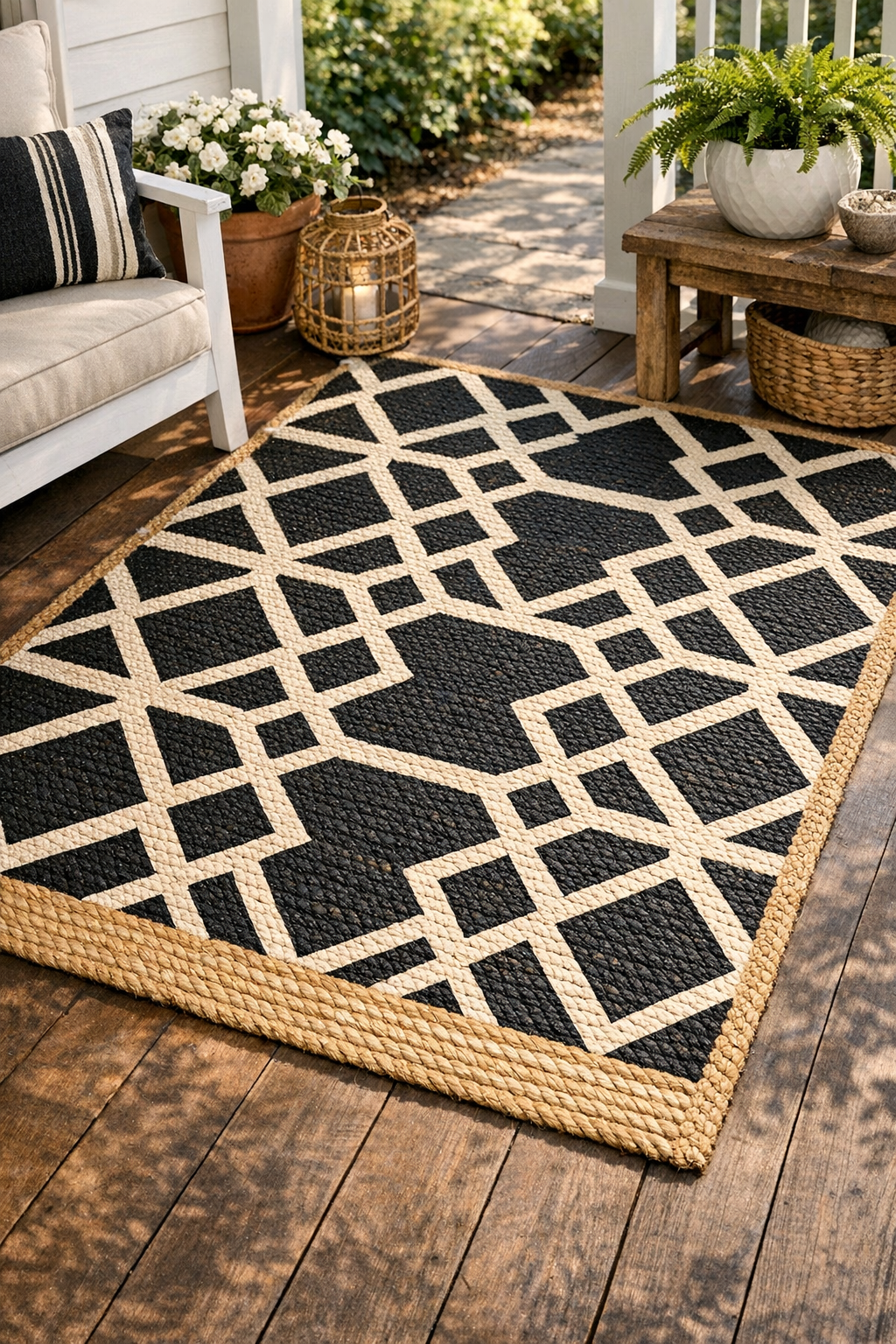
Variations & Tips
Porch color match: If your porch has shutters, cushions, or a painted front door, pull one color from those features so the rug looks like it belongs there from the start.
Softer pattern option: For a more faded, farmhouse-style finish, use less paint on the roller and let a little of the natural seagrass show through the design.
Stencil choice: Bold geometric patterns tend to hide dirt better than delicate ones, which is especially handy on a hardworking porch.
Paint control: The biggest trick is using less paint than you think you need. I’ve learned over the years, whether in the kitchen or at the craft table, that restraint often gives the prettiest result.
Weather placement: This rug will last best in a covered entry or screened porch rather than out in constant rain, since seagrass is a natural fiber.
Cleaning tip: Shake the rug out regularly and spot-clean gently with a barely damp rag; soaking it can loosen the fibers and shorten its life.
Edge border variation: If you don’t want an allover stencil, tape off a 3-inch border around the mat and stencil only the center for a tidy, classic look.