
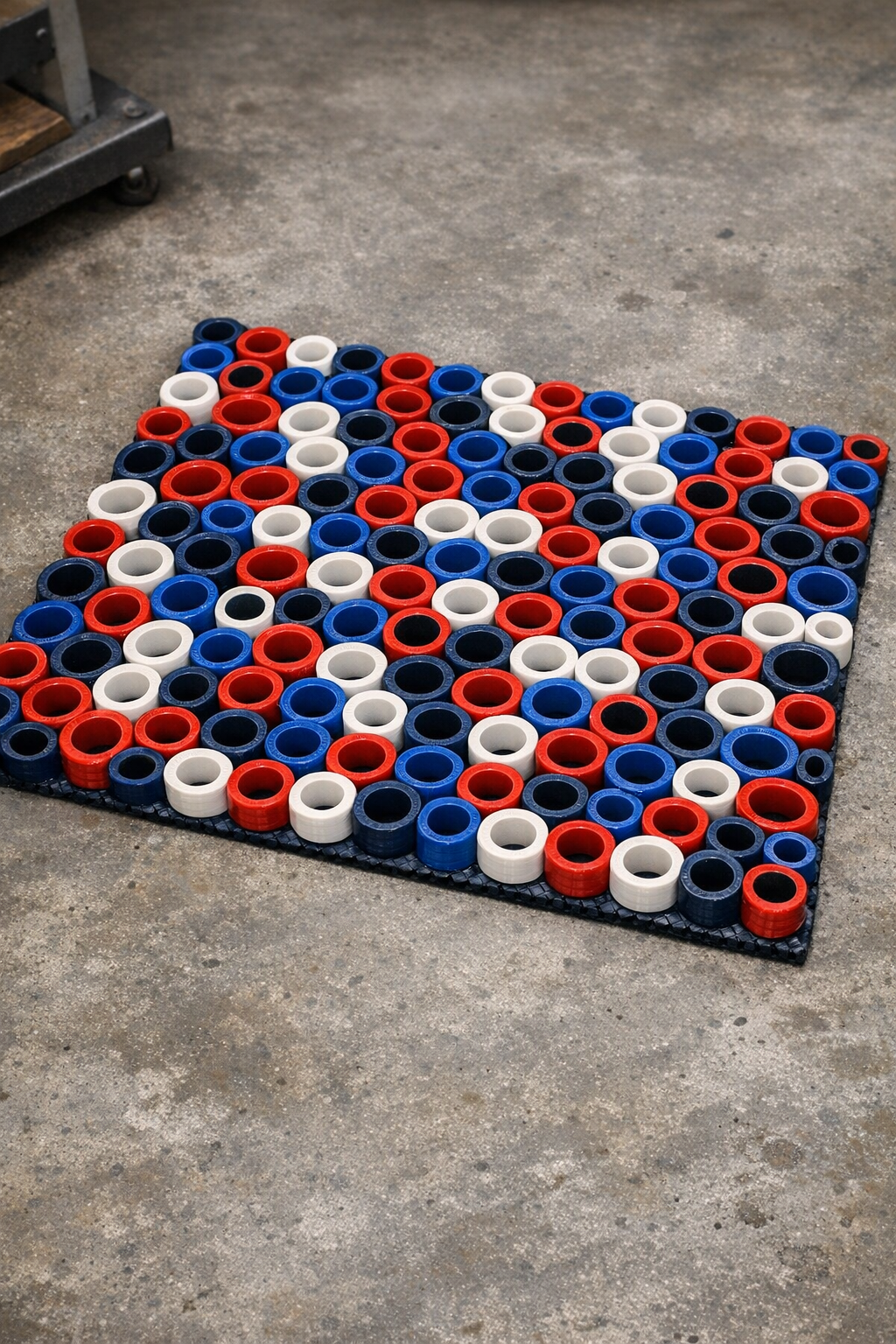
I’ve always had a soft spot for projects that turn plain, practical things into something sturdy and good-looking, and this one does exactly that. These heavy-duty shop mats are made by chopping up red, white, and blue plastic garden hoses, arranging the slices, and baking them just enough to fuse into a thick, durable mat that can stand up to muddy boots, workshop mess, or a hardworking porch entry.
Out where I live, we don’t throw out a good idea just because it sounds unusual at first, and this is one of those projects folks talk about after they see it in person. If you like upcycling, need a rugged mat, or just enjoy making something useful with your own two hands, this is a satisfying weekend project with a wonderfully surprising finish.
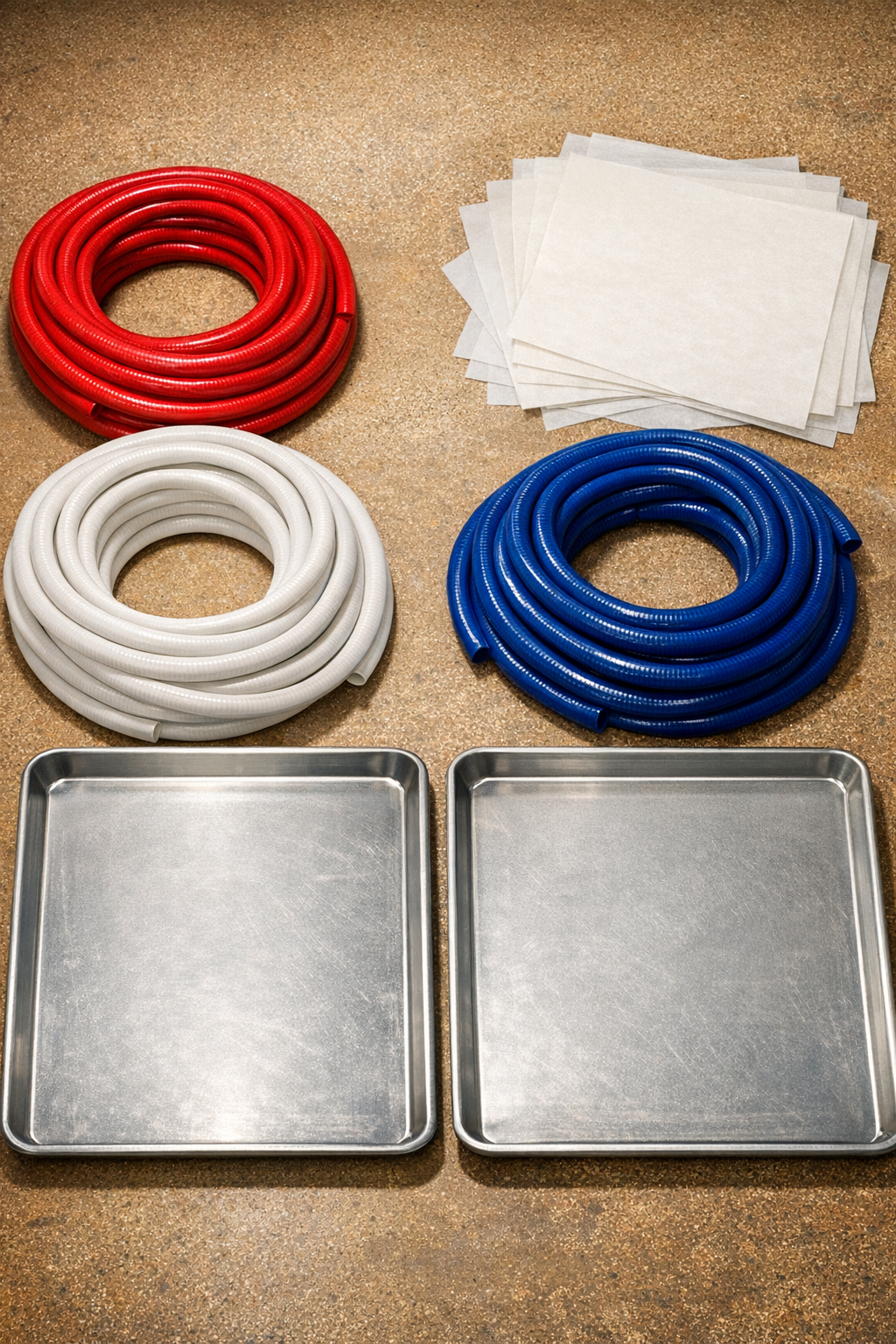
Materials
Instructions
1. Preheat your oven to 275°F and line both rimmed baking sheets with parchment paper so the hose pieces won’t stick as they soften.
2. Cut all three hoses into even slices about 1/2 inch thick, making enough pieces to fill one baking sheet in a tight single layer. Try to keep the cuts as straight as you can so the finished mat sits flatter.
3. Arrange the hose slices on one parchment-lined baking sheet in a tight pattern, alternating the red, white, and blue pieces so the colors are spread evenly. Keep each piece touching its neighbors so they can fuse together in the oven.
4. Cover the arranged slices with a second sheet of parchment paper and set the second baking sheet on top to gently press everything flat as it bakes.
5. Bake for 25 to 35 minutes, until the hose slices have softened and fused at the edges. Check through the oven window near the end; you want them joined together, not melted into a puddle.
6. Remove the tray from the oven and let the mat cool for 15 to 20 minutes before lifting off the top baking sheet and parchment. If any edges have not bonded, return it to the oven for 5 more minutes and cool again.
7. Peel the cooled mat from the parchment and trim away any uneven edges by cutting off loose pieces around the outside. For a larger mat, repeat the process to make a second panel and bake the two panels touching edge-to-edge for 10 minutes to fuse them together.
8. Let the finished mat cure at room temperature for several hours before putting it to work in the shop, mudroom, or by an outdoor door. Once fully cooled, it should feel thick, flexible, and sturdy underfoot.
Variations & Tips
Make it larger: Build the mat in two or three smaller panels first, then fuse the panels together in a final short bake. That’s often easier than trying to handle one oversized tray all at once.
Use a tighter pattern: If you want a stronger finished mat, nest the hose slices as closely as possible before baking. The more contact points there are, the better the pieces bond.
Change the shape: A rectangle is simplest, but you can trim the outer edge into a square, runner, or small boot mat once the piece has cooled completely.
Watch the oven closely: Plastic can go from softened to overdone in a hurry, so I treat this like old-fashioned candy on the stove and keep an eye on it. You want fusion, not scorching.
Reserve this project for utility spaces: This mat is best for a shop, garage, porch, or mudroom where toughness matters most. It’s a hardworking piece, not a delicate one, and that’s exactly its charm.