
I love a project that looks surprisingly polished but starts with the kind of supplies you can toss into your cart while grabbing paper towels and iced coffee. This patriotic outdoor patio tiling is exactly that kind of makeover: sliced red, white, and blue rubber flip flops turned into a fun, cushy mini tile surface with just two other household basics. It gives a small patio corner, plant stand area, or balcony nook a bright summer update without the cost of real outdoor tile.
Because I juggle a full workweek and still want my outdoor spaces to feel cute and intentional, I’m always looking for projects I can finish in an afternoon. This one is great if you want a festive look for Memorial Day, the Fourth of July, or just a playful red-white-and-blue setup that can handle outdoor use a lot better than paper decorations.
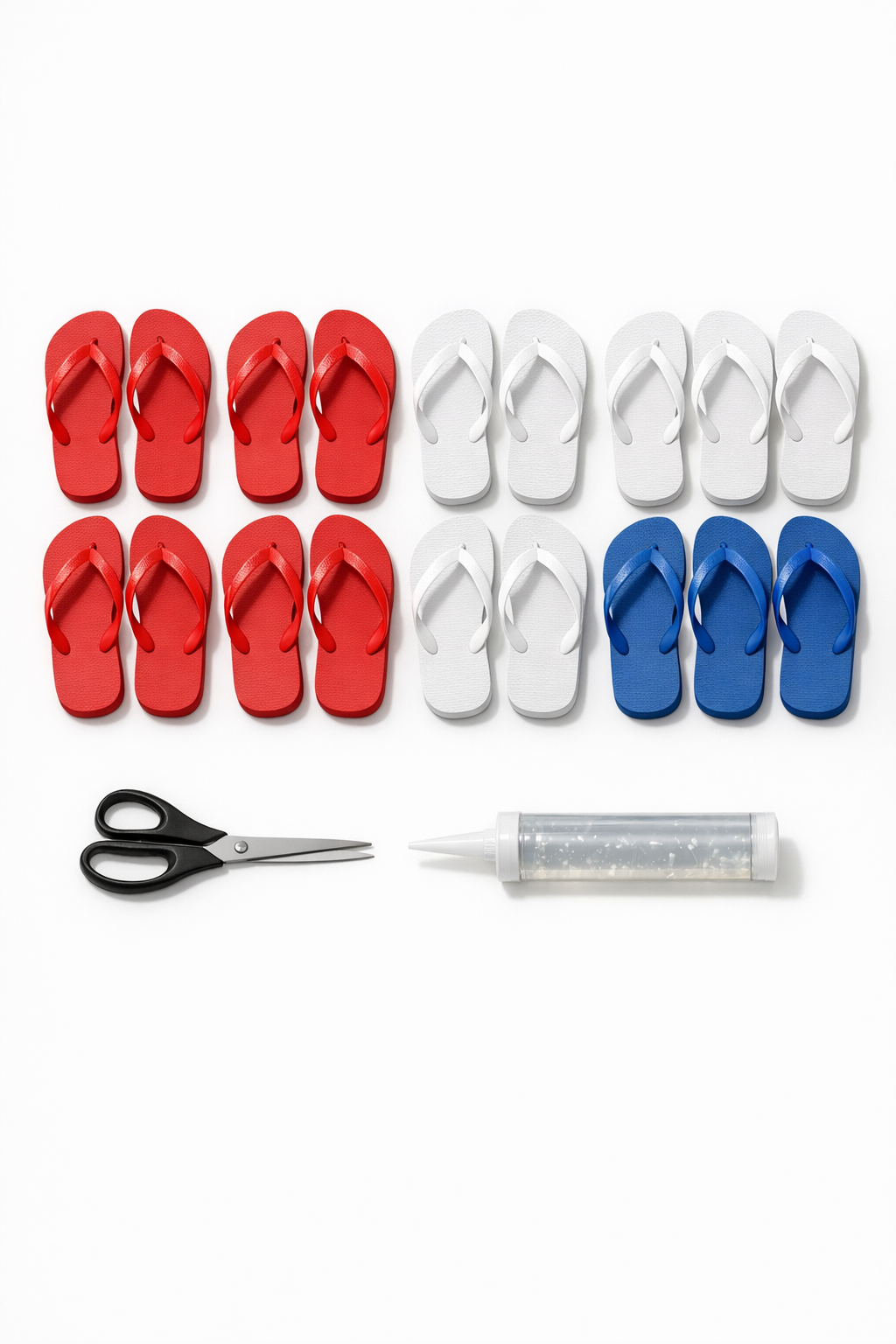
Materials
4 pairs red rubber flip flops, adult size, about 10 to 11 inches long each
Instructions
1. Clean the patio area or the small surface you want to cover, then let it dry fully so the adhesive bonds well. I like to map out a rectangle first, because it keeps the finished pattern looking intentional instead of random.
2. Pull the straps out of all 12 pairs of flip flops so you are left with flat rubber soles. If any soles curl a bit, press them flat under a heavy book for 15 to 20 minutes.
3. Cut each sole crosswise into strips about 1/2 inch wide to make your faux tile pieces. Keep the strips as even as possible so the finished surface looks more like a tiled mosaic and less like scraps.
4. Dry-fit the strips on your patio surface in a simple repeating pattern, alternating red, white, and blue rows or creating a checkerboard effect with short cut sections. Step back and adjust the layout before gluing anything down.
5. Spread a thin line of waterproof outdoor adhesive onto a small section of the patio, working in areas about 12 inches square at a time. Press the rubber strips into the adhesive firmly, leaving little to no gap between pieces.
6. Continue gluing section by section until the whole tiled area is covered. Mix long strips and shorter cut pieces where needed so you can fill edges neatly without awkward empty spots.
7. Trim any overhanging pieces with scissors once the adhesive is still slightly flexible but the strips are secure. This gives the perimeter a straighter, more finished edge.
8. Let the adhesive cure according to the package directions, usually 24 hours, before placing furniture or walking on it. Once cured, brush off any debris and enjoy your new patio accent tile area.
Variations & Tips
Use a smaller zone: If covering a full patio feels like too much, make a tiled square under a planter, side table, or cooler station instead. I think this is the sweet spot for a busy weekend project.
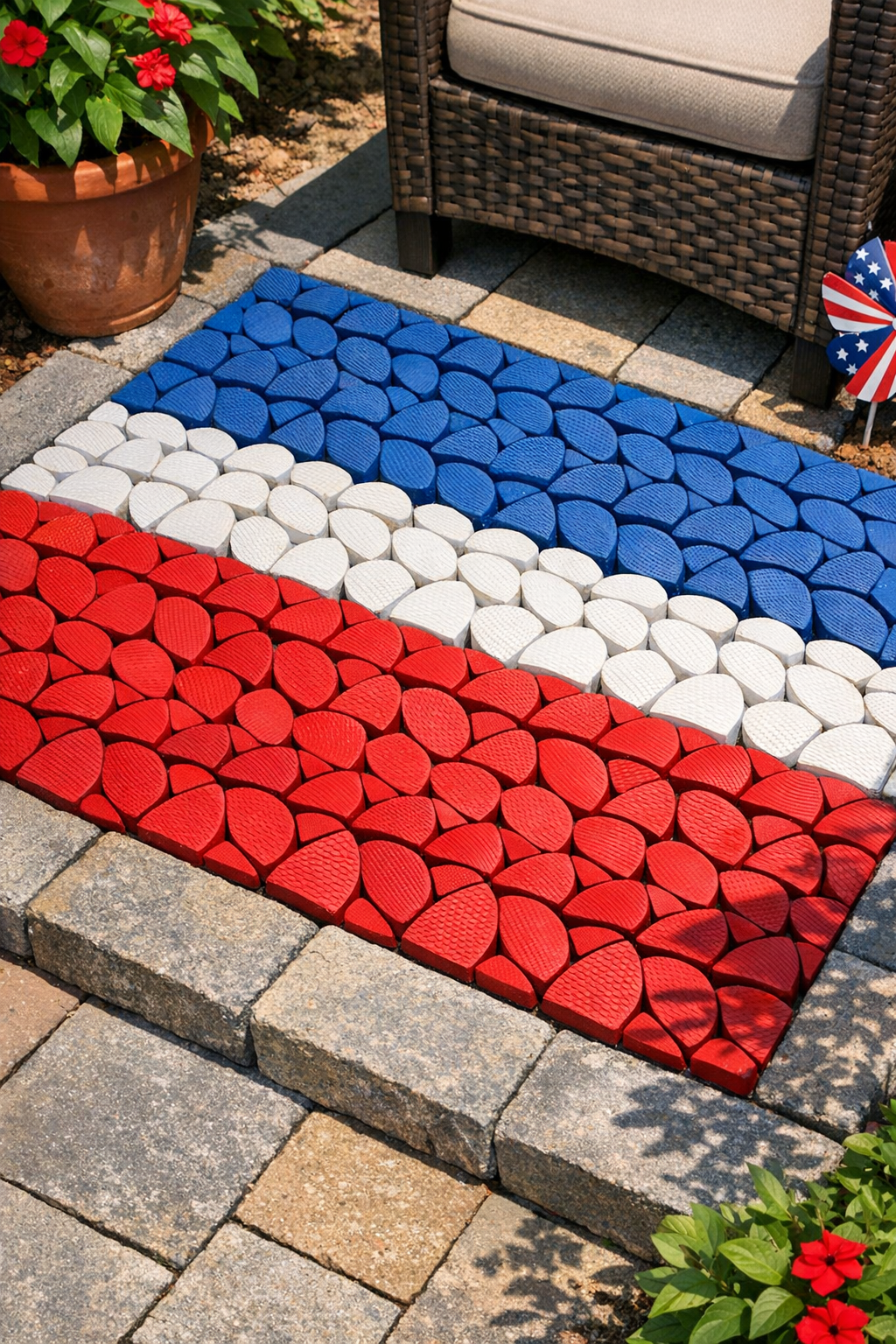
Try a flag-inspired layout: Use blue in one corner and alternate red and white rows through the rest of the design for a subtle American flag effect. It reads festive right away without needing extra decorations.
Choose thicker flip flops: The denser the rubber sole, the easier it is to cut neat strips that hold their shape. Super-thin pairs can work, but they tend to look less crisp once installed.
Work in shade: If you glue in direct hot sun, the adhesive can tack up faster than you want. I’ve learned the hard way that outdoor projects almost always go more smoothly in early morning or late afternoon.
Test the adhesive first: Before committing, glue a couple of sample strips to a spare paver or hidden corner and let them cure. That quick test can save you from redoing the whole thing if your patio surface is dusty, sealed, or extra rough.
Keep it seasonal or permanent: For a temporary summer accent, tile a removable board or outdoor tray instead of the patio itself. For a longer-lasting version, apply directly to a concrete paver section or small dedicated patio inset.