
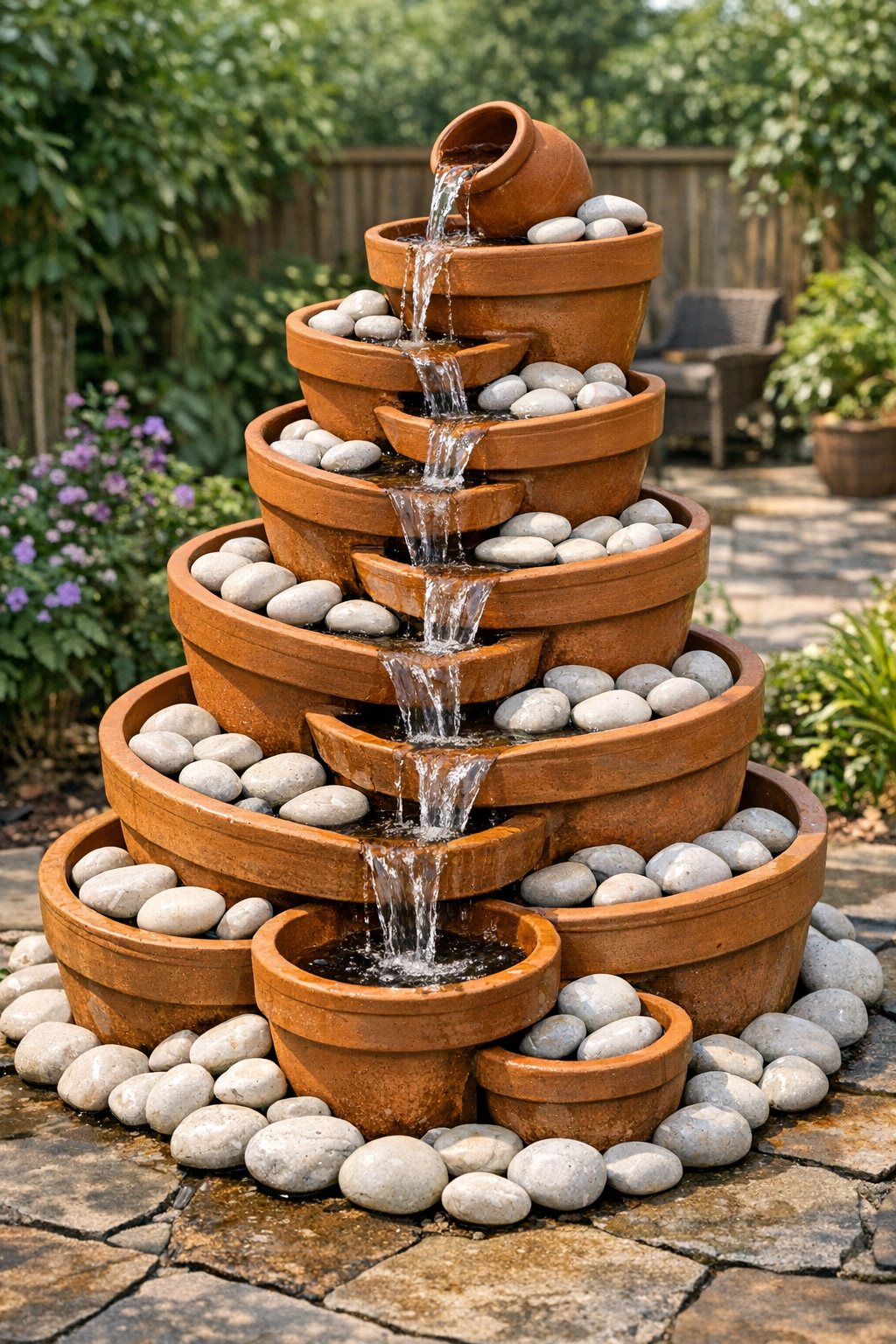
This cascading backyard fountain is one of those projects that looks far more expensive than it is. By stacking a series of heavy terracotta pots and tucking smooth white river rocks around the basins, you can build a sculptural water feature that adds movement, sound, and a lovely Mediterranean feel to an ordinary patio or garden corner.
I’m always drawn to projects that bring the same satisfaction as a well-balanced dish: simple ingredients, careful layering, and a finish that feels special. This fountain is a good fit for anyone who wants a statement piece without masonry work or a fully built pond, and it’s especially practical if you have a small backyard, a side yard, or a quiet seating area that needs a focal point.
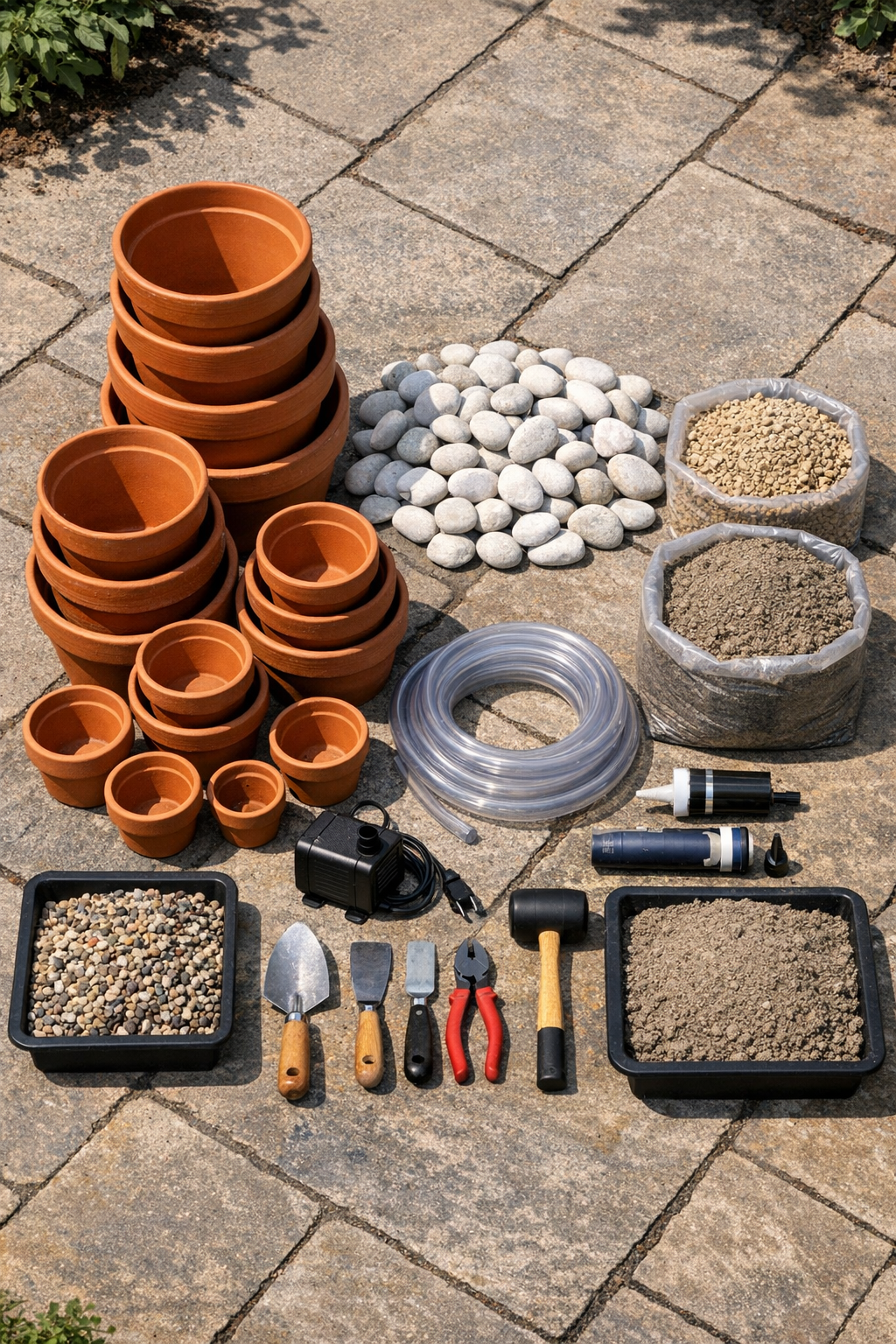
Materials
Instructions
1. Choose a level spot near a GFCI-protected outdoor outlet, and make sure the finished fountain will have at least 2 feet of clearance on all sides for easy assembly and maintenance.
2. Mark out the footprint of the basin, then dig down just enough so the reservoir can sit nearly flush with the surrounding ground or patio grade.
3. Add the paver base and a thin layer of sand, compact them firmly, and set the reservoir into place so it sits level from front to back and side to side.
4. Place the three concrete pavers inside the basin as a stable platform for the pump and the central stack, then set the pump on one side where you can still reach it later.
5. Attach the vinyl tubing to the pump outlet, wrap the connection with plumber’s tape if needed for a snug fit, and run the tubing upward through the center of where the stacked pots will go.
6. Set bricks or paver blocks around the reservoir rim, lay the support grate across them, and cut or adjust the grate so the tubing can pass through the center cleanly.
7. Dry-stack your 15 terracotta pots beside the fountain first, arranging them from largest at the base to smallest near the top, and alternate slight angles so the water can spill from one pot into the next.
8. Place the largest pot over the center tubing on the grate, using a nursery pot or upside-down support inside it if needed to raise the next pot and reduce dead space.
9. Continue stacking the remaining pots one at a time, threading each through the tubing and checking stability as you go, with each upper pot tipped just enough to direct water into the pot below.
10. Once the arrangement looks balanced, use small beads of waterproof silicone at key contact points between pots to keep them from shifting, then let the sealant set according to the product instructions.
11. Feed the tubing to the very top pot, trim off any excess, and position the end so water will emerge at the top and overflow naturally through the stacked sequence.
12. Add pea gravel around the base pots and over any visible grate sections, keeping the pump access area clear enough that you can lift the pump out later if needed.
13. Place the 50 smooth white river rocks inside selected pots and around the fountain base, concentrating them where they will soften the edges and help guide the water visually as it cascades down.
14. Fill the reservoir with water until the pump is fully submerged, then plug it in and adjust the pump flow so the water trickles or streams without splashing outside the basin.
15. Watch a full cycle of water movement, then slightly rotate pots or reposition a few rocks until every spill lands neatly into the next pot or back into the hidden reservoir.
Variations & Tips
Use fewer pot sizes: If sourcing exactly 15 graduated pots is tricky, group similar sizes in pairs and keep the silhouette narrower toward the top so the fountain still looks intentional and balanced.
Control the sound: A stronger pump and steeper pot angles create a brighter, splashier sound, while a lower flow with flatter angles gives you a softer trickle that’s better near seating areas.
Hide the tubing better: I like to run the tubing tight against the back interior edge of the top few pots or disguise it with a couple of carefully placed river rocks so the fountain reads as clay and stone, not hardware.
Seal selectively: Don’t silicone every surface shut; leave enough flexibility to remove a pot or two later for cleaning, pump access, or seasonal storage adjustments.
Keep water clean: Rinse the river rocks and pots before assembly, and top off with fresh water regularly since evaporation happens quickly in summer heat, especially in windy Midwestern yards like mine.
Winter care: In freezing climates, drain the basin, remove the pump, and store the terracotta pots under cover if possible, because repeated freeze-thaw cycles can crack even heavy clay.
Add lighting: A small waterproof LED uplight tucked near the base can make the terracotta glow beautifully in the evening and brings out the movement of the water without changing the basic build.