
If you’ve ever wanted a simple way to edge a patio bed or discourage squirrels, rabbits, or curious neighborhood cats from cutting straight through freshly planted soil, this little cement project is surprisingly effective. The finished pieces are heavy enough to stay put, weather-friendly, and studded with sturdy plastic spikes from an item most people only think about at summer cookouts: corn cob holders.
I love projects like this because they take inexpensive, ordinary household items and turn them into something genuinely useful outdoors. In my kitchen, I’m always thinking about how tools are designed for function first, and this project has that same practical charm. It’s a good weekend DIY for beginners, especially if you want patio borders that are easy to make in multiples without woodworking or power tools.
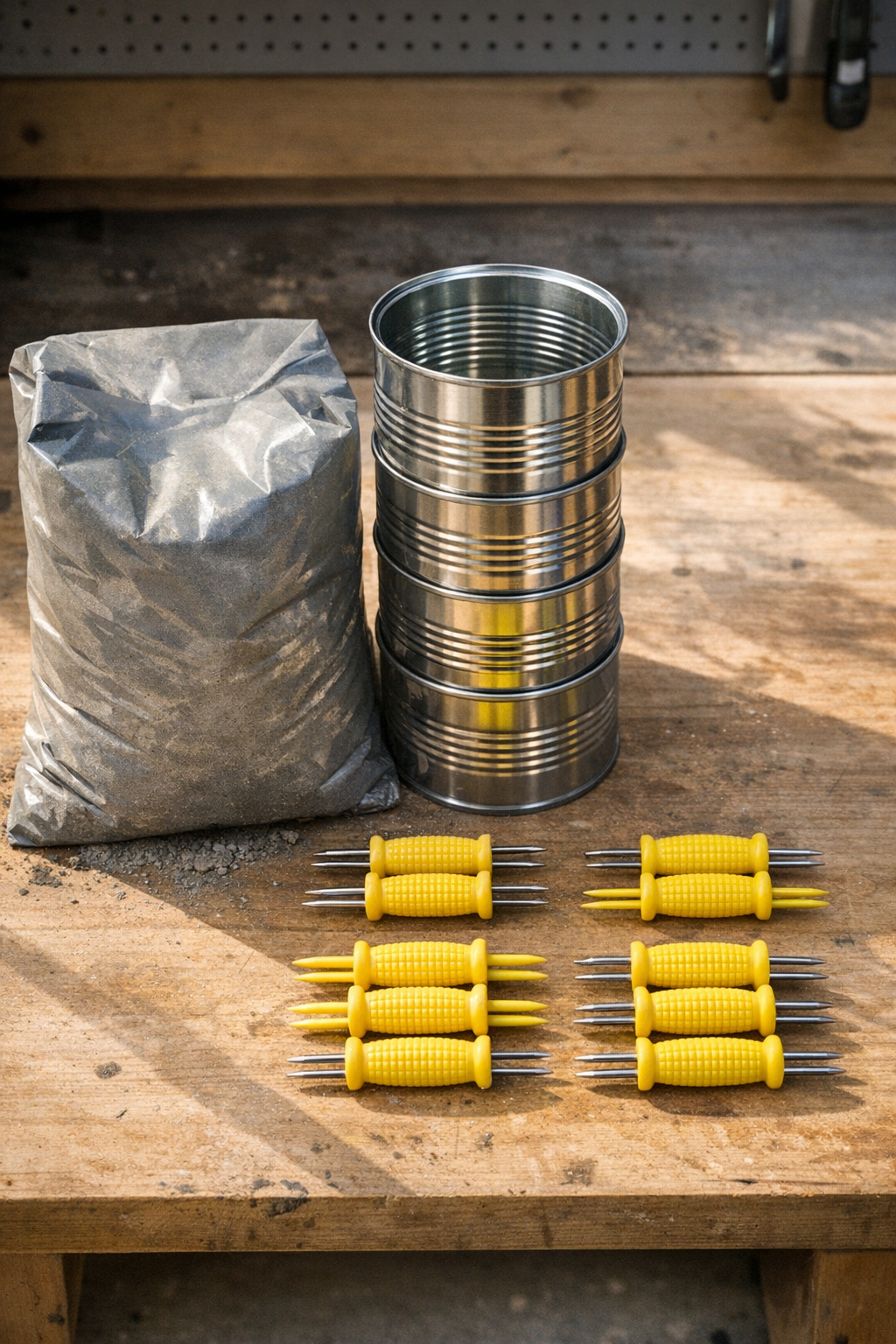
Materials
Instructions
1. Wash and dry the empty cans, then remove any paper labels and sharp loose bits around the rim so the molds are clean and safe to handle.
2. Lightly coat the inside of each can with a thin film of cooking oil or nonstick spray so the cement pieces release more easily after curing.
3. In a bucket or mixing bowl, combine the quick-set cement with water a little at a time until it reaches the texture of thick oatmeal and holds its shape without being dry.
4. Fill each can about three-quarters full with wet cement, then tap the sides gently to settle the mix and release trapped air bubbles.
5. Press two or three pairs of plastic corn cob holders upright into the wet cement in each can, spacing them evenly so the spikes point straight up and the handles are embedded securely.
6. Adjust the holders so they stand vertical and sink deep enough that at least 1 inch of the handle is buried in the cement for strength.
7. Let the cement set undisturbed until firm, following the package timing, then leave the pieces to cure fully for 24 hours before unmolding.
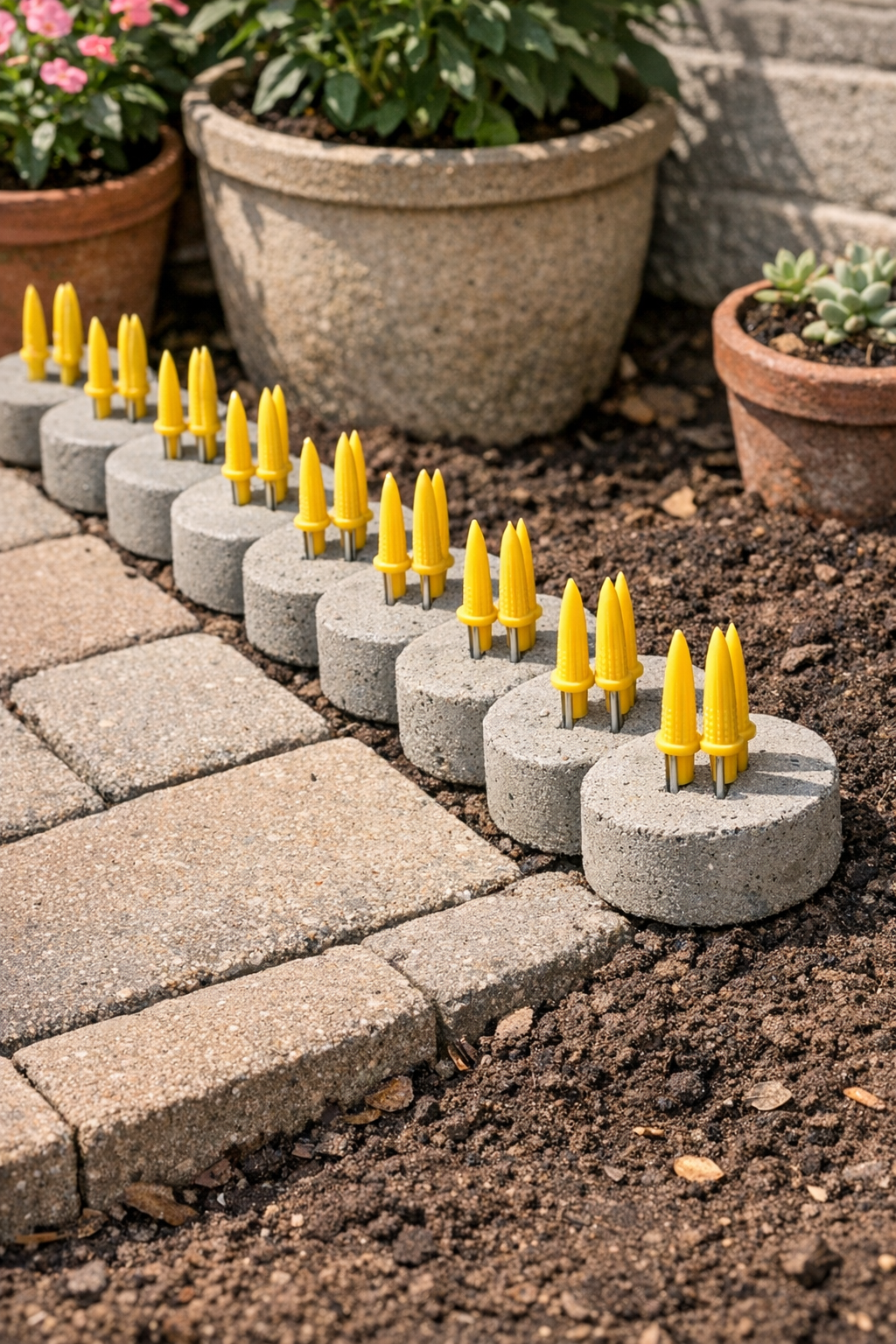
8. Peel or cut the cans away from the hardened cement, then place the finished border pieces spike-side up along the patio edge or between potted plants where you want a protective barrier.
Variations & Tips
Use matching molds: If you want a cleaner, more uniform border, use identical cans so every cement base has the same diameter and height.
Add more weight: For windier spots or larger pets, use slightly bigger cans and fill them deeper for a heavier finished piece.
Choose rust-proof holders: Plastic corn cob holders with sturdy plastic or stainless steel prongs tend to hold up better outdoors than cheaper metal versions that may corrode.
Space for function: I like placing these with small gaps between each piece rather than making a solid row; it looks less bulky and still creates a clear spiked barrier.
Smooth the edges: If the cement edges come out rough, rub them lightly with a sanding stone or coarse sandpaper once fully cured.
Work in batches: Make all the cans at once so your border pieces cure together and look consistent when you line them up around a patio or planter.
Keep it practical: These are best used as deterrent borders in low-traffic spots, not where people regularly step, reach, or garden with bare hands.