
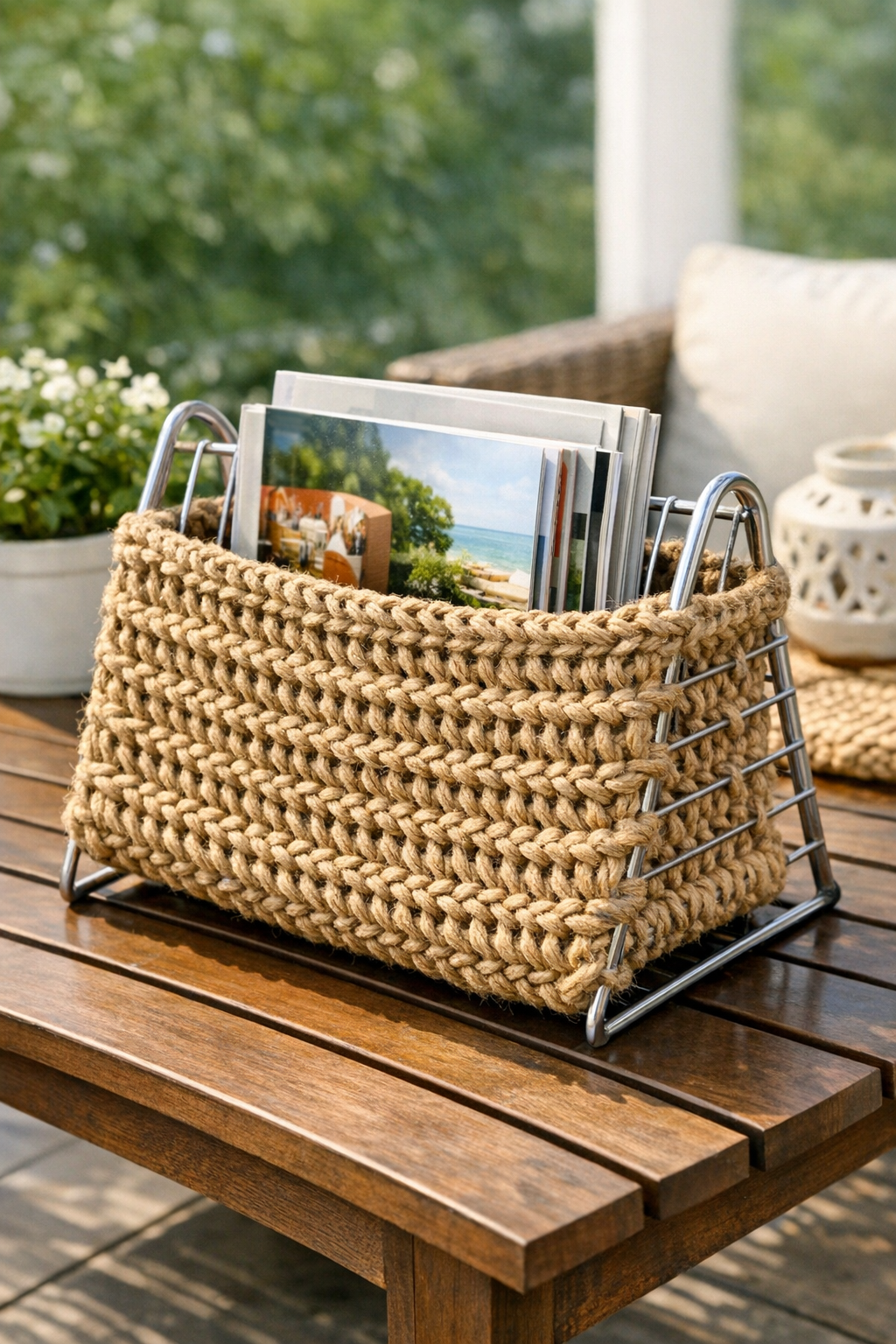
This project turns an ordinary metal dish drying rack into a sturdy little outdoor magazine rack by crocheting thick jute twine through the slots to create a woven sling. I love a thrift-store makeover that looks charming without asking for fancy tools, and this one has that breezy summer porch feel that makes a stack of gardening magazines or puzzle books look right at home.
If you know a few basic crochet motions or you are comfortable looping twine by hand, this is very doable. I’d make it for a patio, screened porch, sunroom, or even beside a potting bench, and it is especially nice if you want something useful that still feels handmade and cozy.
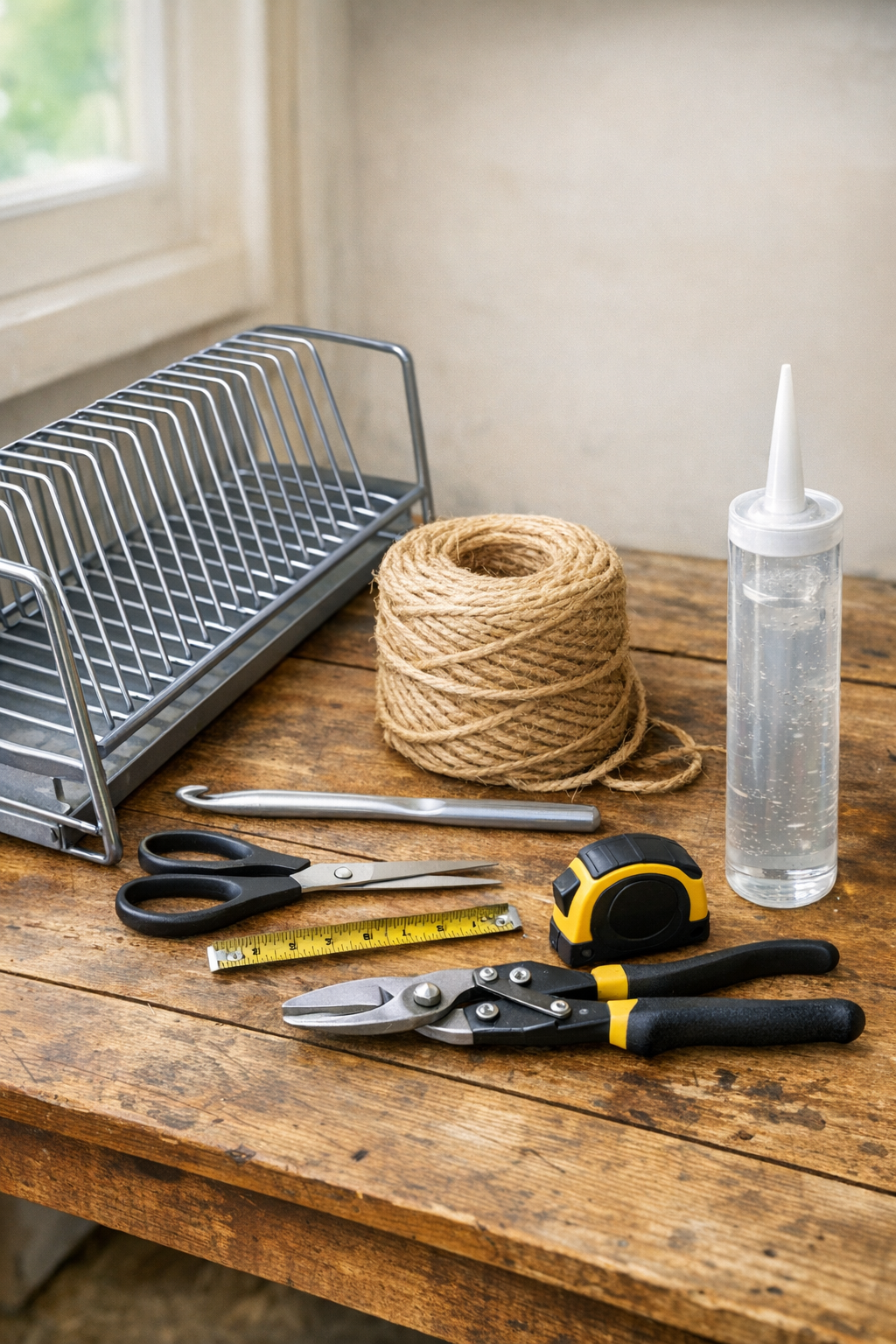
Materials
1 metal dish drying rack, approximately 17 to 20 inches long, 12 to 14 inches wide, with open side slots
Instructions
1. Clean the dish rack thoroughly with warm soapy water and let it dry completely. If there are any rough spots or chipped coating, sand them smooth so the jute will not snag.
2. Turn the rack on its long side to find the best magazine-rack position, with the wider open section forming the pocket. Test it on the floor or table to make sure it sits steady before you begin covering it.
3. Trim off any awkward upright dividers with metal snips if they stick out in a way that would interfere with the pocket opening. Leave the main frame intact, and sand any cut ends until smooth.
4. Measure the width of the opening you want to cover with crochet, then cut a starting length of twine about 6 feet long for the first section. It is easier to work in manageable lengths than to drag the whole roll through every loop.
5. Tie the twine securely to one lower corner of the rack with a double knot, leaving a 4-inch tail. Tuck the tail along the frame so your first stitches will cover and anchor it.
6. Chain enough stitches to span from one metal slot to the next, then single crochet or slip stitch the twine around each vertical slot as you move across the rack. Keep the tension firm so the finished panel can support magazines without sagging too much.
7. Continue crocheting through every slot, building rows that connect the front and back sections of the sideways rack to form a hammock-like pocket. Push the stitches close together with your fingers as you go for a fuller, more finished look.
8. When one length of twine runs short, knot on a new length at the metal frame rather than in the middle of a wide span. Pull the knot tight and hide it along the side or underside where it will be less visible.
9. Fill in the main body until the pocket has small enough openings to hold magazines, mail, or slim books without slipping through. For most racks, leaving gaps of about 1 to 1 1/2 inches between structural strands works well.
10. Crochet an extra reinforcing row along the top edge of the pocket and around any area that will carry the most weight. I like to do this twice on the front lip because that is where things get pulled in and out the most.
11. Knot off the final end tightly around the metal frame, trim the excess twine, and tuck the tail into nearby stitches with the crochet hook. Check every attachment point and tighten any loose sections by hand.
12. If you plan to use the rack outdoors in a covered space, brush on a light coat of clear outdoor-safe sealant over the jute and let it dry fully. Add felt pads or rubber feet underneath if the metal frame slides on your porch floor or side table.
Variations & Tips
For picky decorators: If plain jute feels too rustic, alternate jute with cotton rope in a soft white or sage green for a lighter summer look. I do this when I want something that blends in better with patio cushions and planters.
Thrift-store tip: Choose a dish rack with a sturdy coated metal frame instead of thin wire that bends easily. A heavier rack will hold shape better once it is loaded with magazines.
Beginner-friendly option: If traditional crochet feels fiddly, you can simply loop and knot the twine through each slot in even rows to get a similar woven effect. It still gives that handmade texture without requiring perfect stitch work.
Outdoor placement: This is best for a covered porch, screened patio, or sunroom rather than full rain exposure. Jute is durable, but it lasts much longer when it can stay mostly dry.
Kid-and-family use: I also like this by the back door for coloring books, sidewalk chalk pads, and mail that needs to come inside. It keeps the clutter contained in a way that still looks intentional.
Stronger pocket: If you want to hold heavier cookbooks or seed catalogs, make the crochet rows denser and add two extra support wraps around the bottom frame. A tighter base makes a big difference over time.