
When I need a quick fix for keeping a summer canopy from scooting around the patio, I love projects that solve the problem and still look pulled together. These crochet-style canopy weight covers use simple plastic gallon milk jugs filled with sand, then dress them up with thick jute rope so they blend in beautifully with an outdoor setup instead of looking like a last-minute workaround.
This is a practical weekend project for anyone who wants sturdy canopy weights without spending a fortune on store-bought ones. I especially like this kind of DIY for backyard parties, family cookouts, and lemonade-stand afternoons, because it gives you the function you need while adding a warm, natural texture that feels much more charming than plain plastic.
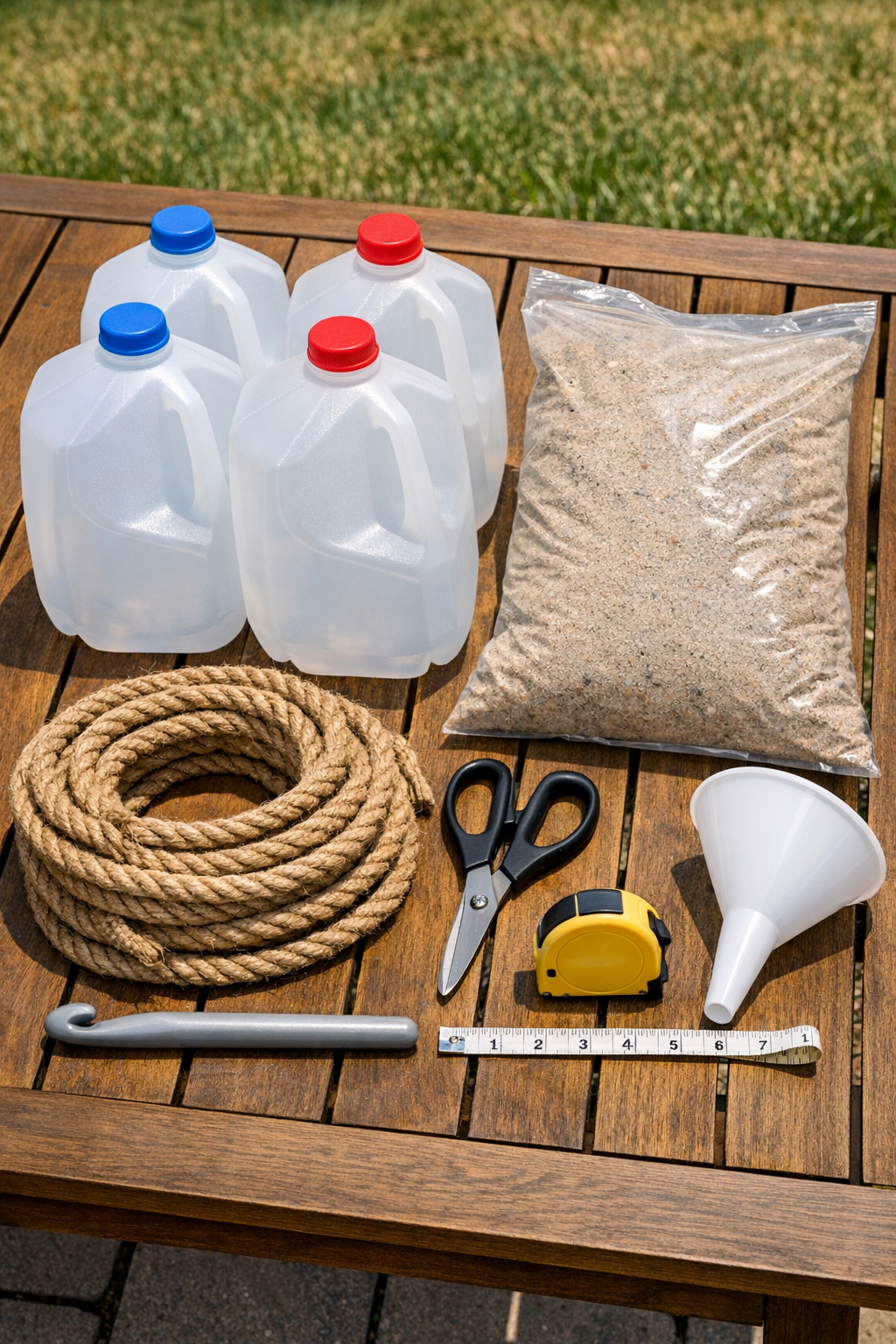
Materials
Instructions
1. Wash and dry the milk jugs thoroughly, then make sure each cap fits tightly. If the jugs still smell like milk, rinse them with warm water and a splash of vinegar, then let them dry completely.
2. Set the funnel into each jug and fill it about 3/4 full with sand. Leave a little empty space at the top so the jug stays easier to handle and the cap can close cleanly.
3. Screw the caps on tightly and wipe off any sand from the outside. Check that each jug sits flat and feels stable before you start covering it.
4. Make a flat crochet circle for the base using the jute rope and large hook. Start with a magic ring or a small loop, then work single crochet stitches in rounds, increasing evenly until the circle is just a little wider than the bottom of the jug.
5. Set the jug on the base circle to test the fit. The circle should support the whole bottom without curling up too soon, so add one more increase round if needed.
6. Stop increasing and crochet even rounds to start building the sides upward. Work snugly so the cover hugs the jug and begins to shape around the base.
7. Slide the jug into the crocheted piece once the sides are about 2 inches tall. Continue crocheting directly around the jug so you can check the fit as you go.
8. Crochet up the straight body of the jug with even stitches, gently tightening or loosening your tension as needed. Keep the cover close-fitting so it looks neat and helps the weight feel more polished.
9. When you reach the shoulder of the jug where it starts narrowing, decrease gradually over several rounds. Shape the stitches carefully so the cover follows the jug without bunching.
10. Leave the handle area open by chaining across the space or by working back and forth around it, depending on your jug shape. I like keeping the handle accessible because it makes these much easier to carry when I’m setting up for a family gathering.
11. Continue crocheting around the neck area if desired, or stop just below the cap for easy refilling later. Fasten off the jute rope and weave or tuck the end securely; a tiny piece of clear tape can help hold a stubborn end in place inside the stitching.
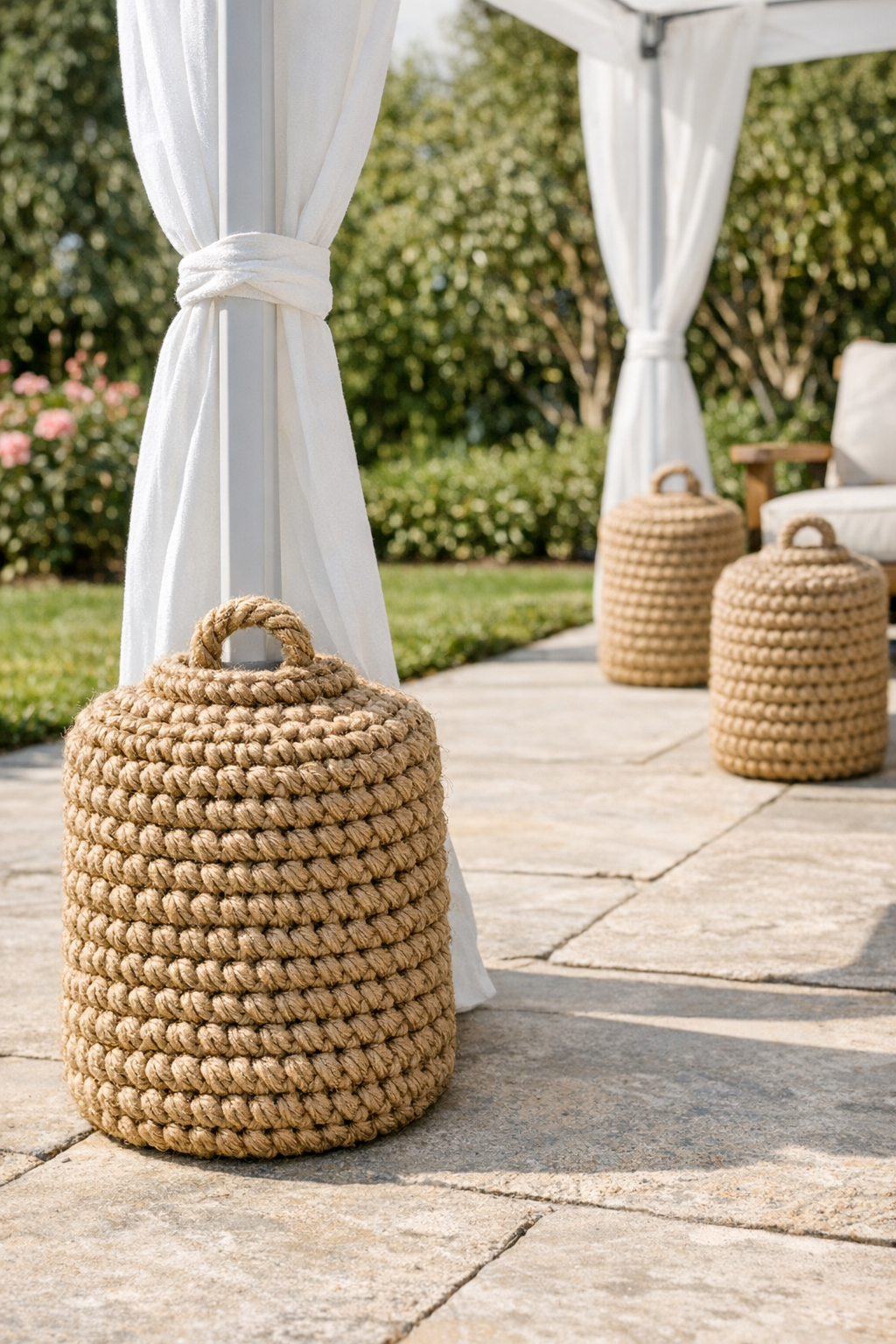
12. Repeat the same cover for the remaining jugs, checking measurements so all four match closely. Place one finished weight at each canopy leg and secure them as needed around the frame base.
Variations & Tips
For a softer look: Use a slightly lighter tan jute rope or alternate rows of jute with outdoor macrame cord for a more decorative finish. This is a nice option if you want the weights to feel a little more styled for a party table or bridal shower.
For picky perfectionists: If matching covers matter to you the way matching dinner plates matter to me, count your rounds and stitches for the first jug and write them down. That makes the next three much faster and keeps the set looking uniform.
For easier crocheting: Jute can be rough on the hands, so I recommend taking breaks or wearing a simple finger wrap if you’re sensitive. A larger hook can also make the rope easier to work without fighting every stitch.
For extra weight: Fill the jugs a bit more, but leave enough room to carry them safely and screw the caps on firmly. If your canopy is used in breezy weather, heavier weights are usually worth it.
For drainage-safe outdoor use: Keep the cap exposed or easy to access, and store the weights in a dry shed or garage when not in use. Jute holds up better when it can dry out between uses.
For a cleaner finish: Work the last round tightly around the upper edge and check for any gaps where the plastic shows more than you’d like. A snug fit is what gives these that surprisingly chic, finished look.