
I love a backyard project that looks clever and custom without turning into a full weekend of complicated carpentry, and this firepit bench absolutely fits that category. The basic idea is simple: stack concrete pavers to create sturdy supports, then curve metal wire fencing around them to form a long, modern bench that hugs your firepit area. It has that “how did they think of that?” look, but it’s made from straightforward materials you can actually find at a home improvement store.
If you want extra seating for summer nights, fall s’mores, or those last-minute gatherings where everyone somehow ends up around the fire, this is a great build. I’m always looking for projects that feel high-impact but still realistic for a busy schedule, and this one is especially nice because you can adjust the size and curve to fit your own yard.
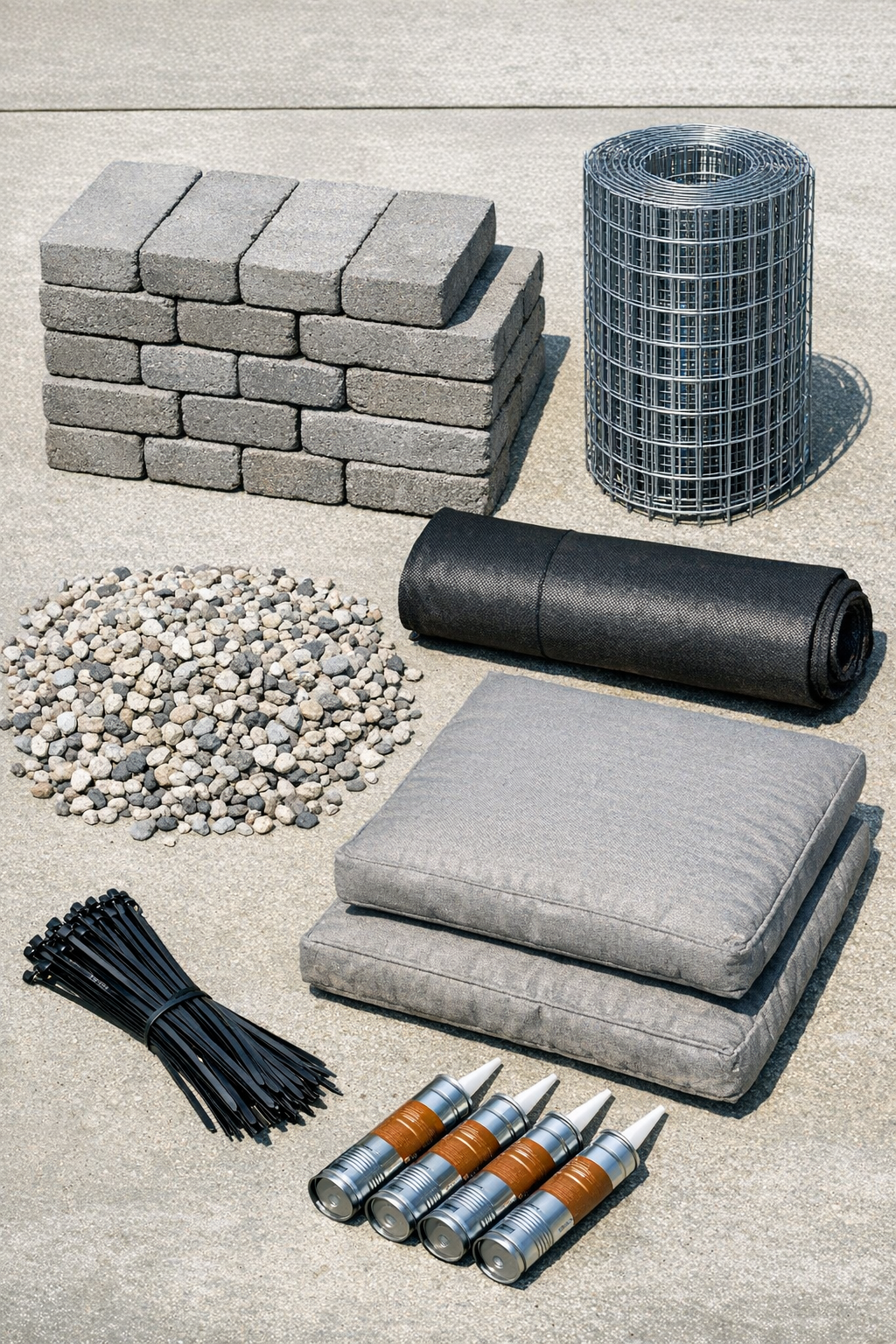
Materials
Instructions
1. Choose a level spot around your firepit and mark the curve of the bench with a garden hose or spray chalk. Leave at least 36 inches of walking space between the bench and the firepit edge for safe movement.
2. Clear grass and debris from a strip about 16 feet long and 18 inches wide, then tamp the soil flat. Lay the landscape fabric over the strip and pin it down with the landscape staples to help reduce weed growth.
3. Spread the pea gravel in an even layer about 2 inches deep over the fabric. Rake it smooth so the paver stacks will sit on a stable, well-draining base.
4. Build three paver support stacks along the curve, spacing them about 5 feet apart at the ends and center. Stack each support with 8 pavers in a staggered brick pattern, using masonry adhesive between layers for strength.
5. Let the adhesive set according to the package directions, then check that all three stacks are level and close to the same height. Small gravel adjustments under the bottom pavers can help correct minor wobble.
6. Unroll the welded wire fencing and bend it gradually by hand to match the curve of the paver supports. Wrap the fencing around the outside faces of the stacks so it forms one continuous curved bench body.
7. Secure the fencing tightly to each paver stack with heavy-duty zip ties threaded through the wire openings and cinched snug. Add ties at the top, middle, and lower sections of each stack so the curve holds its shape.
8. Wrap rope around any exposed top edge or sharp cut ends of the fencing, tying it off neatly and trimming the excess. This softens the look and makes the bench more comfortable and safer around hands and legs.
9. Press on the bench frame in several spots to make sure it feels stable, then tighten or add zip ties where needed. If the curve shifts, reposition the fencing before fully snugging every connection.
10. Place the outdoor cushions evenly along the curved bench and test the seating arrangement around the firepit. Adjust cushion spacing until the bench feels balanced and inviting.
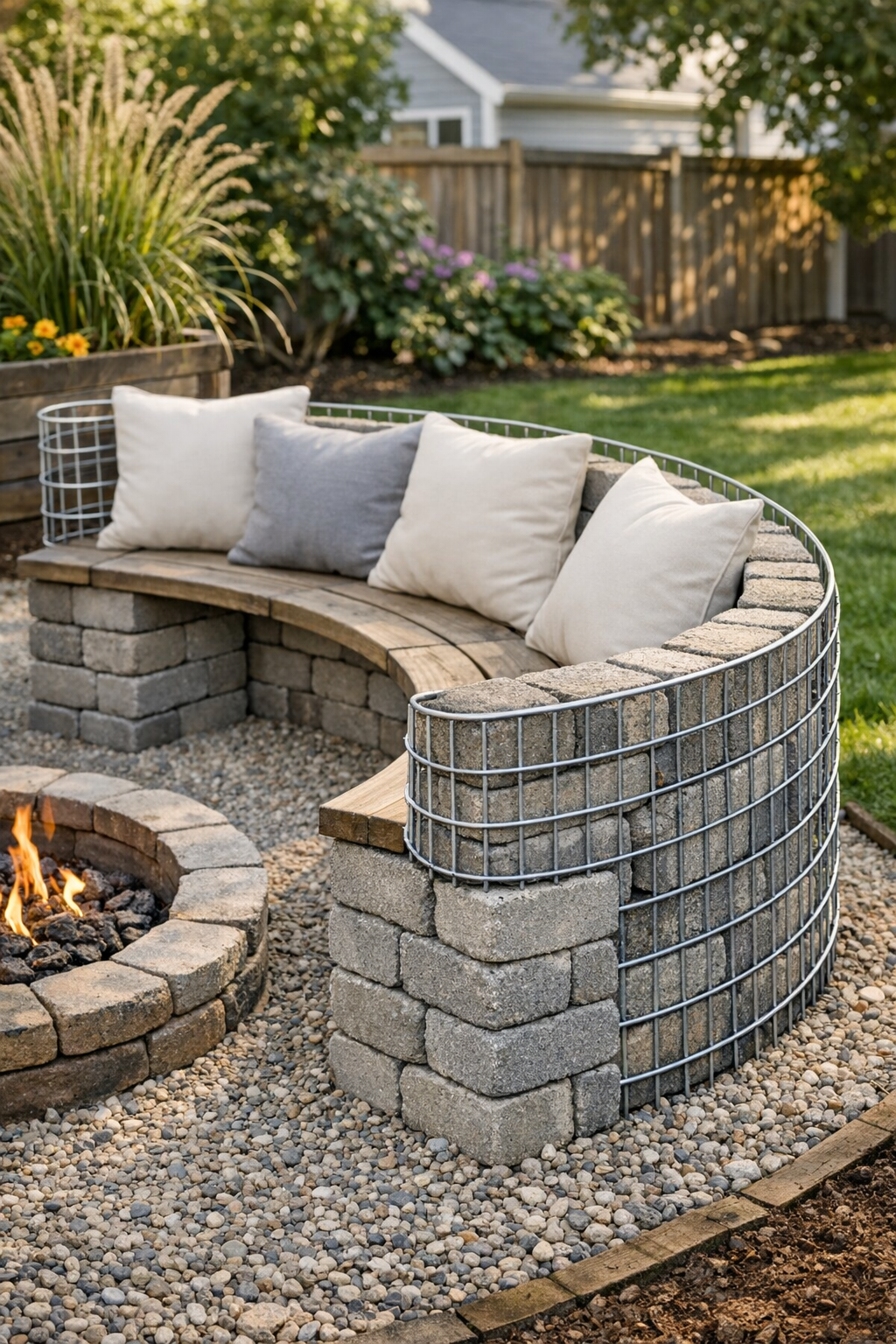
Variations & Tips
Make it longer: If you have a bigger patio, add a fourth paver stack and use a longer fencing roll to create a wider curve with more seating.
Soften the seat: This build works best with thick outdoor cushions or a custom bench pad. I’d definitely go cushioned here if you plan to sit for a full evening by the fire.
Use matching pavers: Choose pavers that coordinate with your firepit or patio for a more intentional finished look. Even a simple gray-on-gray palette can make this feel surprisingly polished.
Check fencing edges: Cut wire can be sharp, so wear gloves during assembly and fold or cap any exposed ends before adding cushions.
Improve stability: On especially soft ground, widen the gravel base and spend extra time leveling. A little patience at the beginning saves a lot of adjusting later, which is usually the lesson I relearn every gardening season.
Bring in storage style: You can weave weather-resistant fabric strips or outdoor reed screening through the wire mesh for a more solid look while still keeping the same curved structure.