
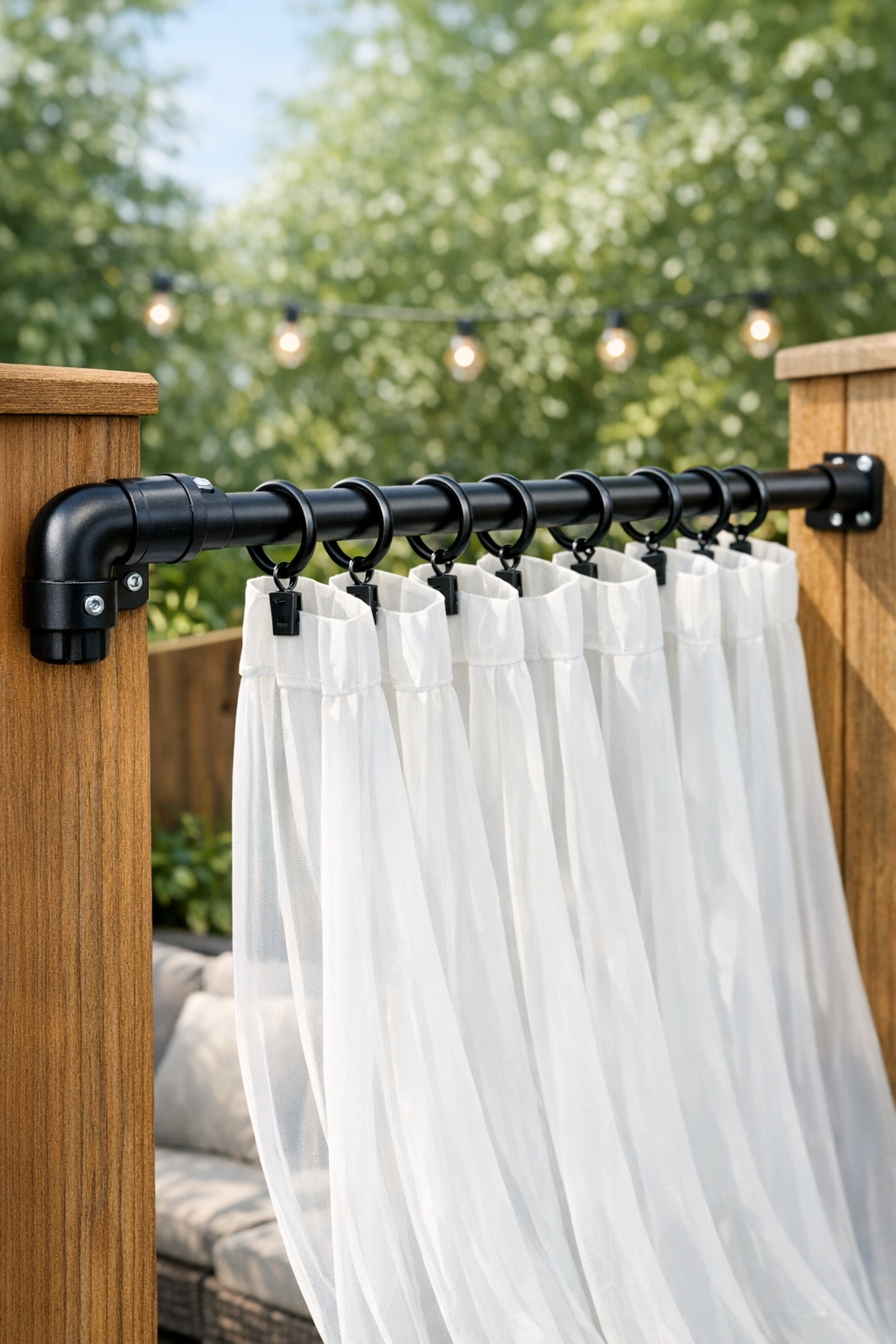
I love a backyard project that looks high-end but is actually doable in one weekend, and this outdoor curtain rod setup is exactly that. By running painted electrical conduit between wooden fence posts and threading sheer curtain panels right onto the pipe, you get soft, breezy privacy and a defined outdoor space without the cost of a full pergola or custom drapery hardware.
This is a great project if you want to make a patio, deck, or seating area feel more finished. I’m always looking for ways to make our yard feel like an extra room of the house, especially during the months when we’re eating dinner outside as often as possible, and these simple outdoor curtains add shade, movement, and that cozy “outdoor living room” feel with very little fuss.

Materials
2 sheer outdoor curtain panels, 54 inches wide x 84 inches long, each with a 1 1/2- to 2-inch rod pocket
Instructions
1. Measure the distance between your wooden fence posts at the height where you want the curtain rod to sit, and subtract about 1/2 inch so the conduit can slide easily into place without binding.
2. Decide on the finished curtain height by holding a panel up in place, then mark the rod location on both posts so the curtain hangs just off the ground or deck surface.
3. Lightly sand the electrical conduit to help the paint adhere, wipe off the dust, and spray on thin, even coats of exterior paint until the metal is fully covered.
4. If needed, cut the conduit to your measured span with a hacksaw or pipe cutter, then smooth any rough edge so it will not snag the sheer fabric.
5. Slide the curtain panels onto the dry conduit through the rod pockets, bunching the fabric toward the center so you can lift the rod into position more easily.
6. Hold the conduit between the posts at your marked height, check that it is level, and mark the conduit strap locations near both ends of the rod.
7. Pre-drill the screw holes in the wooden posts, then attach one conduit strap on each end, leaving just enough room for the rod to slip in before tightening fully.
8. Set the conduit into the straps, center the curtain panels, and tighten the screws so the rod is held firmly but the curtains can still slide as needed.
9. Spread the curtain panels out evenly, test that they open and close smoothly, and make any small height or centering adjustments before calling it done.
Variations & Tips
Use outdoor-rated panels: If your yard gets full sun or regular rain, choose sheer panels labeled for outdoor use. They hold up better and are less likely to mildew or fade.
Match the rod to your yard style: I like black or dark bronze for a clean modern look, but white conduit almost disappears against white trim or light-painted posts.
Add more fullness: For a softer, more luxurious look, use two panels per span instead of one on each side. Extra fabric makes the curtains look fuller even when closed.
Keep the bottom clean: Hanging the curtains about 1 inch off the ground helps prevent dirt stains and keeps them from wicking up water after rain.
Prevent fabric snags: After cutting conduit, always sand the ends thoroughly. Sheer fabric catches on the tiniest burr, and this one small step saves a lot of frustration.
Make it renter-friendly: If you already have sturdy existing posts or a fence structure, this project only needs a few screw holes, so it’s a pretty low-commitment way to dress up an outdoor space.
Try tiebacks: Simple outdoor tiebacks or strips of matching fabric make the whole setup look more polished and keep the curtains out of the way on windy days.