
I love a project that turns an ordinary kitchen extra into something genuinely useful, and this hanging herb planter does exactly that. By crocheting thick jute twine through a metal grease splatter screen, you get a sturdy, breathable base that’s perfect for holding a coco liner and a few summer herbs. It has that relaxed, rustic look I’m always drawn to, and it’s especially satisfying because it gives a forgotten drawer item a whole new life.
This is a wonderful make for anyone who knows a few basic crochet stitches and wants an outdoor project that comes together quickly. If you’re comfortable holding a large hook and working with thicker fiber, you’ll be in good shape. I also like this project because it bridges two worlds I enjoy: practical container gardening and handwork with natural materials.
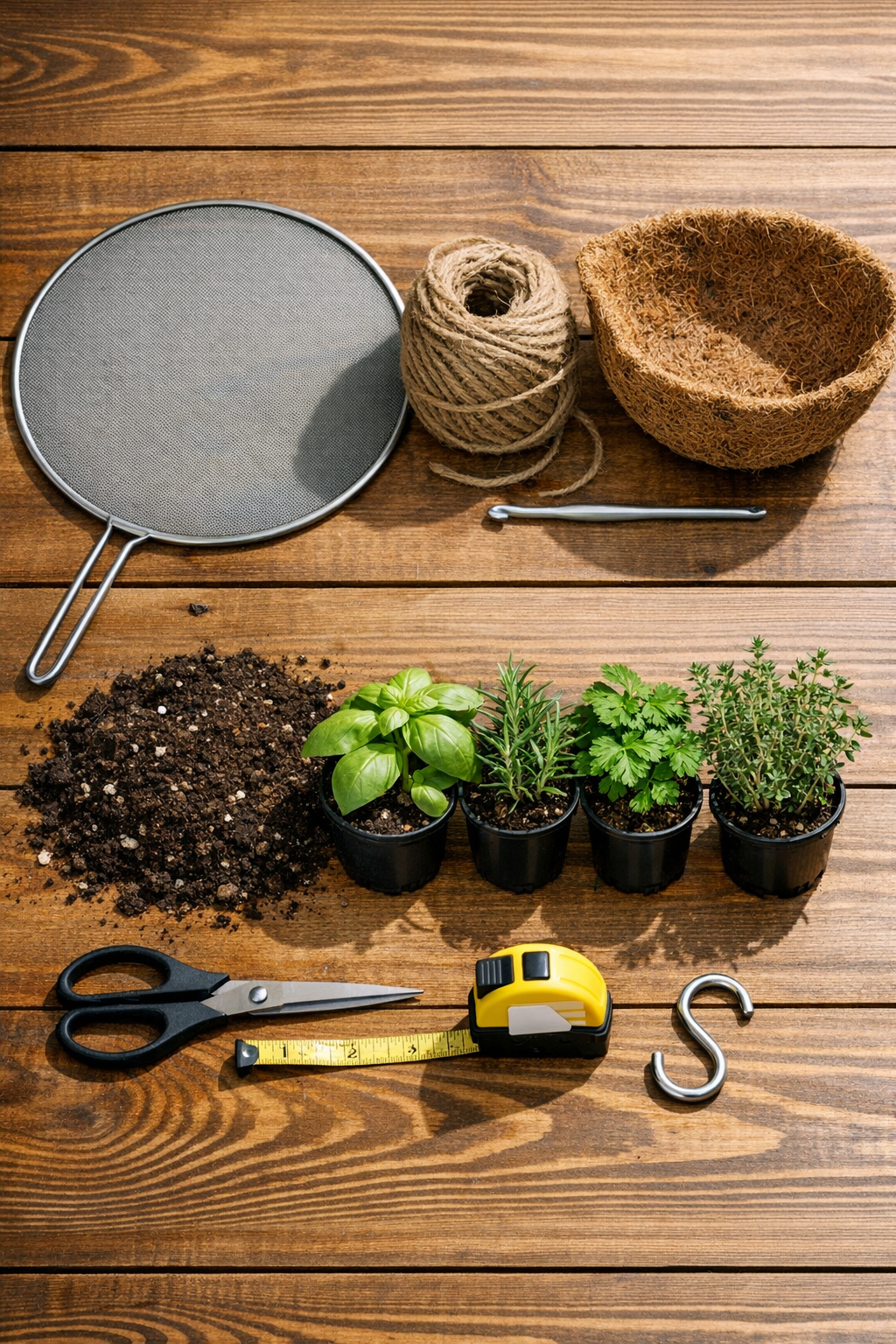
Materials
Instructions
1. Clean the grease splatter screen thoroughly with hot soapy water, dry it fully, and remove any loose handle parts if your screen has a detachable handle. If the handle is fixed, keep it in place and treat it as the back or top of the planter.
2. Cut three 36-inch hanger cords and one 18-inch top loop cord from the jute, then set them aside. Leave the main roll intact for crocheting the body of the planter.
3. Start at the outer edge of the metal screen and single crochet directly around the rim, working one stitch through or around each section of mesh support so the jute grips the frame securely. Keep the stitches snug and close together until the entire outer ring is covered.
4. Continue crocheting inward through the mesh in spiral rounds, using single crochet stitches spaced evenly across the screen. Add an extra stitch every few inches where needed so the crocheted surface lies flat without puckering.
5. When the mesh is mostly filled, stop with a flat crocheted center that still allows a little airflow and drainage. Fasten off the jute and weave the end through nearby stitches by hand or with the crochet hook.
6. Tie the three 36-inch hanger cords evenly around the rim at three points, spacing them about 4 inches apart from each other to balance the planter. Knot each cord twice and pull firmly so they won’t slip.
7. Gather the top ends of the three hanger cords and knot them together around the 18-inch loop cord, then tie that loop securely for hanging. Test the balance by lifting the planter before adding the liner.
8. Press the coco liner into the crocheted screen so it forms a shallow basket shape. If needed, trim the liner slightly so it fits neatly inside the jute-covered frame without bulging over the edge.
9. Add about 2 inches of potting mix to the liner, set in the herb plants, and fill around them with more potting mix until the roots are covered. Keep the crowns of the herbs just above the soil line and press the soil gently to secure them.
10. Water the planter lightly until the soil is evenly moist but not dripping heavily, then hang it from the S-hook in a spot with at least 6 hours of sun. Check again that the cords hang evenly and the basket sits level.
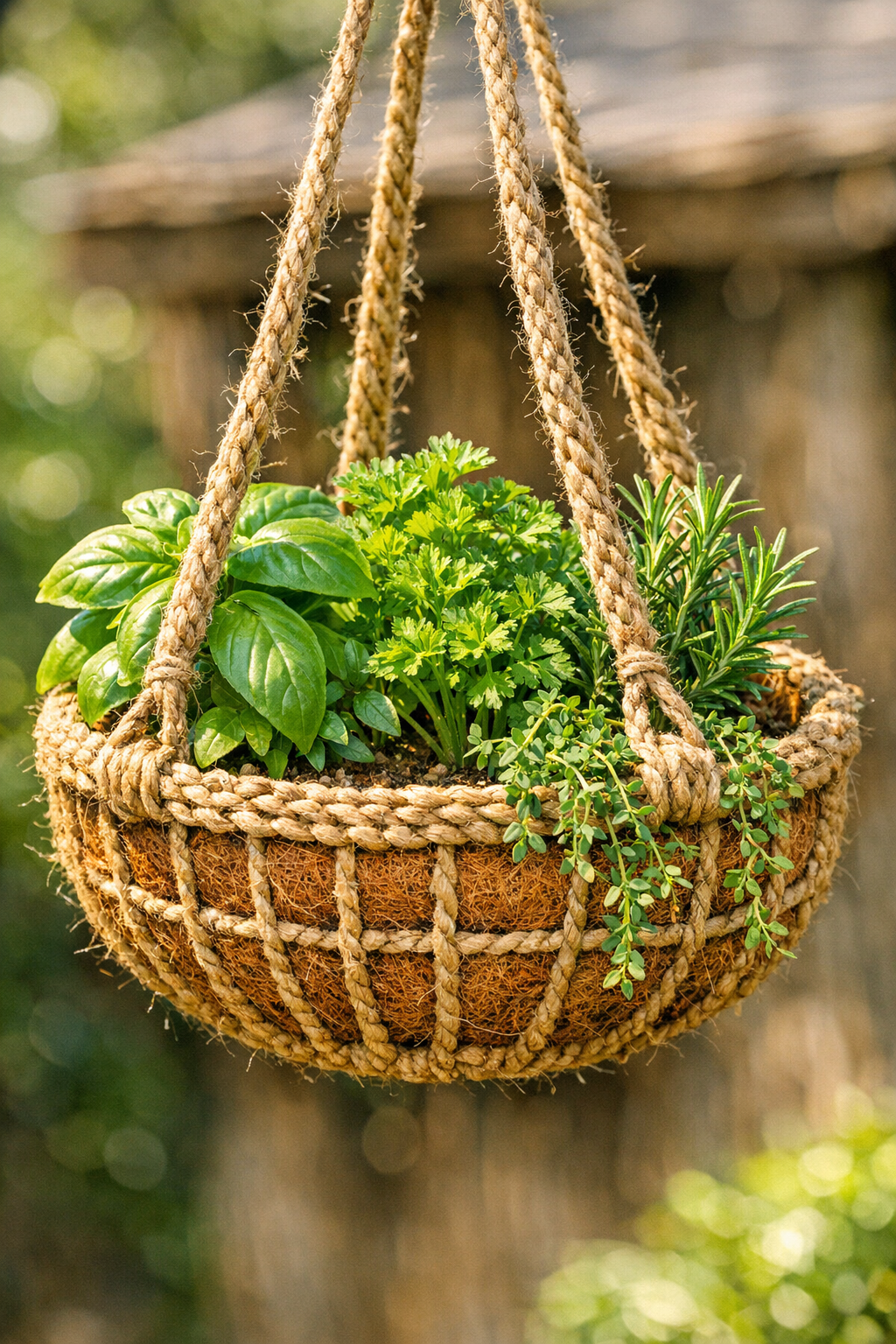
Variations & Tips
Herb choice: Stick with compact herbs like thyme, oregano, chives, or small basil varieties so the planter stays light enough to hang safely.
Twine handling: If your jute feels stiff or sheds a lot, lightly dampen it before crocheting. I’ve found this makes thicker natural fiber easier on the hands and helps the stitches sit more neatly.
Drainage tip: Because coco liners and jute both hold some moisture, avoid overwatering. I like to water, wait a minute, and then check the weight of the basket rather than adding more right away.
Screen size: A 13-inch screen makes a practical herb basket, but you can scale down to a 10- or 11-inch screen for a single herb planter. Just reduce the liner size and use less potting mix.
Hanging support: Always hang this from a hook anchored into solid wood or a structure rated for outdoor planters. Once watered, even a small basket gets heavier than it looks.
Crochet substitution: If single crochet through the mesh feels awkward, you can blanket stitch the rim first with jute and then crochet into that foundation. It’s a handy workaround when the metal mesh is tight.
Style option: For a more decorative finish, add one round of chain loops or scallops around the outer edge after covering the rim. It gives the planter a softer handmade look without affecting function.