
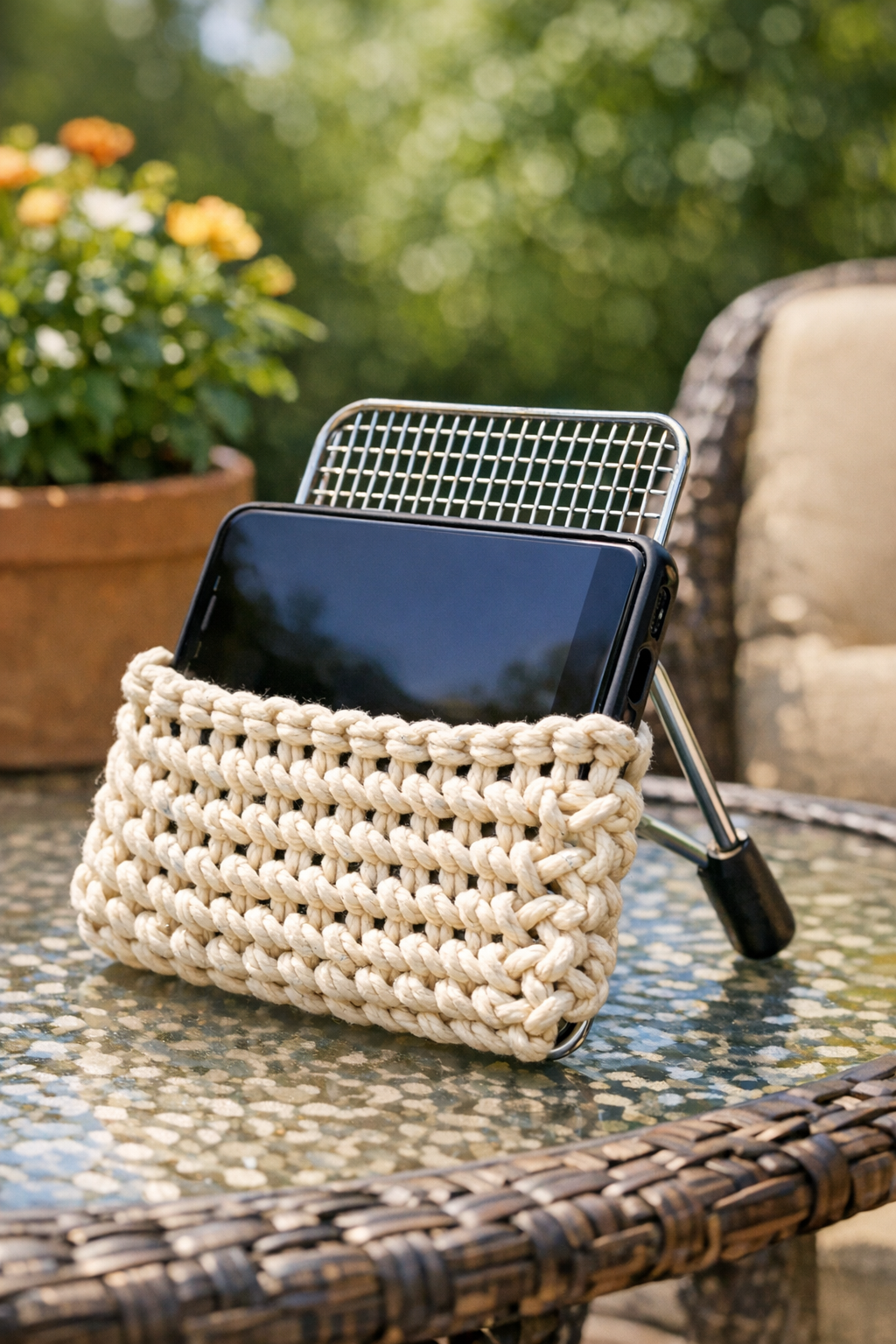
I love a clever dollar-store project, especially one that solves a real summer problem. This crochet phone holder stand turns a plain metal flyswatter into a surprisingly sturdy little stand by bending the frame and weaving thick cotton rope through the mesh to create a supportive pocket for your phone. It is simple, inexpensive, and perfect for patio tables, porch lounging, or keeping a recipe visible while I am bouncing between the grill and the kitchen.
If you know a few basic crochet motions or you are comfortable looping rope through a wire grid, this is very doable. I am always looking for projects that feel creative without eating up an entire Saturday, and this one checks that box while still looking fun and handmade.
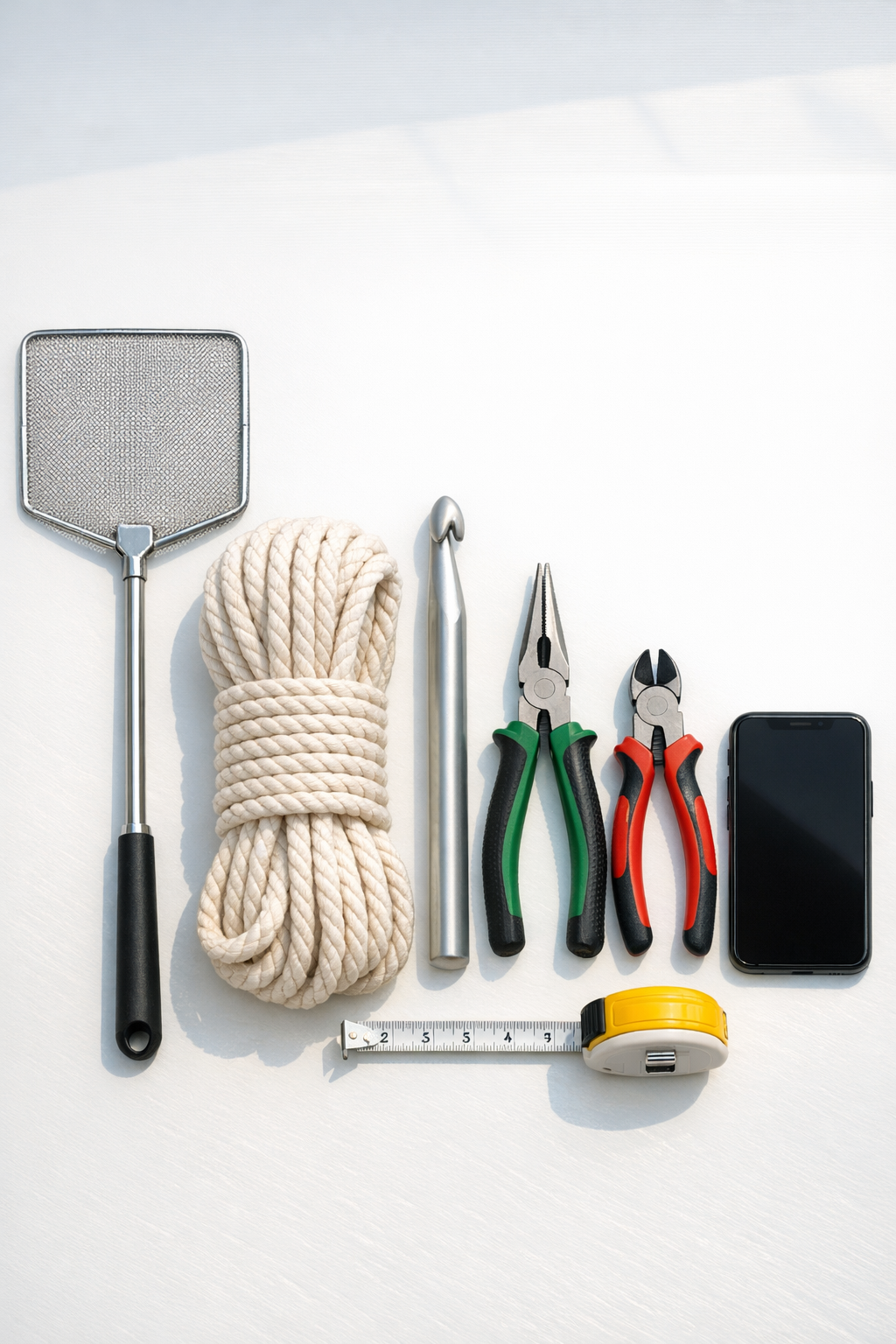
Materials
1 metal flyswatter with wire mesh head and metal handle, about 18 to 20 inches long
Instructions
1. Inspect the flyswatter and choose one with a sturdy wire mesh head and a handle that feels firm in your hand. Make sure there are no sharp broken wires before you start.
2. Use needle-nose pliers to bend the flyswatter head backward at the neck so the mesh face sits at an angle like a small easel. Leave the handle extending behind it to act as the kickstand.
3. Test the angle by setting the frame on a flat surface and leaning your phone against the mesh. Adjust the bend until the stand feels balanced and the screen is easy to see.
4. If the outer wire rim has any rough ends or loose points, trim or pinch them flat with pliers and wire cutters. This step matters because thick cotton rope can snag easily.
5. Measure the mesh area you want to cover, then cut a starting length of cotton rope about 8 feet long. Wrap the end with a little masking tape if it helps the rope feed through the mesh more easily.
6. Begin at the lower center of the mesh and anchor the rope by looping it around one horizontal wire and pulling it snug. Work a row of simple crochet-like wraps or slip-style loops through the mesh openings to create a firm base line.
7. Continue working back and forth across the mesh, pulling each loop snug enough to cover the wire grid without warping the frame. Keep the tension even so the surface stays flat and supportive.
8. Build upward until you have a solid woven panel that covers roughly the bottom two-thirds of the mesh head. This section forms the back support for the phone.
9. Create a pocket lip at the bottom by adding 2 to 3 extra rows just across the lower front area, looping the rope slightly outward from the mesh. That small raised edge keeps the phone from sliding off.
10. Check the fit with your phone and make sure the charging port and screen remain accessible. If needed, leave a slightly wider opening in the center bottom edge or keep the pocket lip lower.
11. When the panel and pocket look right, weave the rope tail through several finished loops on the back side and pull it tight. Trim the excess and add a tiny dab of clear craft glue if you want extra hold.
12. Set the finished stand on a flat outdoor table and test it with your phone in both vertical and horizontal positions. Fine-tune the kickstand angle with the pliers if the stand needs a little more stability.
Variations & Tips
Use colored rope: Natural cotton looks classic, but a bright blue, coral, or sunny yellow rope makes this feel especially fun for summer patios and porches.
Add a softer edge: If your phone case scratches easily, crochet one extra row around the rim area where the phone touches most often to create a cushier contact point.
Make it table-friendly: A small adhesive felt pad on the bottom of the handle can help the stand grip slick patio tables and protect the surface at the same time.
Choose the right flyswatter: I would skip plastic mesh for this one and stick with a metal grid version, because it holds the rope better and keeps its shape after bending.
Keep tension moderate: The biggest mistake is pulling the rope too tight and bowing the frame. I aim for snug loops that cover the mesh while still letting the stand keep its original outline.
Adjust for bigger phones: If your phone is extra large or in a bulky case, make the lower pocket lip shallower and cover a slightly wider section of the mesh so the phone has more resting space.
Try a kitchen version: I would absolutely make a second one just for the counter, since this is handy for following recipes or propping up a screen during a quick video call while cooking dinner.