
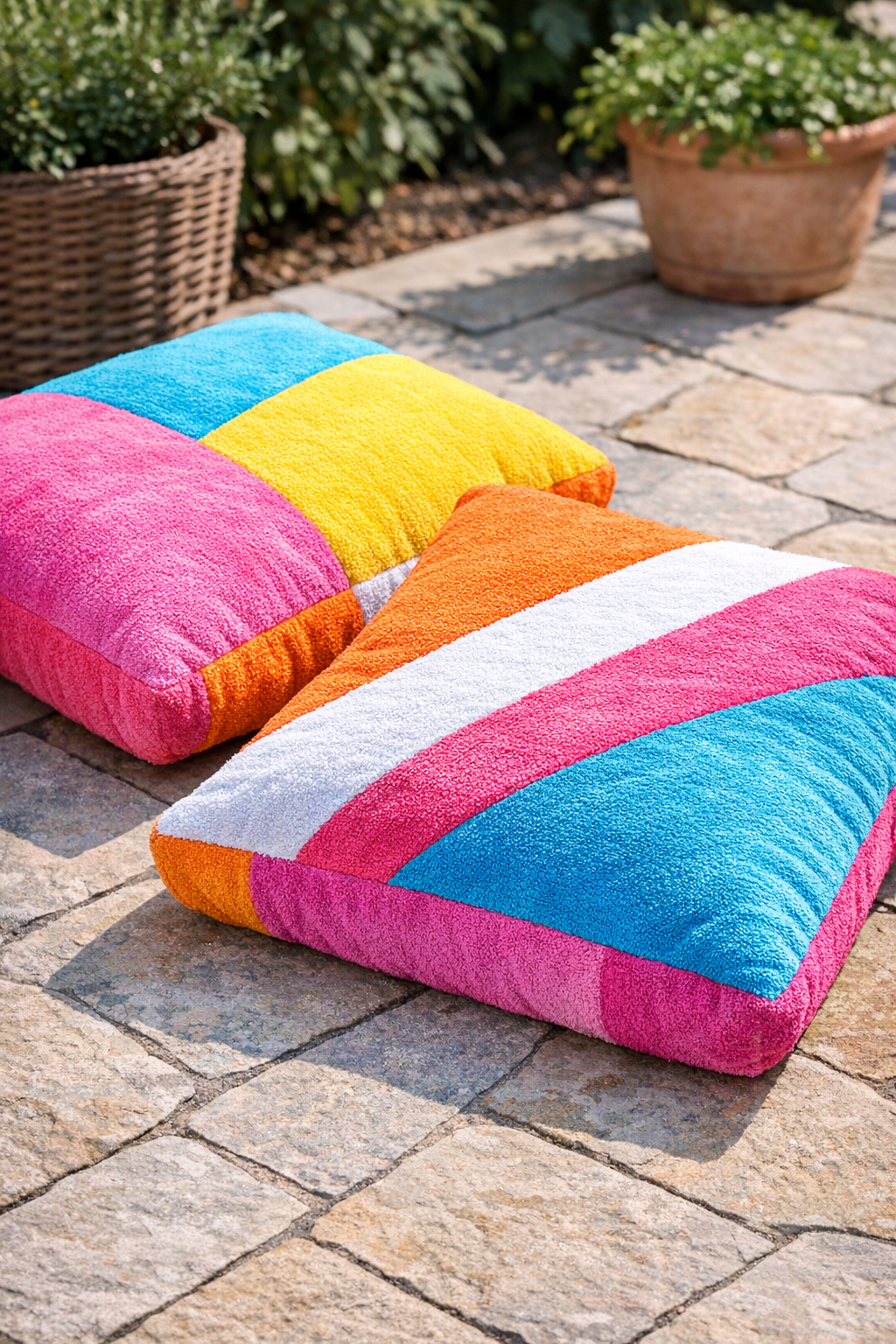
I love a project that solves two problems at once, and these oversized patio floor cushions do exactly that: they turn a stack of inexpensive beach towels and an avalanche of saved plastic grocery bags into cheerful, durable extra seating. If you entertain outdoors, have kids who sprawl on the deck, or simply want a low-cost way to make a patio feel more inviting, this is one of those surprisingly practical ideas that looks playful and works hard.
As someone who spends plenty of time thinking about texture, layering, and how materials behave in real life, I appreciate that this project is less precious than many sewn home décor pieces. The towels are forgiving, the plastic bag fill is lightweight and water-resistant, and the finished cushions are big enough to lounge on with a cold drink and a plate of grilled food. They are especially good for covered patios, porches, and three-season spaces where you want comfort without spending a fortune on store-bought outdoor cushions.
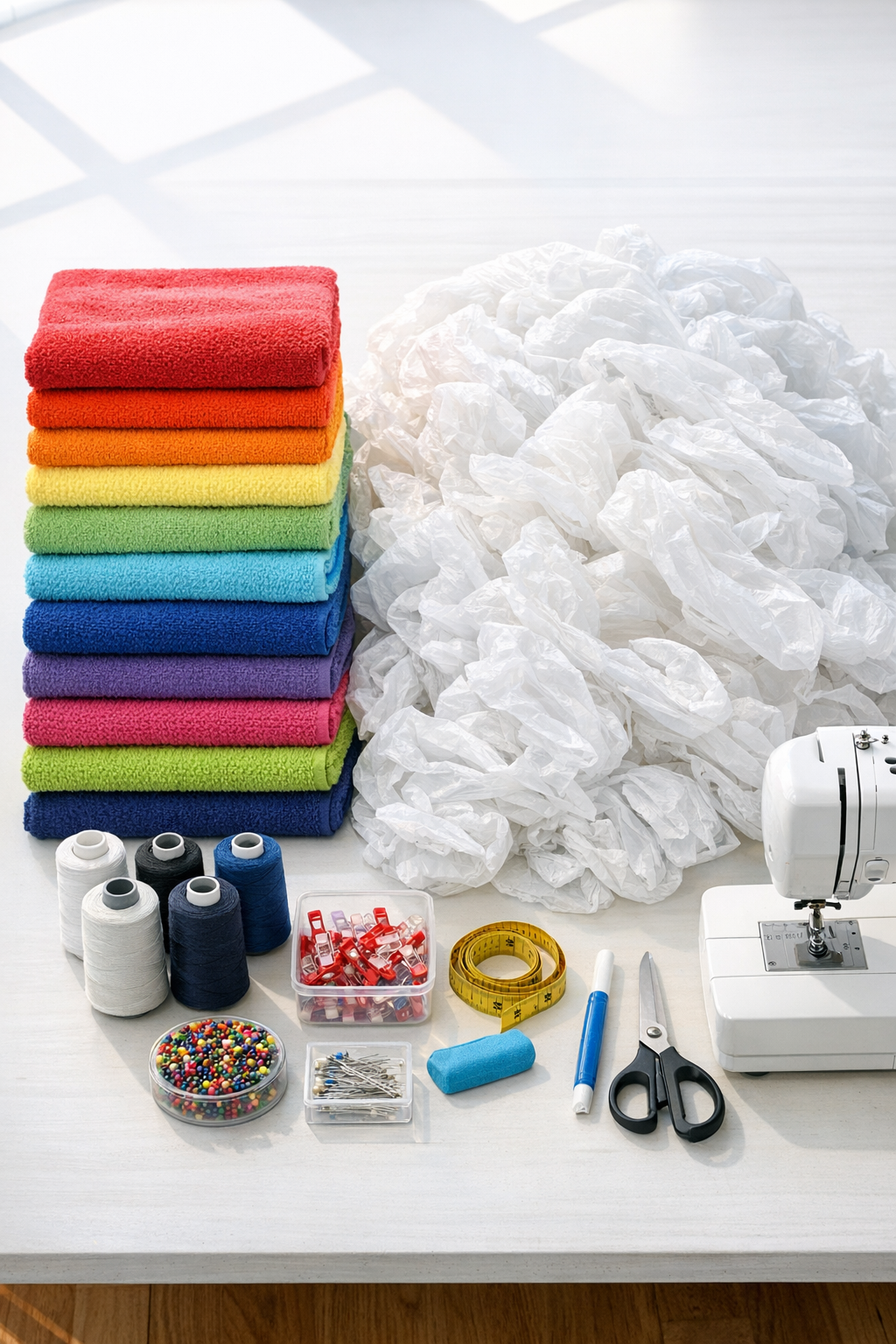
Materials
12 cheap beach towels, standard size about 30 x 60 inches each
Instructions
1. Sort the 12 towels into two matching groups of 6, and choose how you want the colors arranged so each cushion has a top, bottom, and side panels that look intentional rather than random.
2. Wash and fully dry the towels if they are new, because inexpensive towels often shrink and shed lint the first time. Shake out loose fibers before sewing.
3. Flatten and inspect all 600 grocery bags, removing receipts, crumbs, and anything damp. Crumple them loosely rather than tightly so the finished cushions stay soft instead of stiff.
4. Make the top and bottom panels for the first cushion by laying 2 towels side by side with the long edges overlapping by 1 inch, then sew that seam; repeat with 2 more towels for the second large panel.
5. Cut the remaining 2 towels for that cushion into side strips to create the boxing around the edge; aim for strips about 10 inches wide, then piece them together until you have enough length to go around the full perimeter of the cushion.
6. Sew the side strips end to end with 1/2-inch seam allowances, and press the seams flat with your hands since terry cloth does not need a crisp ironed edge here. You want one long continuous band.
7. Clip the side band around the top panel, right sides together, easing the corners gently rather than forcing sharp angles. Sew slowly around the perimeter with a 1/2-inch seam allowance.
8. Attach the bottom panel to the free edge of the side band, again right sides together, but leave a 16- to 20-inch opening on one side so you can turn and stuff the cushion.
9. Trim bulky seam fuzz if needed, then turn the cushion right side out through the opening and push out the corners with your fingers. The shape should now resemble a giant floor pillow.
10. Stuff the cushion with about 300 loosely crumpled plastic grocery bags, distributing them evenly to the corners and edges first, then the center. Add or subtract a few bags until the cushion feels full but still compressible.
11. Fold the raw edges of the opening inward by 1/2 inch and stitch the opening closed by machine if it fits comfortably, or use a sturdy hand ladder stitch for a cleaner finish.
12. Repeat the same process with the remaining 6 towels and the other 300 grocery bags to make a second oversized cushion. Try to match the finished height so the pair looks balanced on the patio.
13. Fluff both cushions by kneading the fill around with your hands, then set them outdoors on a covered patio or porch and test them. If a cushion feels lumpy, reopen a few inches of seam, adjust the bags, and resew.
Variations & Tips
For better weather resistance: These hold up best in a covered outdoor space, but you can line the inside of each cushion with a simple water-resistant fabric shell if your patio gets frequent damp air.
To reduce noise: Plastic bags can rustle a bit, especially at first. I like to crumple them loosely and mix bag types so the fill settles more softly and sounds less crisp.
For a firmer cushion: Add 25 to 50 extra bags per cushion, but stop before the seams strain. Overstuffing makes thick towel seams work much harder.
For a softer finish: Wrap especially noisy bags inside a few old pillowcases or knit T-shirts before placing them in the center. That gives the cushion a more uniform feel.
To make cleaning easier: Choose towels in busy prints or saturated colors, which hide outdoor dust far better than pale solids. That is a small trick, but it makes a big difference on patios.
If you want removable covers: Add a long zipper or hook-and-loop tape closure instead of sewing the final side shut. It takes longer, but it lets you wash the outer cover and adjust the fill later.
For sizing: With standard beach towels sewn this way, you will get generously oversized floor cushions that feel casual and loungey rather than structured. If you want a tidier, more tailored look, trim all panels to matching measurements before assembly.
My practical note: I would not leave these out in open rain for days, even though the fill itself is fairly moisture-tolerant. Like a good picnic setup, they last longer when you bring them in after the party is over.