
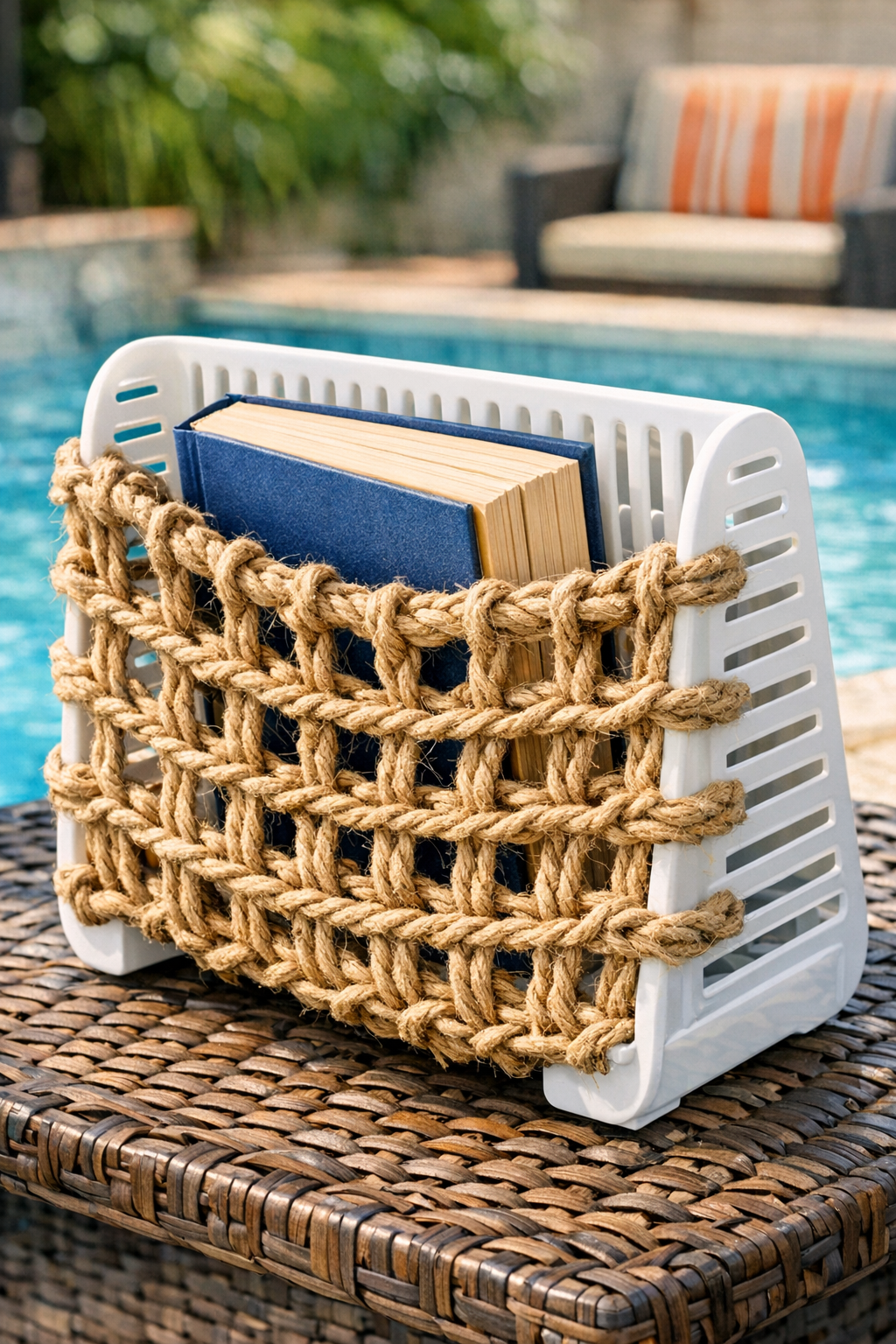
There’s something mighty satisfying about turning an ordinary household item into something both useful and charming, and this outdoor book holder does exactly that. By standing a plastic dish drainer on its side and crocheting thick jute twine through the slots, you can make a sturdy little holder that keeps your summer reading up off the damp patio, pool deck, or porch floor. It has that plainspoken, practical sort of cleverness I’ve always admired in Midwestern homes, where folks have a habit of making do beautifully with what they have.
I especially like this project for anyone who enjoys easy crochet but doesn’t want a fussy pattern. You’re not making delicate lace here—you’re building a hardworking piece with texture and backbone. It’s a good project for a beginner with basic crochet confidence, and it’s also a fine afternoon make for an experienced hand who wants something useful before supper.
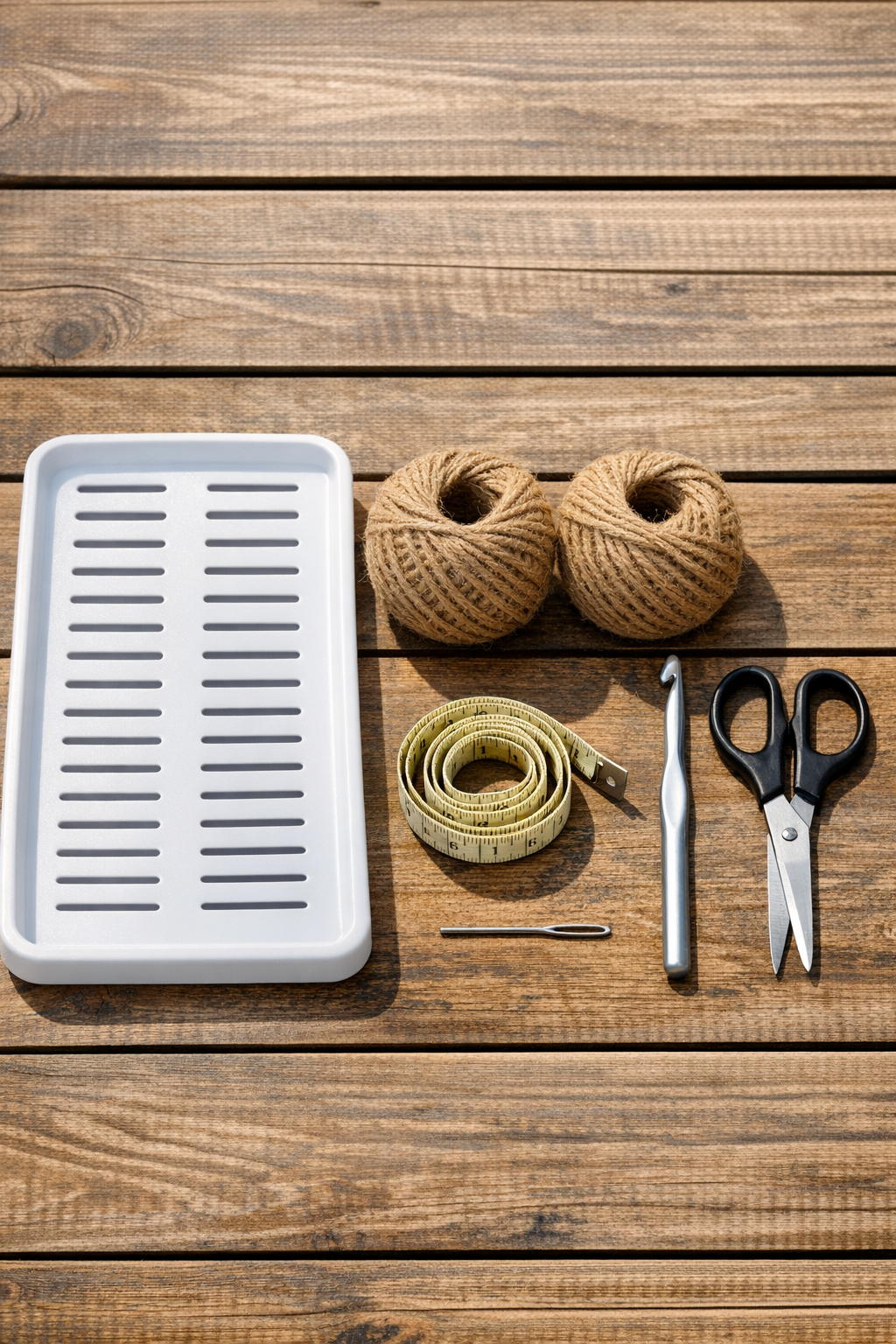
Materials
Instructions
1. Wash and dry the plastic dish drainer thoroughly, then stand it upright on its long side to decide which edge will be the bottom. Make sure it sits steady and that the slots run in a direction that will let you crochet across the open face.
2. Cut a starting length of jute twine about 6 feet long and thread one end through a lower corner slot from back to front. Tie a firm double knot on the back side, leaving a 3-inch tail.
3. Work a row of single crochet stitches through the first set of slots, using each slot like an anchor point and drawing the jute across the front face. Keep the stitches snug but not so tight that the plastic frame begins to bend.
4. Continue crocheting through every slot across the width of the drainer, adding more twine as needed by knotting a new length securely on the back side. Spread the knots out so they do not create a bulky spot in one area.
5. Turn and work back across the next row, again placing one stitch through each slot or opening in a consistent pattern. As the rows build, the front will begin to form a strong woven-crocheted panel that helps hold books and magazines in place.
6. Check the tension every few rows by setting a paperback or tablet inside the holder area. If the panel sags, pull the next row a touch tighter; if the frame bows, loosen your stitches slightly.
7. Keep filling the upright face until you have crocheted through every slot you want covered, leaving the top edge open for sliding in a book. Stop when the crocheted section creates a deep enough pocket to support a book at an angle without it tipping forward.
8. Fasten off the final row by cutting the twine with a 6-inch tail, threading it to the back, and weaving it through several stitches before knotting. Trim loose ends neatly and tuck any sharp jute fibers into the back side.
9. If you want extra stability, crochet a short reinforcing band through the lowest front row and side slots to firm up the pocket edge. This little extra strip helps heavier hardcovers sit more securely outdoors.
10. Add rubber pads or non-slip bumpers to the bottom edge if the holder will sit on slick concrete, deck boards, or poolside tile. Test it with a book, adjusting the angle slightly until the pages rest comfortably and stay clear of splashes.
Variations & Tips
For softer hands: Jute can be rough after a while, so I like to wear light cotton gardening gloves if I’m doing a lot of pulling. You can also substitute outdoor polypropylene cord if you want the same sturdiness with less scratch.
For a neater finish: Choose a dish drainer with evenly spaced rectangular slots rather than irregular curves. The more uniform the openings, the tidier your crochet rows will look.
For heavier books: Use a thicker plastic drainer and double the jute on the first three rows at the bottom. That lower section does most of the work, rather like a good pie crust has to hold the filling.
For weather resistance: Jute has a beautiful natural look, but it does best in covered outdoor spaces. If your holder will live right by the pool all season, an outdoor synthetic rope will last longer.
For a prettier style: Add a simple crocheted edging along the top pocket edge or weave in a stripe of colored cotton clothesline. I think a sunwashed blue or soft green looks especially nice in summer.
For using leftovers: This is a fine stash-busting project if you have partial rolls of sturdy cordage. Just keep the thickness similar from one section to the next so the pocket stays even.
My practical tip: Test the holder with the biggest book you plan to use before calling it done. Around my house, if something can hold a cookbook or a seed catalog, I know it’s ready for real life.