
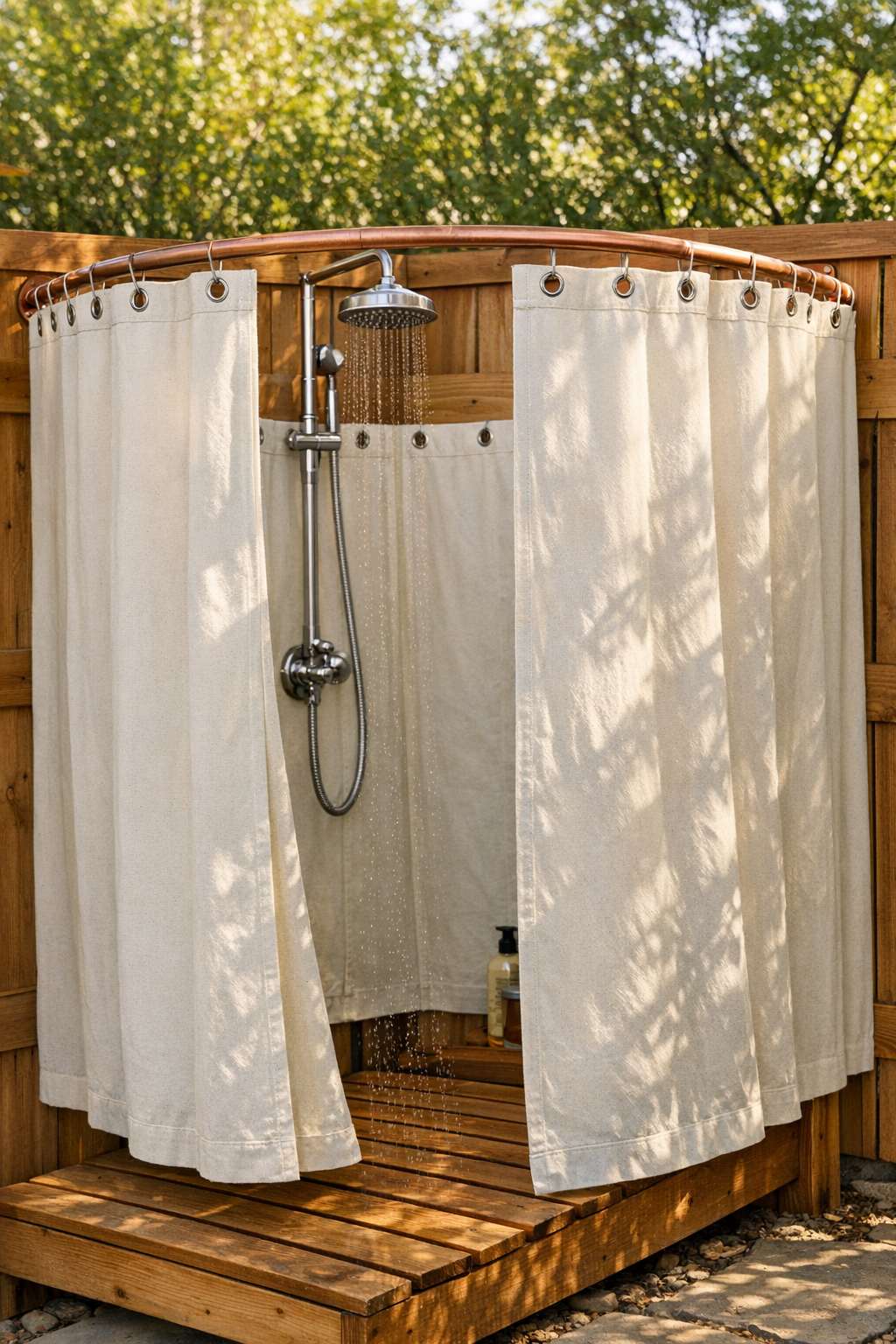
An outdoor shower curtain like this is one of those backyard fixes that feels downright clever once you see it finished. I’m taking a simple grommeted canvas drop cloth and threading it onto a curved copper pipe mounted right to a fence, which gives you privacy, weather-friendly durability, and a tidy look that feels more custom than expensive.
I’ve always had a soft spot for practical projects that make outdoor spaces more comfortable without a lot of fuss. This one is especially good for folks who have an outdoor shower, rinse station, pool area, or even a garden wash-off corner and want a little shelter without building a whole enclosure. It’s straightforward, sturdy, and handsome in that honest, useful way I’ve always admired.

Materials
1 grommeted canvas drop cloth, 6 ft x 9 ft
Instructions
1. Measure the shower or rinse area on your fence and decide how far the curtain should curve outward; a 30-inch projection and about 72 inches of hanging width works well for most backyard setups.
2. Mark the curtain rod height on the fence, usually 78 to 84 inches from the ground, and use a level so both mounting points sit even.
3. Dry-fit the copper pipe by connecting one 36-inch side piece to each end of the 30-inch front piece with the two 90-degree elbows to form a simple U shape.
4. Hold the assembled pipe against the fence to confirm the size and placement, and trim the pipe if needed so the curtain clears the shower hardware and hangs comfortably.
5. Sand any rough pipe ends lightly so they won’t catch the fabric grommets during installation.
6. Slide the grommeted edge of the canvas drop cloth onto the copper pipe before mounting, threading each grommet onto the front and side sections so the fabric will wrap around the curved frame.
7. Attach the wall-mount brackets or split-ring pipe clamps to the fence at your marked points, using exterior screws and washers for a secure hold.
8. Lift the threaded pipe assembly into the brackets and tighten it in place, checking again that the front section stays level.
9. Add the extra pipe straps along the side runs where they meet the fence for more support, especially if your curtain is heavy or the area gets wind.
10. Test the curtain by pulling it open and closed several times, then adjust the fabric spacing so it hangs evenly around the curve.
11. If you want a longer-lasting finish, spray the copper lightly with a clear outdoor protective coat and let it dry fully before regular use.
12. Hem or fold the bottom edge of the drop cloth if it sits too low, keeping it about 1 inch above the ground so it stays cleaner and dries faster.
Variations & Tips
For a softer look: Use an off-white or lightly weathered canvas drop cloth for a relaxed farmhouse feel that blends beautifully into a garden or rustic fence line.
For more privacy: Choose a wider drop cloth or overlap two panels by 6 to 8 inches so there’s no gap when the curtain is closed.
For windy spots: Sew small curtain weights into the bottom hem or clip a few rust-resistant weights along the lower edge to keep the fabric from billowing.
For easier movement: If the grommets catch a bit on the copper, rub the pipe with a little paste wax and buff it well so the curtain slides more smoothly.
For a longer rod: Add a center support strap on the front span if you extend the pipe wider than 30 inches, which helps prevent sagging over time.
My practical tip: Wash and dry the drop cloth before installation if you want to soften it up and reduce some of the stiffness. I’ve found that humble materials often behave better after a little breaking in, much like an old apron or a good dish towel.