
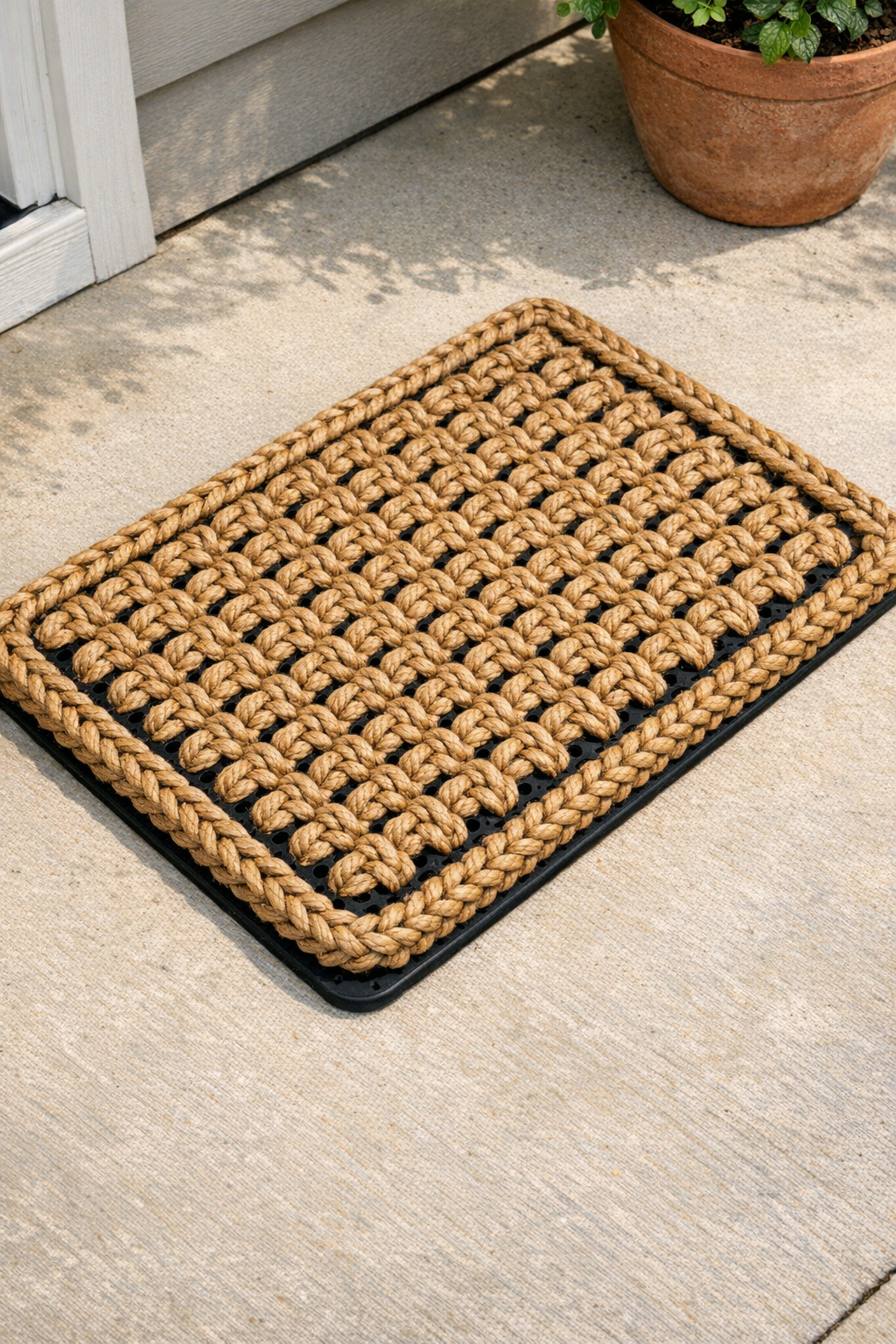
There is something mighty satisfying about turning a plain, practical thing into something that looks like it came from a little boutique on the town square. This late-summer doormat starts with an ordinary rubber car trunk cargo mat with drainage holes and a length of thick jute rope, and by the time you crochet through every hole, you end up with a sturdy, handsome mat that feels rustic, useful, and just a touch fancy. I love projects like this because they make good sense: the rubber base keeps the mat in place and lets water drain, while the jute gives it that warm natural look that always reminds me of porch season and dusty August evenings.
If you know a basic crochet stitch and can manage a large hook, this is a very approachable project. Even if you are not a seasoned crocheter, the holes in the mat act almost like built-in guides, so the pattern stays nicely under control. It is a wonderful project for anyone who enjoys practical handmade décor, especially if you like that farmhouse, late-summer look without spending a small fortune.
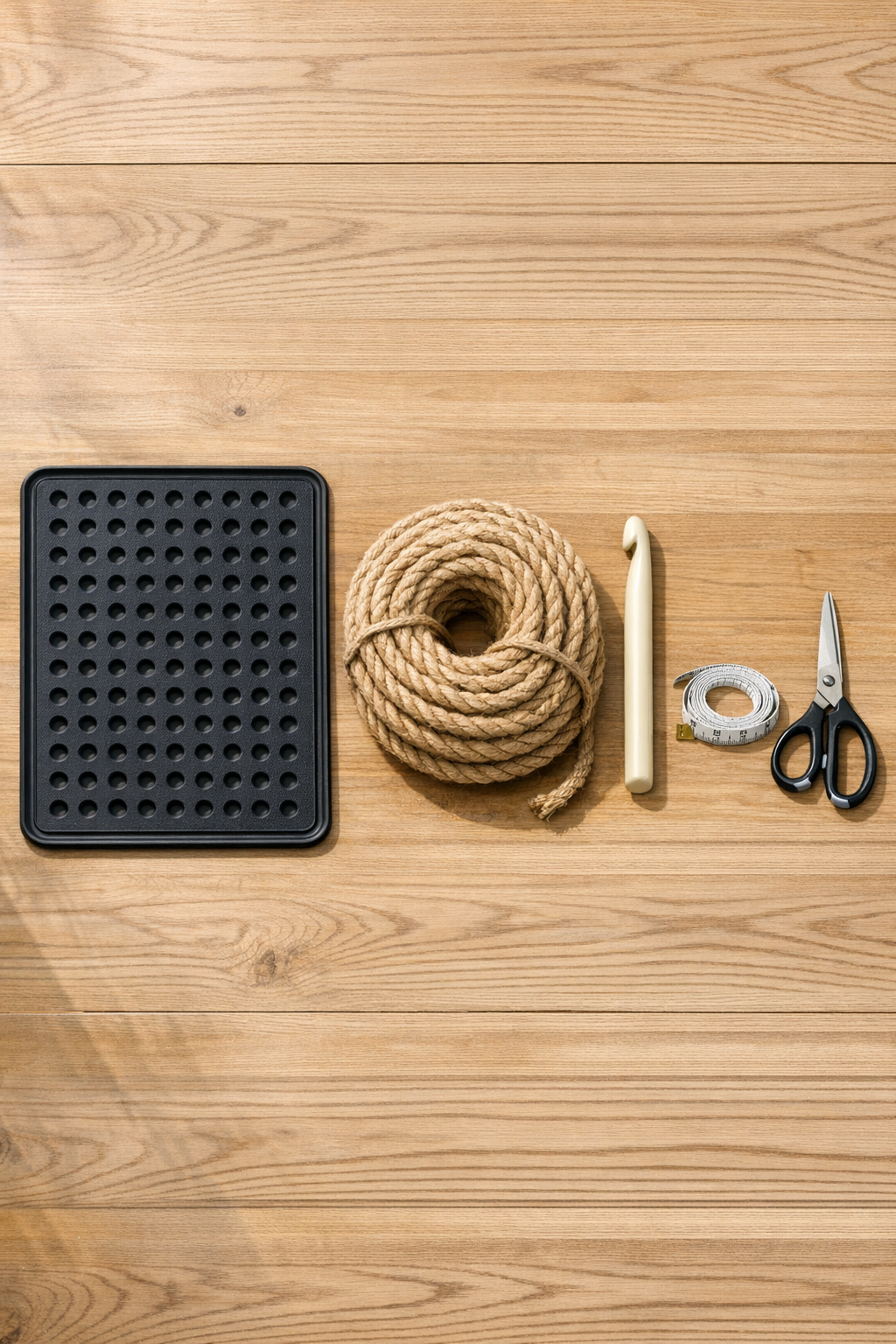
Materials
1 rubber car trunk cargo mat with drainage holes, approximately 24 x 36 inches
Instructions
1. Turn the cargo mat upside down so the flatter side faces up, then trim it if needed to your desired doormat size. Wipe it clean and dry so the rope will sit neatly against the surface.
2. Measure the mat and decide whether you want to cover every hole in straight rows or work a simple all-over stitch pattern. For a first mat, I recommend stitching through every hole in horizontal rows from one short end to the other.
3. Wrap the cut end of the jute rope with a little painter’s tape to keep it from fraying as you work. Thread the hook through the first corner hole from front to back, catch the rope, and pull up a loop.
4. Make a securing chain or tight loop at the first hole, then insert the hook into the next hole and pull up another loop. Complete a single crochet through that hole, keeping the rope snug against the rubber without puckering it.
5. Continue single crocheting through each hole across the first row, making one stitch per hole. Keep your tension even so the rope lies full and rounded on top of the mat.
6. At the end of the row, move directly into the next row by crocheting through the nearest hole below or above, depending on your mat’s hole layout. Work back across in the opposite direction, again placing one single crochet in every hole.
7. Repeat row by row until the center of the mat is fully covered in jute stitches. Every so often, lay the mat flat and smooth the rows with your hand to make sure the coverage looks even and the rubber base is not warping.
8. When the main field is covered, crochet around the outer edge through the perimeter holes to frame the mat. I like working one stitch in each edge hole, with an extra stitch in each corner so the border lies flat.
9. If you want a fuller, more expensive-looking finish, work a second round around the border using the same holes or by stitching around the edge of the mat where possible. This gives the mat a substantial rim that stands up nicely to foot traffic.
10. Cut the rope leaving a 6-inch tail, pull it through the last loop, and tighten to fasten off. Weave the tail back through several nearby stitches with the hook, then trim any excess neatly.
11. Shake the mat well to remove loose jute fibers and set it on the porch or by the door to check that it lies flat. If any section looks loose, go back and snug up those stitches before using it.
Variations & Tips
Smaller entry mat: If your doorway is narrow, cut the cargo mat down to about 18 x 30 inches before you begin. That size uses less rope and works up faster.
Softer hand feel: Jute has a wonderfully rustic look, but it can be scratchy on the hands. I sometimes wear lightweight work gloves for the early rows, especially when pulling thick rope through snug holes.
Alternative fiber: For a similar look with a bit more flexibility, try thick cotton clothesline rope instead of jute. It is often easier to crochet and sheds less.
Tension tip: The prettiest results come from firm, even stitches. If the mat curls, your stitches are too tight; if you can see too much rubber between stitches, they are too loose.
Outdoor care: This mat does best in a covered porch or sheltered entry. Jute can handle everyday use, but constant soaking rain will shorten its life.
Color accent: If you want a little late-summer charm, weave in a few rows of dark green or muted gold outdoor rope near the border. It gives the mat a custom look without losing that natural country feel.