
There’s a certain satisfaction in making do with what’s on hand, and that old habit has served me well over the years. This little project turns plastic spiral binding coils and a basic metal screw into a simple homemade masonry anchor, shaped with heat so it can grip inside a drilled hole. It’s the kind of practical fix that appeals to folks who like to tinker, reuse materials, and understand how things work with their own two hands.
I do want to say plainly that this is best suited for light-duty, non-critical uses like hanging a small shop tag, fastening a lightweight guide, or testing a clever upcycling idea at the workbench. I wouldn’t trust a homemade anchor anywhere safety matters. Still, for the handy person who enjoys experimenting, it’s a neat transformation and a fine reminder that even humble scraps can earn a second life.
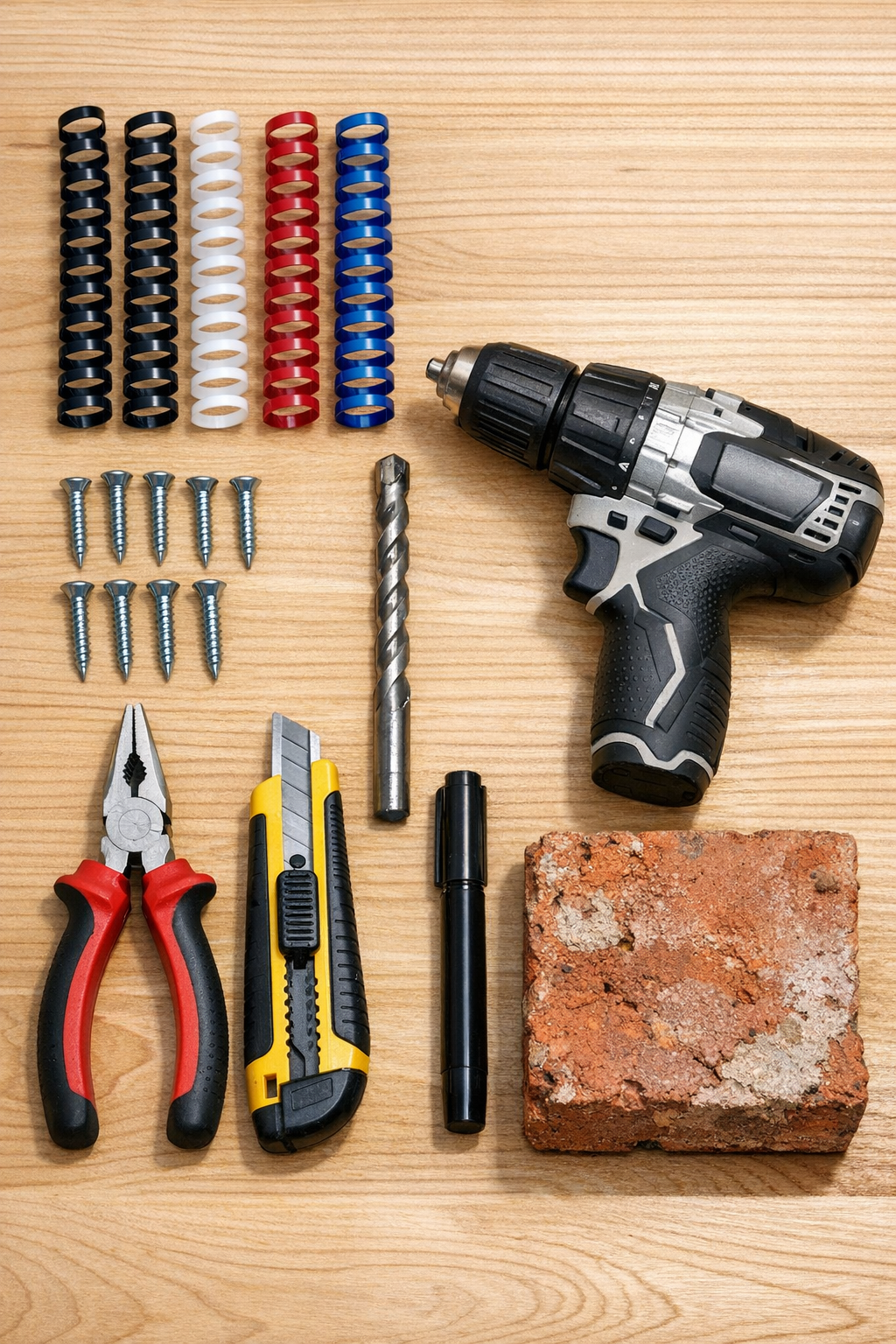
Materials
Instructions
1. Cut the plastic spiral binding coil into sections about 1 1/2 inches long, making each piece slightly shorter than the screw you plan to use.
2. Check that the coil diameter will fit into the drilled hole snugly once softened and shaped; trim away any bent or damaged ends with a utility knife.
3. Mark your masonry drill bit with masking tape at a depth about 1/4 inch deeper than the anchor length so you won’t drill too shallow.
4. Drill a clean hole into the brick or concrete using the masonry bit, then blow out or brush out all the dust so the anchor can grip the sides properly.
5. Thread a screw gently into one plastic coil section to test the fit, then back it out; the screw should bite into the plastic without splitting it.
6. Hold the coil section with pliers and warm it carefully with a heat source until the plastic just begins to soften and relax, not burn or drip.
7. While the plastic is soft, insert the shaping screw partway into the coil and press or roll the outside lightly so the spiral compresses into a rough sleeve shape with ridges along the outside.
8. Let the piece cool completely for a minute, then remove the screw and smooth any sharp melted nub with sandpaper or the knife.
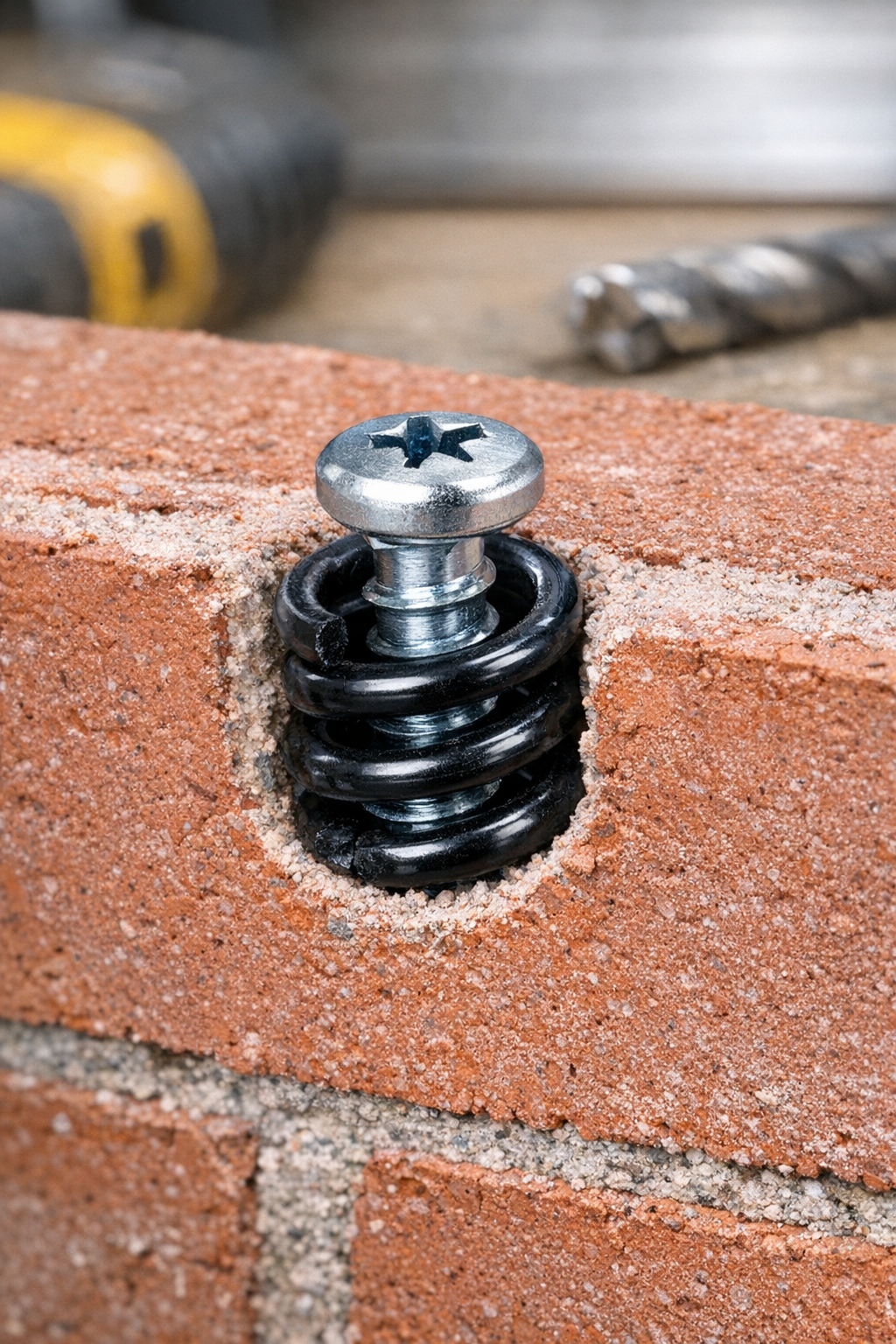
9. Push the finished plastic sleeve into the drilled masonry hole until it sits flush or slightly below the surface; if it’s too tight, trim a little plastic rather than forcing it.
10. Drive the screw into the sleeve slowly and stop once it feels firmly seated, allowing the plastic to expand against the sides of the hole.
11. Test the hold with a gentle hand pull or light-duty mounted item, and remake the anchor with a slightly larger or longer coil section if you need a tighter grip.
Variations & Tips
For lighter fastening: Use a shorter coil section and a shorter screw for small, non-critical attachments like lightweight markers or workshop guides.
For a tighter anchor: If the hole is a touch oversized, soften a fresh coil piece and leave a little more outer ridge on it so the plastic has more to bite with.
Heat carefully: I’ve learned over the years that gentle heat does a prettier job than impatience ever will; warm the plastic slowly so it softens evenly instead of scorching.
Choose sound masonry: Old rural brick taught me this lesson many times—crumbly mortar or weak brick won’t hold much no matter how clever the anchor is, so drill into solid material whenever possible.
Keep this for non-safety jobs: Homemade anchors are best treated as workshop experiments or light-duty fixes, not for shelves, railings, overhead loads, or anything that could hurt someone if it failed.