
There’s something especially satisfying about turning plain, throwaway packaging into a sturdy garden feature, and this project does exactly that. By pressing wet cement over empty cardboard egg cartons, you can create heavy patio stones with a wonderfully dimpled texture that looks surprisingly intentional once it cures. It’s simple, low-cost, and ideal if you want handmade stepping stones without buying specialized molds.
I like projects like this because they sit right at the intersection of practical and creative. If you’ve never worked with cement before, this is a forgiving place to start, and if you already enjoy making things for your patio or garden, the egg carton texture gives you a nice organic finish that works beautifully with gravel paths, planting beds, or tucked between potted herbs.
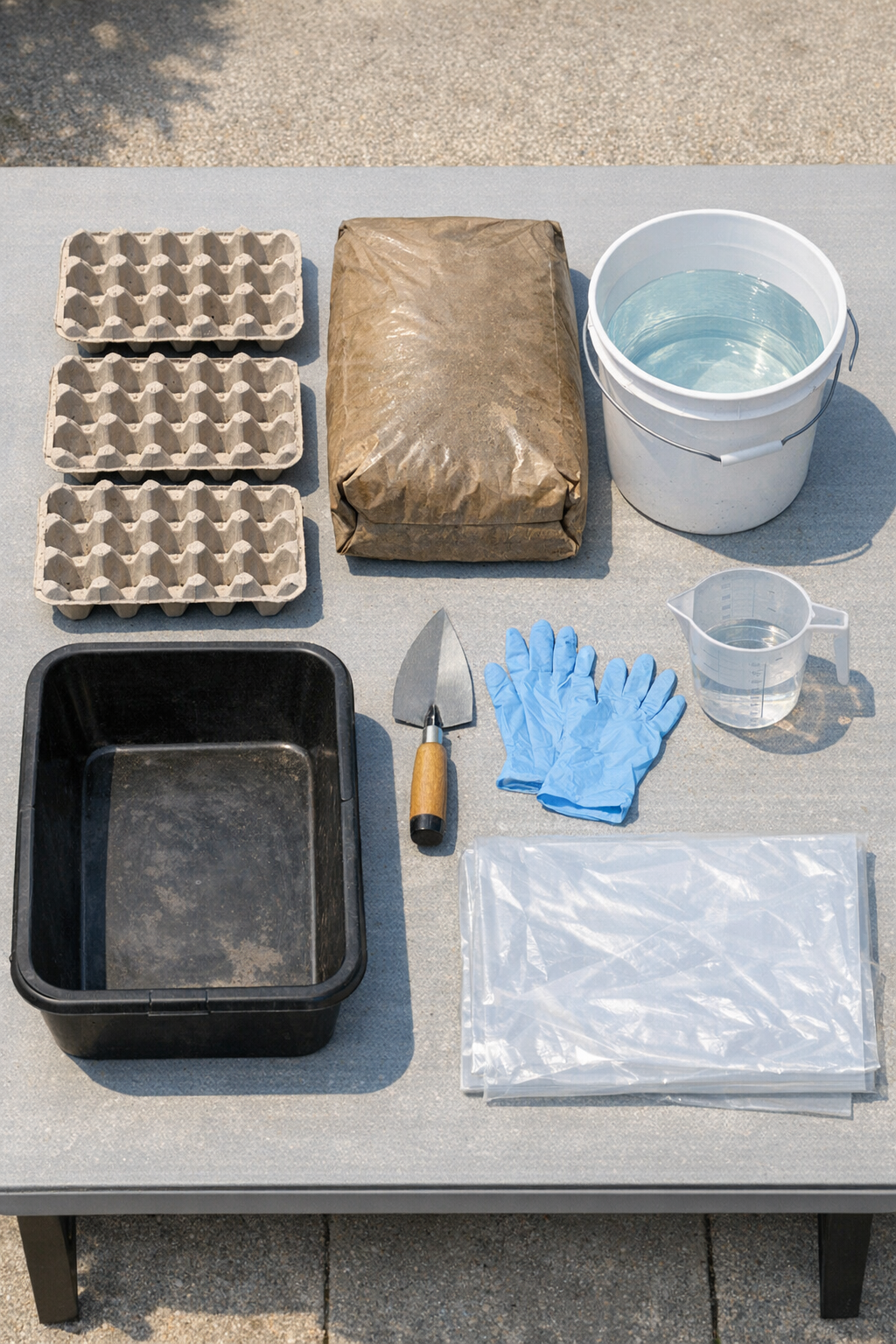
Materials
2 empty cardboard egg cartons, 12-egg size
Instructions
1. Cover your work area with the plastic sheet and set the empty cardboard egg cartons on top with the cup side facing up. Put on gloves and keep everything within easy reach because cement begins to set faster than most people expect.
2. Lightly dampen the egg cartons with a little water so the cardboard doesn’t pull moisture too quickly from the cement. They should feel slightly moist, not soggy or collapsing.
3. Pour the cement mix into your tub and add water 1 cup at a time, stirring until you have a thick, spreadable consistency like stiff mashed potatoes. The mix should hold its shape on a trowel without running.
4. Scoop cement onto the top of each egg carton and begin pressing it down gently so it conforms to the peaks and valleys. Cover the entire carton with a layer about 1 1/2 inches thick so the finished stone will be heavy and durable.
5. Shape the edges with your gloved hands or trowel, rounding or squaring them as you like. If any spots look thin, press on a bit more cement and smooth it just enough to hold together.
6. Let the stones sit undisturbed for 24 hours until they are firm enough to lift. In my own patio projects, I’ve learned that patience here matters more than perfect smoothing, because the texture is what makes these look interesting later.
7. Carefully peel away or trim off any exposed cardboard once the stones are hard enough to handle. If a little carton remains stuck underneath, leave it and let it dry out naturally before brushing it off later.
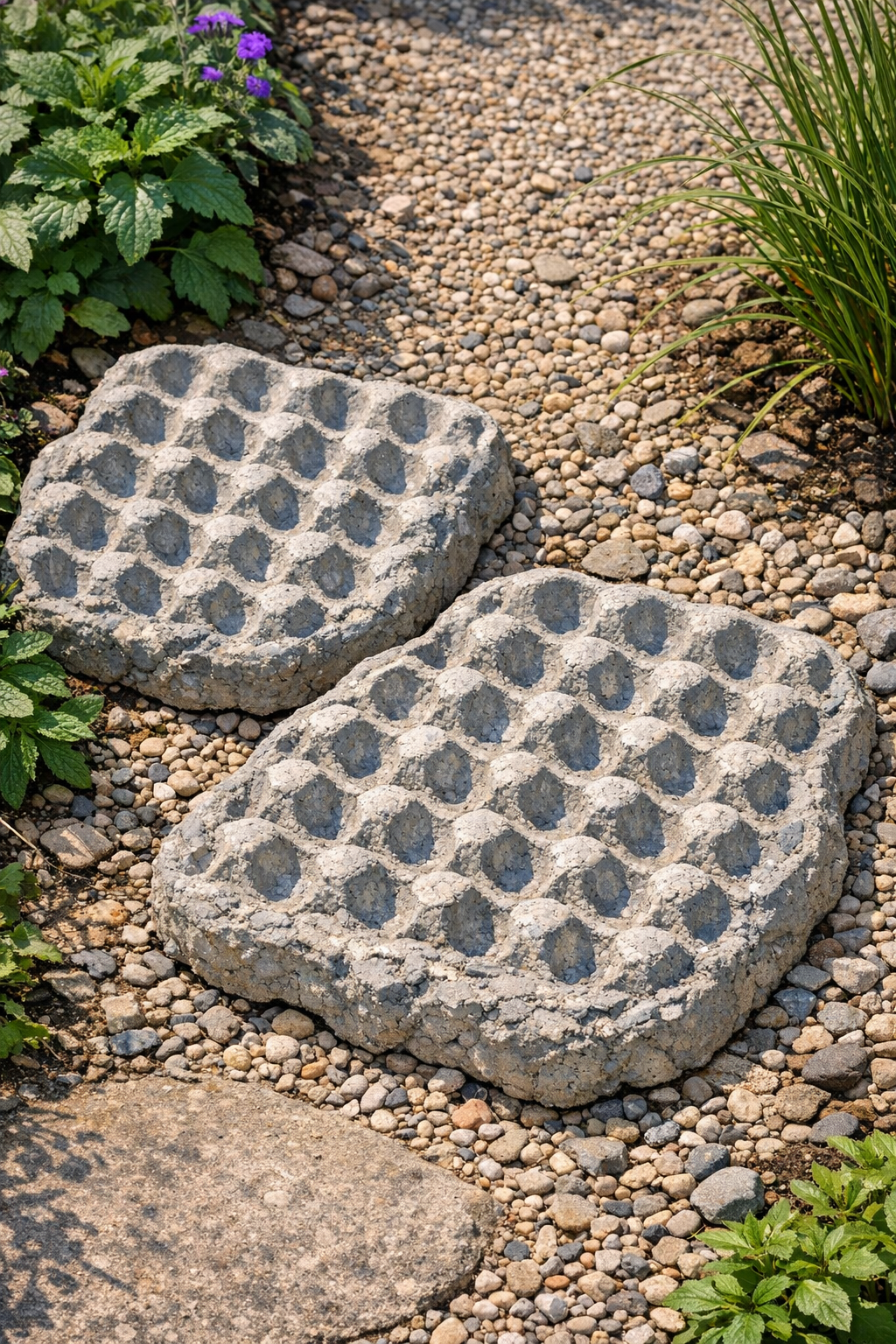
8. Cure the stones for another 3 to 5 days, lightly misting them once or twice a day if the weather is hot or dry. Once fully hardened, place them in the patio, garden path, or between planters with the dimpled side facing up.
Variations & Tips
Make them larger: For wider stepping stones, place two egg cartons side by side and bridge them with cement, keeping the thickness at least 1 1/2 inches so the slab stays strong.
Add color: Stir a small amount of concrete pigment into the dry mix before adding water if you want earthy gray, terracotta, or charcoal tones that blend more naturally into the landscape.
Create cleaner edges: If you prefer a more polished look, trim the carton shape slightly before covering it, then smooth the perimeter with a damp gloved hand after the cement begins to firm up.
Use the right mix: I’ve found that mixes with sand and fine aggregate are easier for this kind of molded texture than coarse concrete blends with large gravel, which can leave weak spots and make shaping harder.
Place them carefully: These stones are decorative and useful for light foot traffic, but they’ll last longer if they sit on a level bed of compacted soil or gravel instead of wobbling on uneven ground.