
An outdoor towel rack is one of those backyard additions you do not realize you need until you are constantly draping damp towels over chairs, railings, and whatever else is nearby. This version uses painted wooden oars and thick sisal rope to create a rack that feels coastal, practical, and sturdy enough for everyday use near a pool, hot tub, or garden shower.
I love projects like this because they borrow from familiar materials and give them a second life with a very clear purpose. If you are comfortable with basic measuring, sanding, painting, and threading rope, you can make this in an afternoon, and the finished piece has that collected, almost cottage-by-the-lake look that works beautifully in a Midwestern summer backyard.
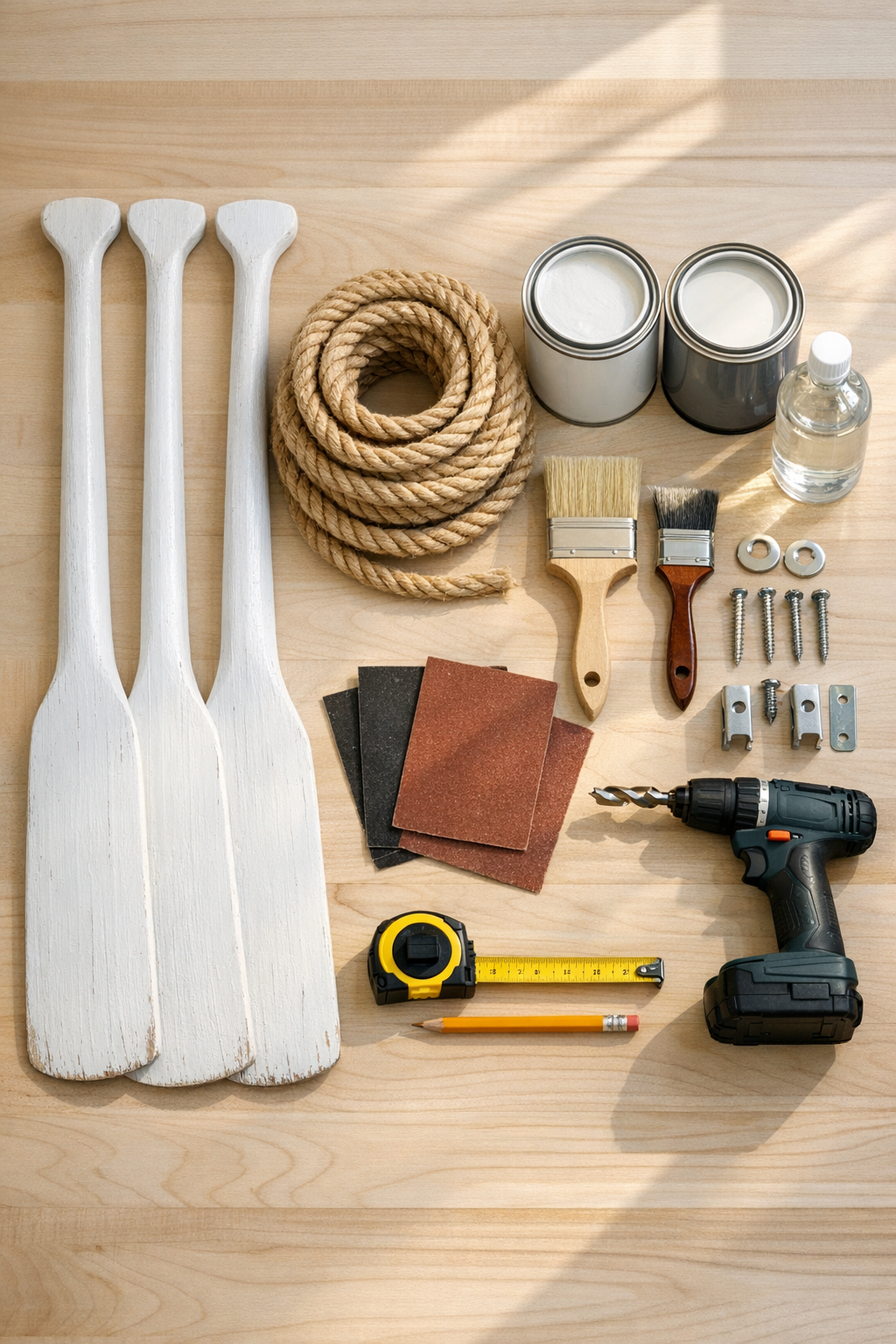
Materials
Instructions
1. Clean the wooden oars thoroughly and let them dry completely so paint and sealer will adhere well. If you are using vintage oars, remove any loose flakes, dirt, or rough splinters first.
2. Sand the entire surface of each oar with 120-grit sandpaper, then smooth with 220-grit. Fill dents or deep cracks with exterior wood filler if needed, and sand those areas flush once dry.
3. Mark rope holes on each oar so they line up evenly when hung vertically; place one hole about 8 inches below the blade shoulder and a second hole about 10 to 12 inches below the first. Keep the marks centered on the shaft for a balanced look.
4. Drill the holes using a wood bit slightly larger than your 1/2 inch sisal rope so the rope passes through without fraying. Sand the inside edges of each hole until smooth to protect the rope.
5. Apply one coat of exterior primer to the oars and let it dry fully according to the manufacturer’s timing. This extra step is worth it outdoors, especially if the wood is old or porous.
6. Paint the oars with two even coats of exterior white paint, allowing proper drying time between coats. I like vintage white because it softens the whole piece and makes the rope texture stand out.
7. Seal the painted oars with one or two thin coats of clear exterior sealer, paying extra attention to the drilled holes and end grain. Let the finish cure completely before assembling the rack.
8. Cut two equal lengths of sisal rope, about 9 to 10 feet each, depending on your desired rack width and hanging spacing. Wrap tape around the cut points before cutting to keep the sisal from unraveling.
9. Thread one rope through the upper set of holes across all three oars, then thread the second rope through the lower set. Space the oars evenly, usually 12 to 16 inches apart, depending on how wide you want the towel rack to be.
10. Tie a large stopper knot on the outer side of each end of both ropes to hold the oars in place, adjusting the spacing before tightening fully. If you want extra hold, add a small dab of exterior construction adhesive inside each hole before final tightening.
11. Attach D-ring or keyhole hangers to the back of the top area of each outer oar, using rust-resistant screws. Check that the hardware sits at the same height so the rack hangs straight.
12. Hold the assembled rack against the wall, mark the mounting points, and install wall anchors if you are not drilling into solid wood framing. Fasten the rack securely with exterior screws and test it with a few dry towels before regular use.
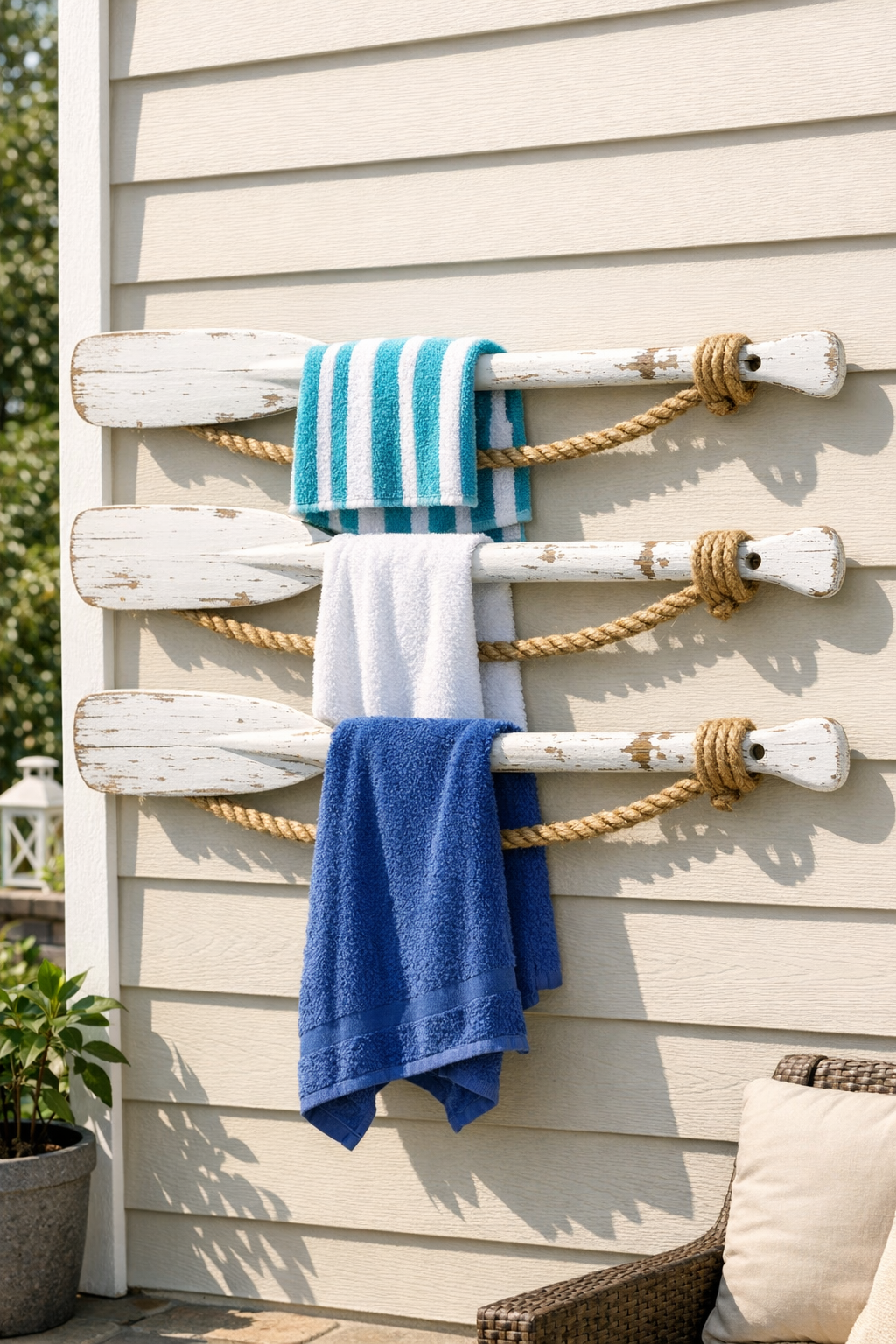
Variations & Tips
Color choice: White gives this project a breezy vintage look, but soft blue, sage green, or weathered gray also work well outdoors and pair nicely with natural sisal.
Wood selection: If you cannot find true vintage oars, use new unfinished decorative oars and distress them lightly after painting for a similar character.
Rope spacing: For larger pool towels, increase the spacing between the oars so air circulates better and the towels dry faster.
Weather protection: If the rack will sit in full sun and rain, refresh the topcoat every season or two to keep the paint from chalking or peeling.
Mounting tip: For the strongest install, anchor at least one side into a stud, fence post, or solid wood backing rather than relying only on hollow-wall anchors.
Style upgrade: Wrap the rope ends with a little jute twine before knotting if you want a tidier, more finished nautical look.