
I’ve always had a soft spot for making something useful out of what would otherwise be tossed aside, and old blue jeans are one of those materials I just can’t look at without seeing possibility. This heavy-duty floor underlayment is a sturdy, practical pad you can make by soaking shredded denim with two simple household ingredients, then pressing it into dense sheets that work beautifully under rugs, small storage cabinets, pet feeding stations, or workshop mats.
What I like most about this project is that it turns tough cotton denim into something with real backbone. It’s a good fit for folks who enjoy upcycling, need a budget-friendly underlayment for light household use, or simply want to try a hands-on project that feels old-fashioned in the best way. It reminds me of the farm habit of wearing things out twice—first as clothing, then as something useful around the house.
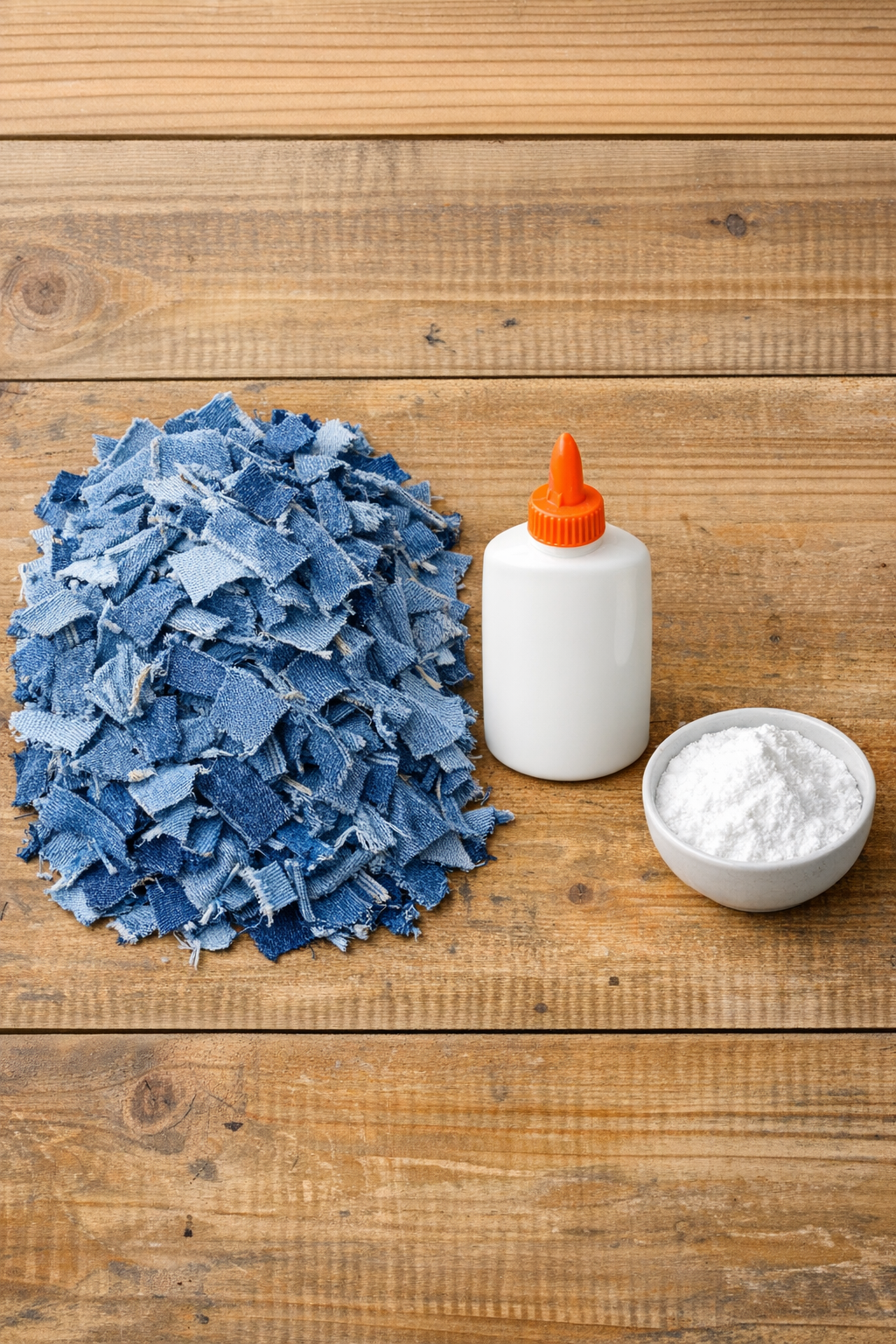
Materials
Instructions
1. Cut away seams, waistbands, and heavy hems from the jeans, then shred the remaining denim into short, narrow pieces so the fibers will mat together more evenly.
2. Put the shredded denim in a large bucket or tub and add enough warm water to fully cover it; let it soak for 8 to 12 hours until the fibers soften.
3. Drain the denim well, then squeeze out the excess water until it is very damp but not dripping; I usually press handfuls between my palms or inside an old towel.
4. Transfer the damp denim to a large mixing tub and work in the white glue a little at a time, turning and squeezing until every piece is lightly coated.
5. Sprinkle the baking soda over the glued denim and mix thoroughly so it is evenly distributed through the mass with no dry pockets left behind.
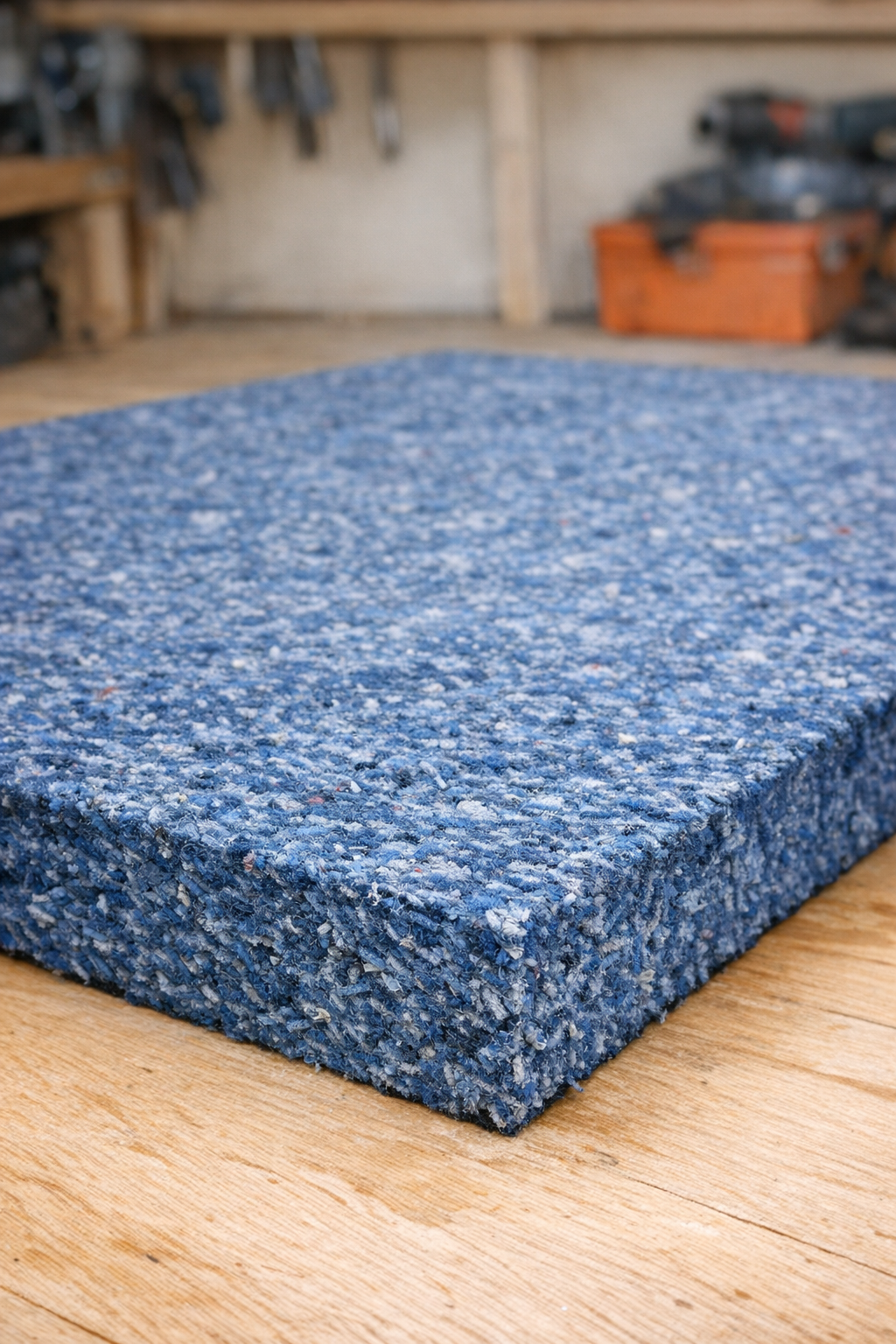
6. Spread the mixture onto a flat protected surface and shape it into a slab about 1/2 inch thick, pressing firmly so the fibers lock together into an even layer.
7. Place another flat board, tray, or baking sheet on top and press down hard by hand or with stacked heavy books to compact the slab as densely as possible.
8. Leave the slab under pressure for 24 hours, then remove the weight and let it air-dry for another 24 to 48 hours until fully firm throughout.
9. Trim the edges with sturdy scissors or a utility knife to fit the area where you plan to use it, and test it on a dry floor before placing anything heavy on top.
10. If you want a thicker underlayment, make a second slab and glue the two dry layers together, then press and dry them once more to create an extra-heavy pad.
Variations & Tips
For larger panels: Make several smaller sections instead of one oversized slab, then place them edge to edge under a rug or bench; they are easier to press evenly and dry more reliably.
For smoother edges: Press the denim mixture inside a shallow tray or simple wooden frame lined with wax paper so the slab holds a cleaner shape while it dries.
For extra density: Really take your time compacting the mixture before drying. In my experience, firm pressing matters more than adding more glue.
Best use: This works best as a homemade underlayer for light-duty household applications, especially where you want a little cushioning and grip without buying specialty padding.
Drying tip: Set the slab where air can move around it well, and turn it once during the final drying period if the bottom still feels cool or damp.
Practical caution: Always use the finished pad only when completely dry, and avoid placing it in constantly damp areas such as bathrooms, entryways with wet boots, or directly on wet concrete.