
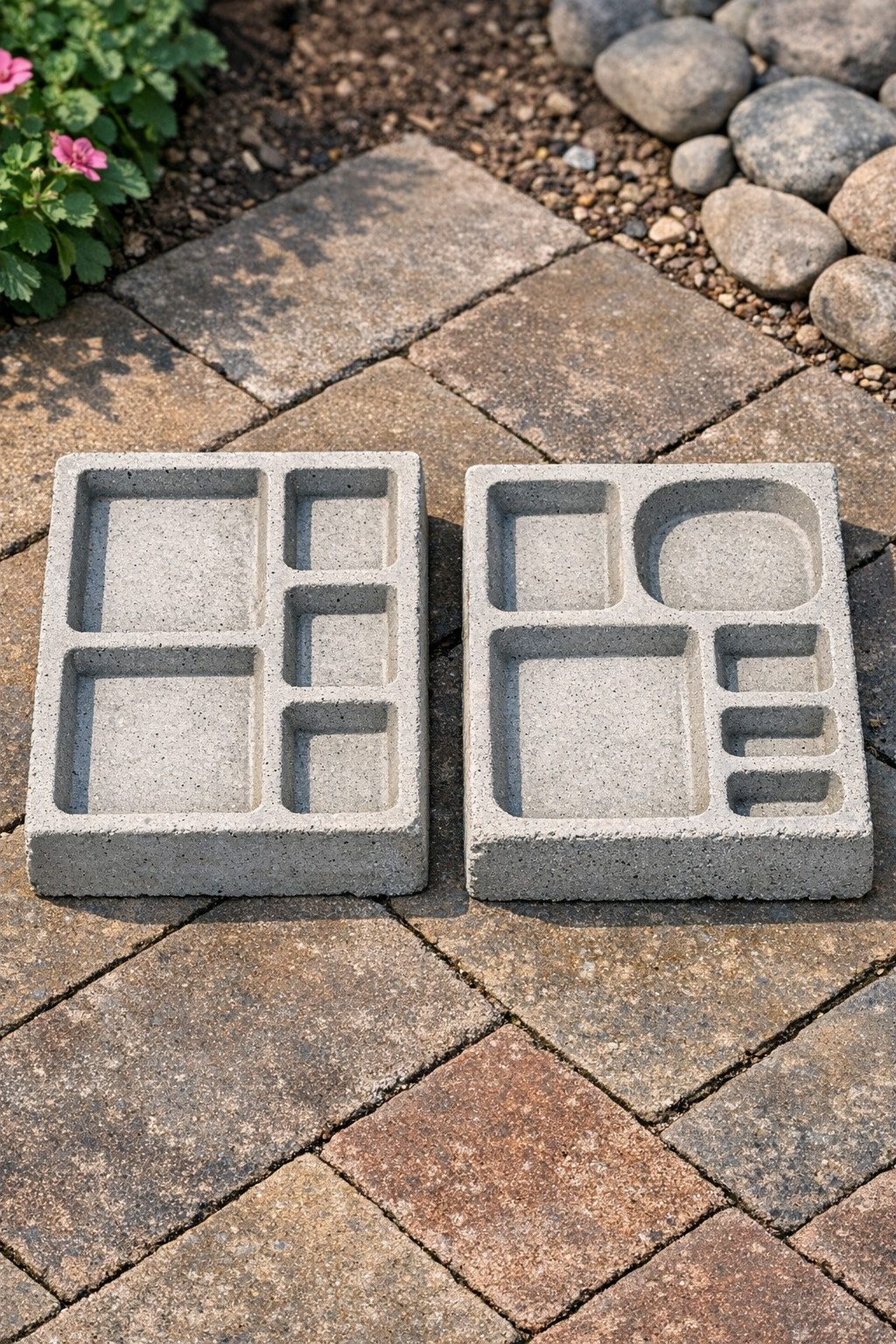
I love a project that turns an everyday object into something sturdy and unexpectedly polished, and this one does exactly that. By using retro plastic cafeteria trays as molds, you can make heavy segmented patio blocks with built-in sections that look far more custom than the process suggests. The “basic staple” here is simple wire mesh, which helps reinforce the concrete so the finished blocks feel more dependable underfoot.
This is a good weekend project for anyone who wants to create a small patio path, a garden sitting spot, or stepping stones with a little midcentury charm. As someone who spends plenty of time thinking about structure in the kitchen as well as flavor, I appreciate how satisfying this is: a humble tray gives you neat divisions automatically, and the concrete cures into something practical, weighty, and surprisingly attractive.
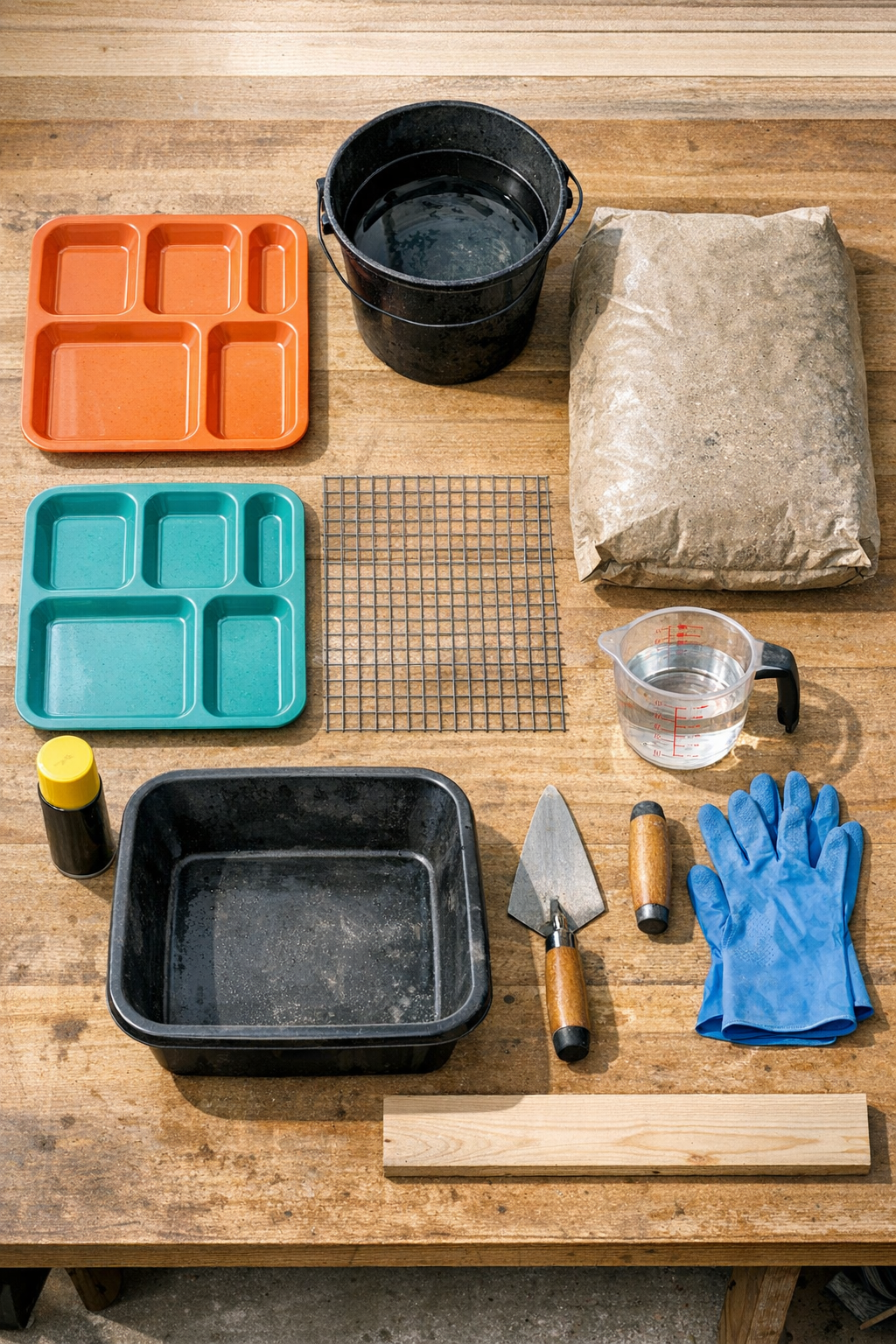
Materials
Instructions
1. Set the trays on a flat, level surface protected with the plastic drop cloth, and check that they do not wobble. A level setup matters here because the concrete will copy every tilt.
2. Clean and dry the trays thoroughly, then coat the inside lightly with nonstick cooking spray or mold release. Keep the layer thin so you do not leave puddles on the plastic.
3. Cut the wire mesh so each piece fits inside a tray with about 1 inch of clearance around the edges. This reinforcement is simple but helpful, much like adding structure to a delicate baked custard so it holds its shape when served.
4. Pour the concrete mix into a mixing tub and add water a little at a time, stirring until it reaches a thick, scoopable consistency like stiff oatmeal. It should hold its shape when lifted, not run like batter.
5. Fill each tray about halfway, pressing concrete into all the segmented compartments with a trowel or gloved hand. Tap the trays firmly against the work surface a few times to bring air bubbles to the top.
6. Lay one piece of wire mesh onto the half-filled concrete in each tray and press it down gently so it sits near the center thickness. Do not let the mesh touch the tray edges or bottom.
7. Add more concrete until each tray is filled to the top, then use the scrap board to screed across the surface and level it. Smooth any low spots with the trowel and tap the trays again to release trapped air.
8. Let the trays sit undisturbed for 24 to 48 hours until the concrete is firm enough to handle. If the weather is hot or dry, cover them loosely with plastic so they cure slowly and gain strength.
9. Flex the plastic trays gently to loosen the blocks, then turn them over onto cardboard, a towel, or sand and ease the concrete pieces out. Handle them with both hands because they will be heavy and still somewhat green.
10. Cure the blocks for another 5 to 7 days in a shaded spot, lightly misting them once or twice a day for the first couple of days if conditions are very warm. Wait until they are fully cured before placing them in a walkway or patio area.
Variations & Tips
Smoother Finish: For a cleaner face, tap the trays a bit longer after filling and smooth the back carefully with the trowel. More vibration usually means fewer surface voids.
More Decorative Look: Press pea gravel, mosaic tile pieces, or sea glass lightly into the exposed side before the concrete fully sets. Keep embellishments shallow so the block stays comfortable to walk on.
Color Option: Add concrete pigment according to the package directions if you want charcoal, terracotta, or sandstone tones. I find earthy colors especially nice in herb gardens and small seating areas.
Strength Tip: If your trays are especially large or flexible, support them underneath with a plywood sheet while they cure. This helps prevent bowing and gives you a flatter finished block.
Placement Advice: Set the finished blocks over a compacted sand base if you are using them outdoors. A stable base keeps the segmented design looking intentional instead of shifting after the first hard rain.
Mold Release Reminder: Avoid heavy oiling inside the trays because too much release agent can soften the crispness of the compartment lines. A very light coat is enough.