
There is something mighty satisfying about turning a worn-out garden hose into something useful again, especially when it becomes a set of hardworking outdoor mats that can stand up to muddy boots, porch traffic, and wet weather. Out where I live, nothing gets tossed too quickly if it still has a bit of life left in it, and this project has that same practical, old-fashioned spirit I grew up with.
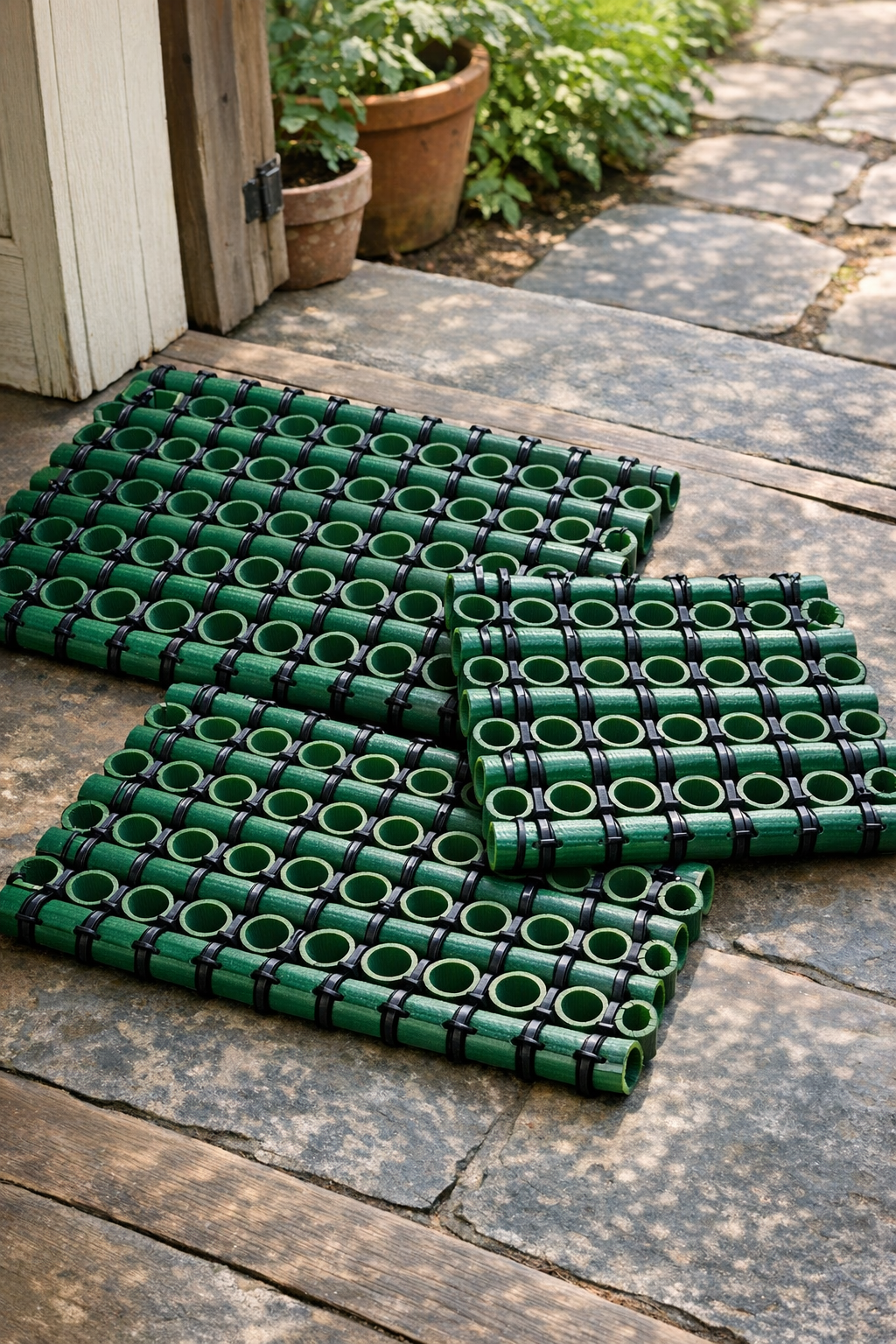
These hose-slice mats are a good fit for anyone who wants a sturdy, easy-to-rinse floor mat for a back step, potting bench, mudroom entry, or garden shed. I make this as a 3-piece set so I can place one by each door that sees the most mess, and the finished mats have a cheerful, tidy look that surprises folks when they learn what they are made from.
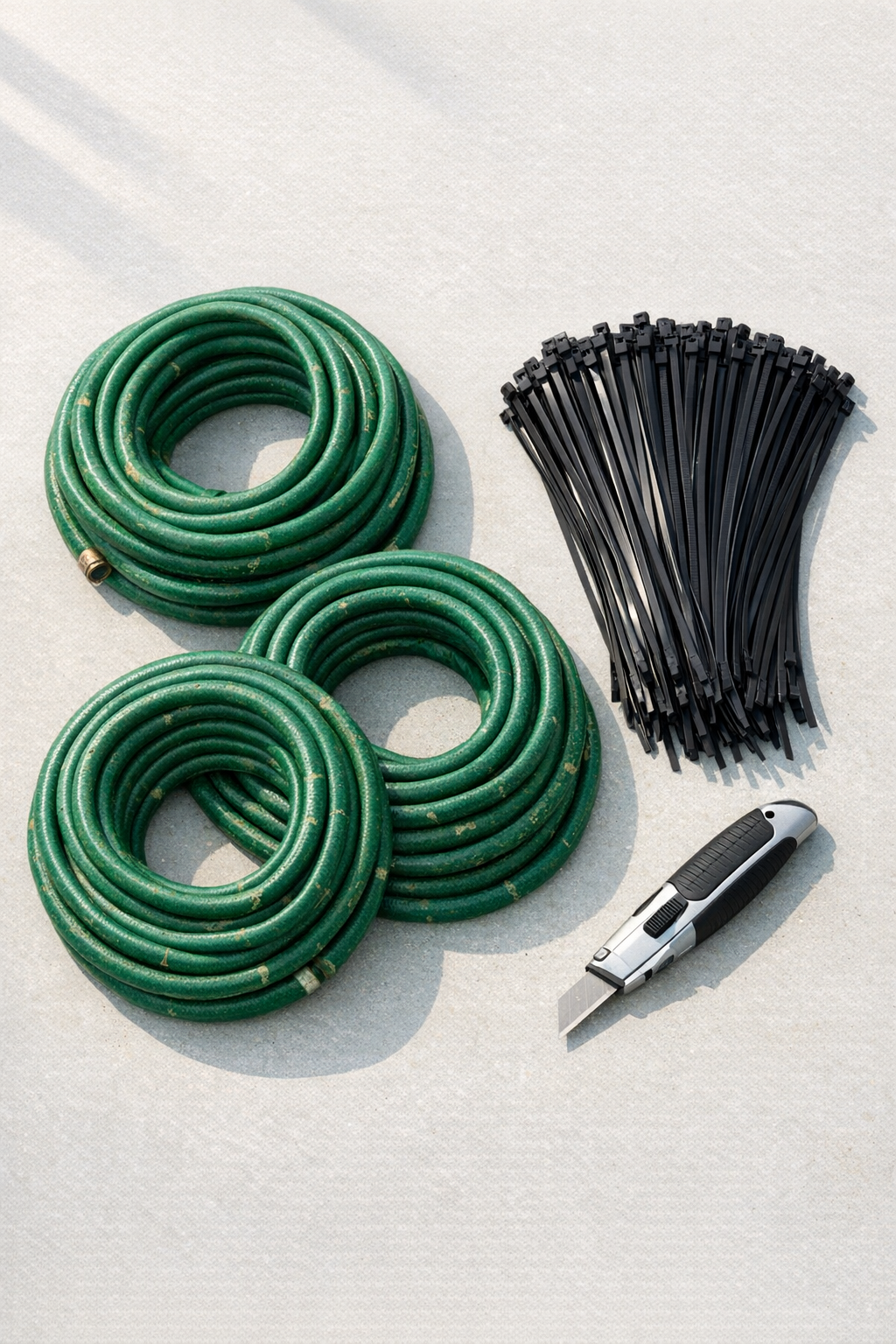
Materials
Instructions
1. Rinse the garden hoses well and let them dry so you are not working with slippery dirt or grit. If any hose sections are badly cracked or brittle, cut those parts away and discard them.
2. Cut the metal hose ends off each hose, then divide the remaining hose lengths into manageable straight sections about 24 inches long. For three mats, plan on making each mat about 18 x 30 inches.
3. Slice each 24-inch hose section lengthwise with the utility knife so it opens into a long curved strip. Work slowly on a protected surface and keep the cut as straight as you can.
4. Press each sliced section flatter by hand so the strips relax and are easier to line up. They do not need to be perfectly flat, just flexible enough to sit side by side.
5. Lay 18 to 20 hose strips next to each other for the first mat, keeping all the curved sides facing the same direction. Adjust the layout until you have a rectangle roughly 18 x 30 inches.
6. Thread zip ties around the full width of the mat at 4 evenly spaced points, placing them about 3 inches in from each end and then spacing the others across the middle. Pull each tie snug enough to hold the strips tightly together without buckling them.
7. Trim the tails off the zip ties close to the lock heads, then square up the mat by trimming any uneven hose-strip ends with the utility knife. If you want a slightly thicker mat, add one or two more strips before tightening the ties fully.
8. Repeat the same process to make the second and third mats, matching the size as closely as possible so the set looks consistent. A simple way is to use the first mat as your size guide while laying out the next two.
9. Hose the finished mats off once more to remove any plastic dust, then place them at outdoor entries or near your potting area. The slight curve in the hose strips helps scrape dirt, and the plastic holds up nicely in wet spots.
Variations & Tips
For a larger porch mat: Use longer hose sections, such as 30 or 36 inches, and add more strips across the width. Just be sure to add an extra zip tie or two so the middle stays secure.
For better drainage: Leave a small gap between each hose strip when laying out the mat. That little bit of space helps rainwater and mud fall through instead of sitting on top.
If your hoses are different shades: Alternate light and dark green strips to create a simple striped pattern. I always think a practical project is even nicer when it has a touch of charm.
To make cutting easier: Replace the utility blade as soon as it begins to drag. A fresh blade gives you a cleaner slice and makes the job much safer and less tiring on your hands.
For extra strength: Double up the zip ties at the two end positions if the mats will get especially heavy use. That is a good choice for a farmhouse back door or a busy shed entrance.
Cleaning tip: These mats can be rinsed with a garden hose and leaned up to dry. If they get especially grimy, a scrub brush and a little dish soap will freshen them right up.