
I’m always a little delighted when something destined for the trash turns out to be genuinely useful, and this is one of those projects. If you have a pair of worn foam flip-flops and a basic pantry staple, you can make simple heavy-duty vibration dampeners for small household appliances, speakers, or other items that rattle, buzz, or creep across a hard floor.
What makes this trick worth doing is that it’s fast, inexpensive, and surprisingly effective. The foam provides cushioning, while the pantry item helps create a grippy surface that keeps the pads from sliding around. I especially like this project for apartment living, where cutting down vibration from a fan, compact washing machine, dehumidifier, or countertop appliance can make a room feel much calmer.
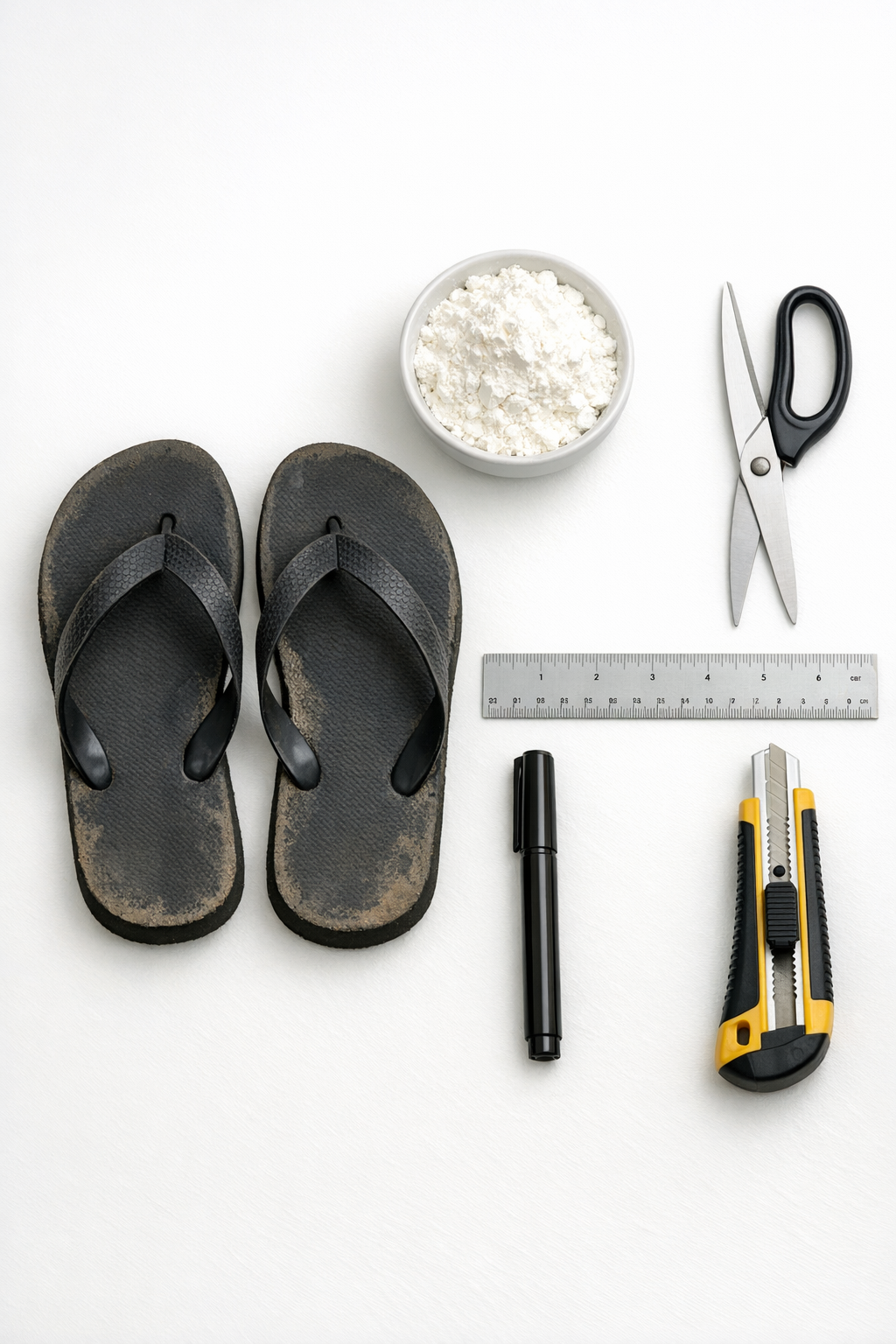
Materials
1 pair worn foam flip-flops, standard adult size, about 1/2 inch thick
Instructions
1. Wash and dry the flip-flops thoroughly so the foam is free of dust, body oils, and loose grit.
2. Remove and discard the straps, then lay the foam soles flat and check that the material is still springy rather than cracked or brittle.
3. Measure and mark the soles into equal pads sized for your project; for most appliances, I cut 2-inch by 2-inch squares or 2-inch diameter circles.
4. Cut out the marked pads with scissors, using the utility knife only if you need cleaner edges or are working with thicker foam.
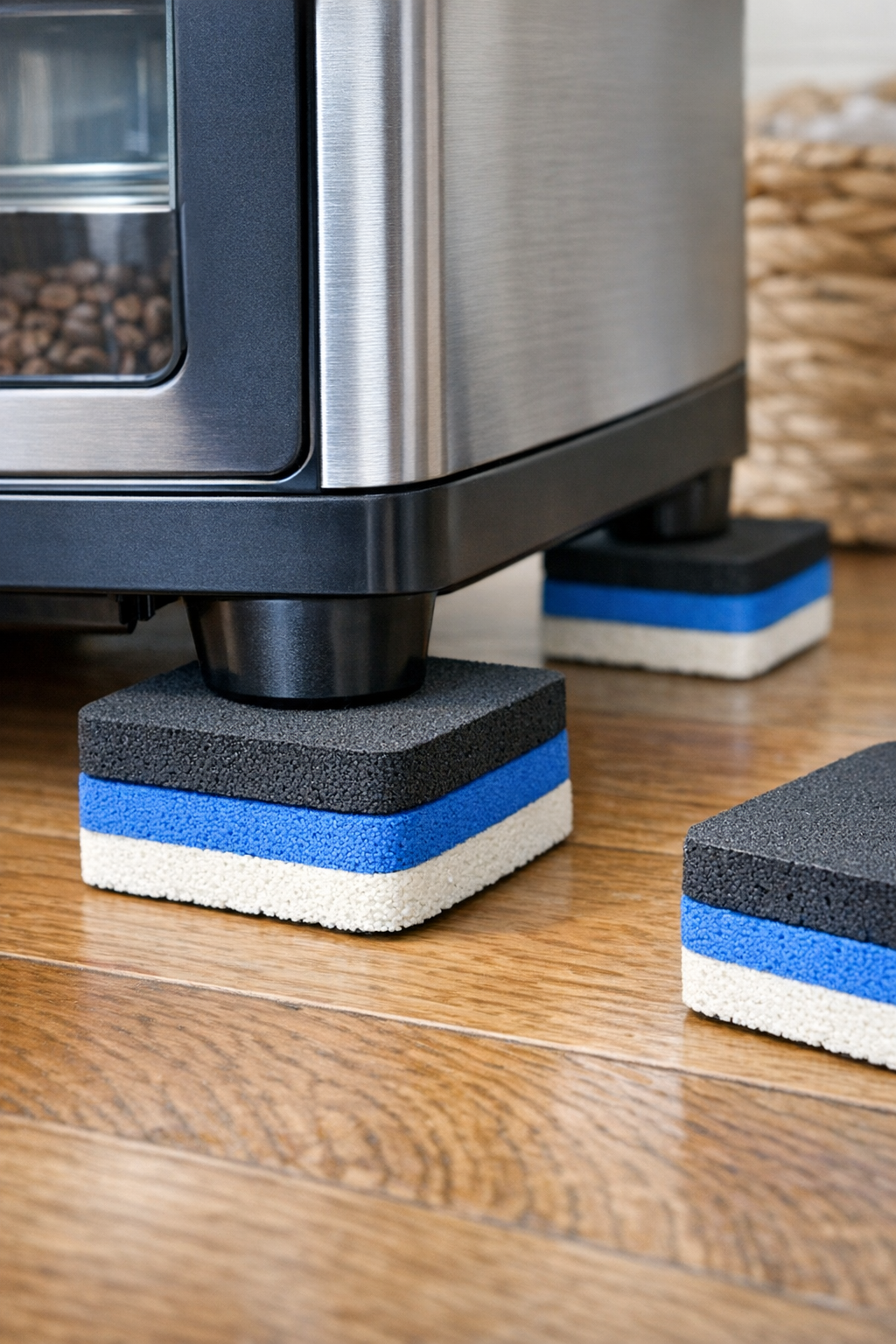
5. Stack two matching pads together for each dampener if you need extra height or stronger shock absorption; leave them single-layer for lighter items.
6. Lightly dampen the bottom side of each pad with the cloth, then dust a very thin coating of cornstarch over the surface and rub it in with your fingers until it feels slightly tacky rather than powdery.
7. Place the pads under the feet or corners of the appliance, speaker, plant stand, or other vibrating object, keeping the thickness and spacing even.
8. Test the item while it’s running or vibrating, then trim the pads smaller if needed or double them up if you want more isolation and lift.
Variations & Tips
Best pantry item choice: I recommend cornstarch for this project because it helps reduce surface slickness without making a mess. If your foam is already grippy, use only a whisper-thin amount.
For heavier machines: Use double-thick pads made from two layers per corner, and cut them slightly larger—about 2 1/2 inches square—to spread out the load.
For round appliance feet: Circles look neater and are less likely to peek out from underneath, but squares are quicker to cut and waste less foam.
Where this works best: These pads are most useful on hard surfaces like tile, laminate, sealed concrete, or wood. On carpet, you’ll get less dramatic vibration control because the floor is already absorbing some movement.
Safety note: Don’t use homemade dampeners under very hot appliances, open-flame equipment, or anything so heavy that the foam crushes completely flat. If the foam stays compressed after testing, cut larger pads or switch to a denser material.
Keep expectations realistic: This won’t magically silence a badly damaged machine, but it can take the edge off everyday buzzing and rattling. In my kitchen, little fixes like this often make the biggest difference in how peaceful a space feels.