
This pool-noodle blanket ladder is one of those clever patio projects that looks surprisingly polished once it’s finished. I’m using cut sections of pool noodle as the soft, oversized “rungs,” then crocheting thick driftwood-gray yarn around them and reinforcing each one with a dowel rod through the center, so the whole piece works as a lightweight outdoor blanket ladder with a fun late-summer feel.
I love projects like this because they’re budget-friendly, easy to customize, and gentle enough for makers who don’t want a heavy woodworking build. If you can do basic crochet stitches and measure carefully, you can make this for a porch, patio, sunroom, or even a guest room to hold throw blankets when family comes by.
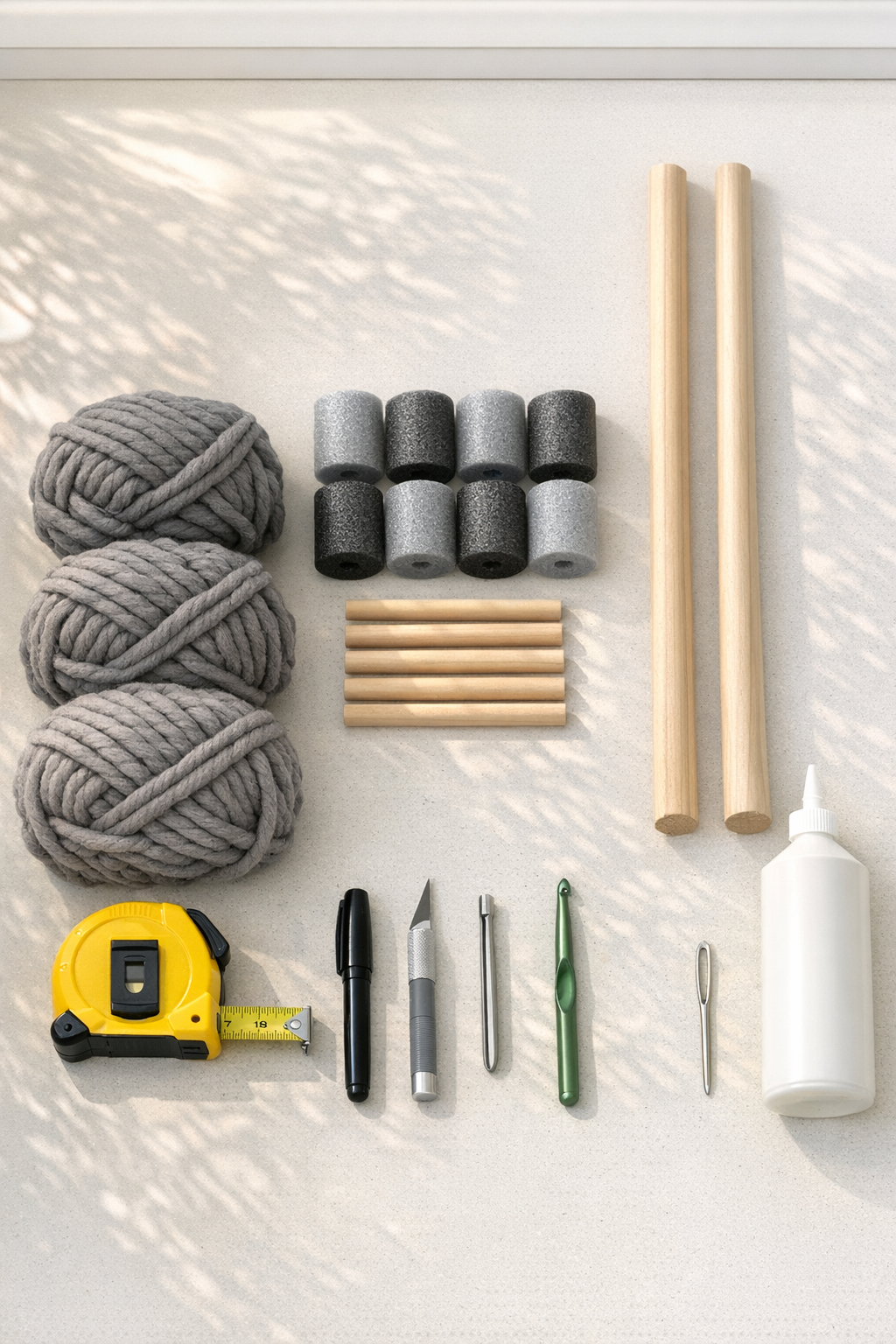
Materials
Instructions
1. Mark both 60-inch side dowels so your rungs will sit evenly, placing rung centers at 12, 24, 36, and 48 inches from the bottom. Keep at least 10 inches clear at the top so the ladder has a balanced, decorative shape.
2. Cut the pool noodle into four 18-inch sections, making each cut as straight as you can. If the noodle ends look ragged, trim them lightly so the finished rungs look tidy.
3. Test-fit a 3/4-inch dowel rod through the center of each noodle section. If the hole is too tight or uneven, carefully open it with the drill bit or knife until the dowel slides through without forcing.
4. Sand the ends of all dowel rods and the side dowels until they feel smooth to the touch. Wipe away dust with a damp cloth so the yarn stays clean while you work.
5. Crochet a long foundation chain that wraps snugly around one noodle section lengthwise, then work single crochet rounds to create a fitted tube. Make one tube for each 18-inch noodle section, checking the fit as you go so the cover hugs the foam without sagging.
6. Slip each crocheted tube over a pool noodle section and center the seam along the underside. Thread a yarn needle with matching yarn and stitch the open ends closed neatly around the noodle ends.
7. Insert one 18-inch dowel rod through the center of each covered noodle rung. Add a small dab of outdoor-safe glue at each end where the dowel meets the foam to help reduce shifting.
8. Lay the two long side dowels parallel on a flat surface, spacing them 18 inches apart from outside edge to outside edge. Double-check that both side rails are straight before attaching any rungs.
9. Position the first rung between the side dowels at the 12-inch mark and secure it temporarily with two cable ties on each end. Repeat with the remaining rungs at the marked positions so you can confirm spacing before tightening everything fully.
10. Tighten the cable ties firmly, trim the tails, and rotate the tie locks toward the back side of the ladder so they stay hidden. If you want a cleaner finish, wrap a little extra yarn around each joint and knot it securely on the rear.
11. Add a crocheted hanging wrap at the top by winding yarn around both side dowels several times and knotting it off at the back. This softens the look and helps the piece feel more finished, especially on a cozy patio wall.
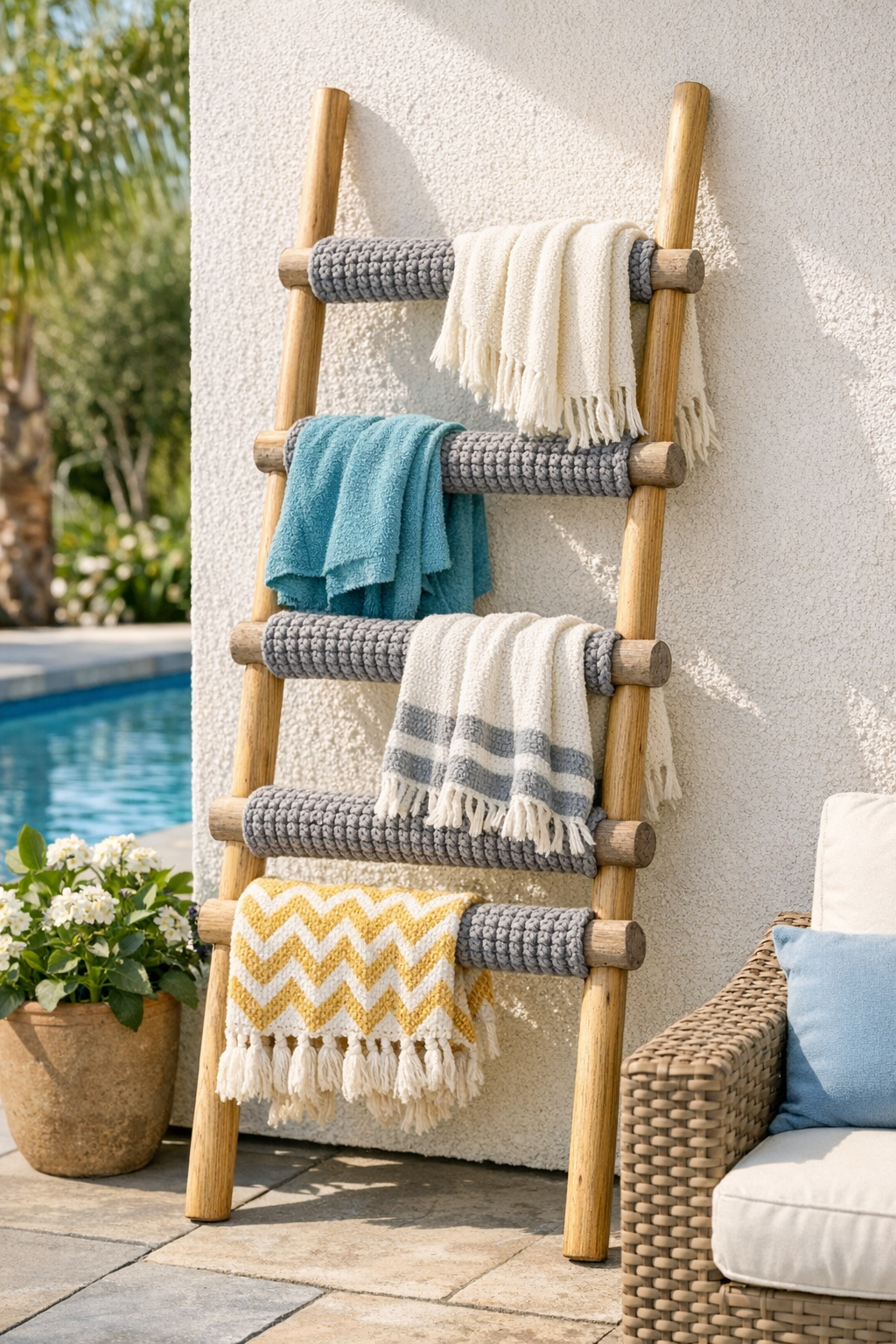
12. Lean the ladder against a covered outdoor wall and drape lightweight throw blankets over the crocheted rungs. Test the balance before styling it, and use it as decorative blanket storage rather than a climbing ladder.
Variations & Tips
Color change: If driftwood gray feels too cool for your space, try oatmeal, sandy beige, or soft sage yarn for a more cottage-style patio look. I like neutrals because they play nicely with almost any outdoor cushion or throw.
For picky decorators: Just like feeding a family, I’ve learned that simple is often best. If someone in your house doesn’t love a chunky crochet texture, keep the side rails bare wood and crochet only the rungs for a cleaner mixed-material style.
Weather tip: Use synthetic yarn rather than wool if this ladder will live outdoors. It handles moisture better and dries faster after humid August evenings.
Sturdier finish: If you want a more secure build, drill shallow 3/4-inch recesses into the side dowels where each rung meets the rails before fastening. That little seat helps keep the rungs from twisting.
Blanket weight: This project works best with light to medium throws, picnic blankets, or beach towels. I would not use it to hold very heavy quilts, and it should never be used for climbing.
Easy sizing: For a narrower ladder, cut the rungs and center dowels to 16 inches instead of 18 inches. For a taller ladder, add another rung and increase the side dowels to 72 inches long.
Neater crochet: Count your stitches every few rounds so the tube stays even from end to end. A snug cover looks much more polished than one that droops, and that little extra attention really pays off in the final look.