
If you’ve got a cracked plastic kiddie pool taking up space in the garage, this is one of those satisfying little projects that turns “junk” into something genuinely useful. I love a practical backyard fix, especially one that saves money, and these heavy-duty landscape edging stakes are a smart way to reuse thick pool plastic instead of tossing it out.
I like this project for gardeners, homeowners, and really anyone trying to keep mulch, flower bed borders, or flexible landscape edging in place without spending extra on store-bought stakes. The method is simple, and the two pantry staples help make the melted plastic easier to work with and release from your pressing surfaces, so you can shape sturdy stakes that hold up well outdoors.
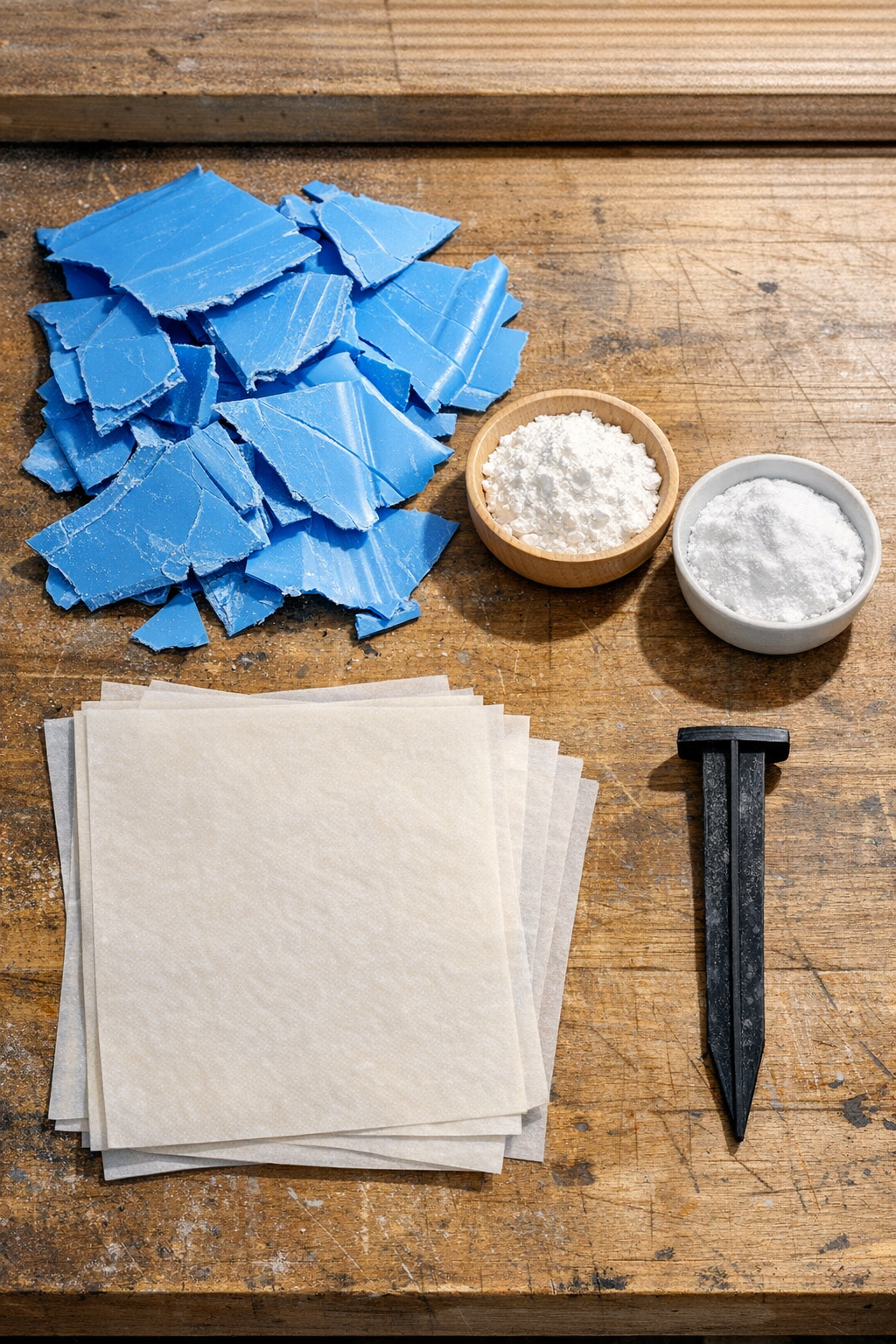
Materials
1 cracked hard-plastic kiddie pool, cleaned and dried, enough to yield about 20 to 30 stakes
Instructions
1. Wash the kiddie pool well with dish soap and water, then dry it completely so no dirt or moisture gets trapped in the plastic when heated.
2. Cut away any badly warped sections, then chop the usable pool plastic into small pieces about 1 to 2 inches wide so it melts more evenly.
3. Sprinkle a light dusting of cornstarch over one sheet of parchment paper and a very small pinch of baking soda across the center area where the plastic will sit.
4. Spread a single layer of chopped plastic pieces over the prepared parchment, keeping the pile in a rough rectangle about 2 inches wide for stake blanks.
5. Cover the plastic with a second sheet of parchment paper and heat it until the pieces soften and fuse into one solid sheet; work in short heating intervals so you can check progress and avoid scorching.
6. While the plastic is still hot and pliable, press it flat between the parchment sheets to an even thickness of about 1/4 inch.
7. Let the fused plastic cool just enough to hold its shape, then trim it into stake strips about 10 inches long and 1 inch wide.
8. Cut one end of each strip into a tapered point so it will drive into the soil more easily.
9. If you want extra holding power, reheat just the top 1 inch of each stake and flatten or flare that section slightly to create a wider head that helps catch the edging.
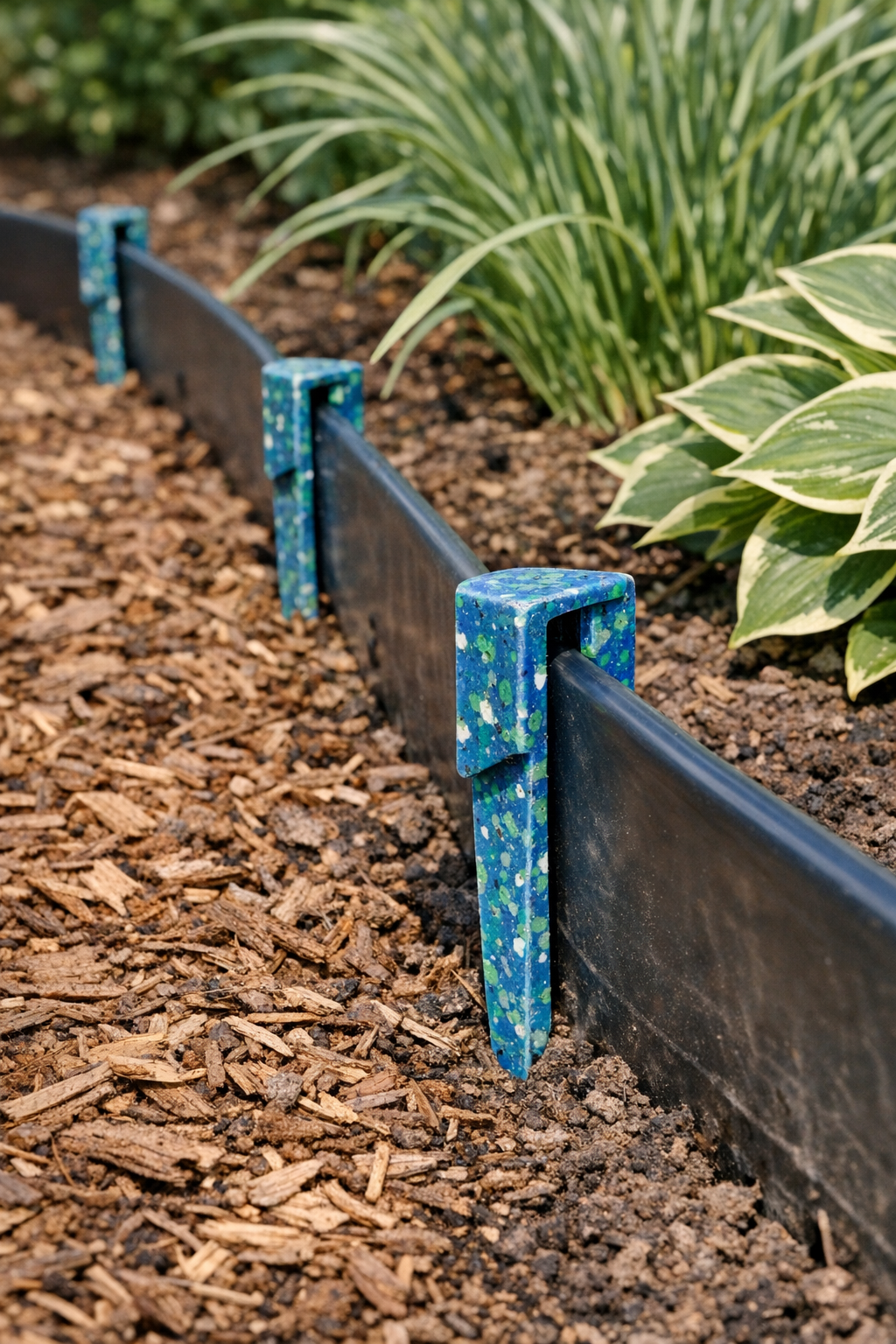
10. Allow the stakes to cool completely until rigid, then press them into the ground alongside landscape edging, spacing them about 18 to 24 inches apart.
Variations & Tips
For thicker stakes: Stack a deeper layer of chopped plastic before heating so your finished blanks come out heavier and better suited for rocky or compacted soil.
For shorter borders: Make stakes 6 to 8 inches long if you’re securing shallow flower bed edging in softer soil where full-length stakes aren’t necessary.
For picky backyard spots: In spots where edging loves to pop up, I use slightly wider stake heads so they grab the top edge better and stay put after a hard rain.
Color sorting: If your kiddie pool has multiple colors, sort the chopped pieces before melting for a more uniform finished look, or mix them together for a speckled recycled style.
Clean edges matter: Trim away any thin, ragged plastic after fusing; smoother edges make the stakes easier to push in and less likely to catch on gloves or edging.
Make a test piece first: I always recommend starting with one small batch so you can check the thickness, stiffness, and shape before making a whole pile for the garden.