
I love a yard project that looks clever and a little unexpected, especially when it starts with something as ordinary as a clear plastic shoe organizer. This project turns that organizer into a set of heavy, pocketed concrete yard blocks that can be used as rustic planters, border accents, candle holders for outdoor tables, or weighted décor pieces that actually stay put in Midwest wind. It’s one of those “wait, that worked?” ideas that feels genuinely satisfying once you unmold the blocks.
What makes this especially worth trying is that it uses just a few basic supplies, doesn’t require fancy woodworking, and can be done over a weekend with curing time in between. If you like practical outdoor DIYs and you’re balancing a busy schedule like I usually am, this is the kind of project you can mix, pour, and check on in short bursts.
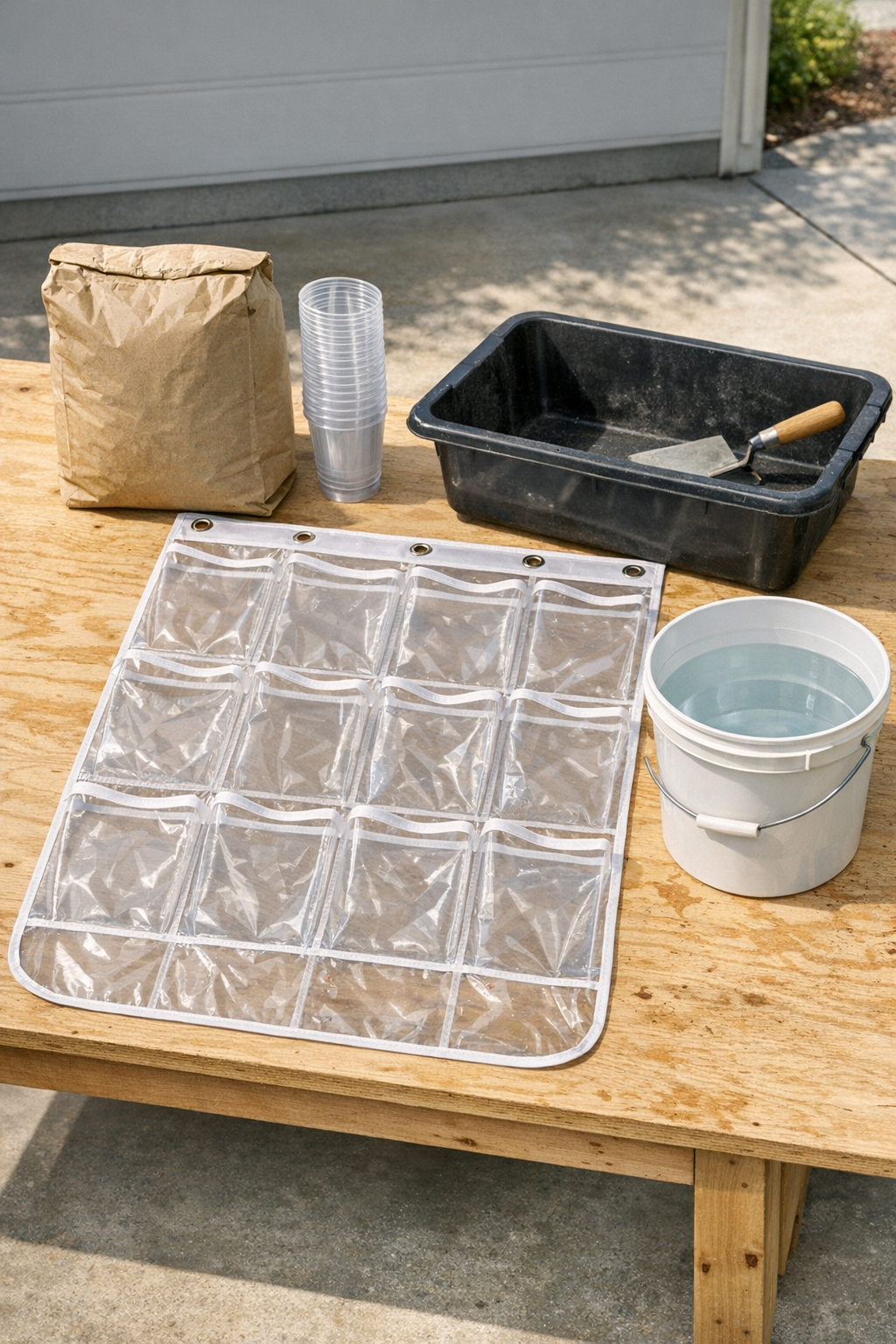
Materials
Instructions
1. Spread the tarp on a flat outdoor surface or garage floor, then lay the clear shoe organizer flat with the pocket openings facing up. Tape the outer edges to the tarp so the organizer stays as level and still as possible while you fill it.
2. Lightly coat the inside of each pocket with nonstick cooking spray. This helps the concrete release more cleanly later, which saves a lot of frustration.
3. Mix a small batch of concrete in a bucket or mixing tub, following the package ratio and aiming for a thick brownie-batter consistency. I’ve learned the hard way that concrete that’s too watery makes weaker blocks and messier pockets.
4. Scoop concrete into each pocket, filling each one about three-quarters full. Tap the sides of the organizer gently as you go to settle the mix and release trapped air bubbles.
5. Press one plastic cup straight down into the center of each filled pocket to create the recessed pocket in the finished block. Leave the cup in place and adjust it so there is an even concrete border on all sides.
6. Let the organizer sit undisturbed until the concrete firms up enough to hold its shape, usually a few hours for fast-setting mix. If any cups tilt, straighten them while the concrete is still workable.
7. Once the concrete is firm but not fully cured, gently twist and remove the plastic cups from each pocket. This is usually the easiest stage for removal before the cups get locked in too tightly.
8. Allow the blocks to cure fully in the organizer for 24 to 48 hours, depending on temperature and humidity. If the weather is hot and dry, lightly mist the concrete once or twice so it cures more evenly.
9. Peel back the plastic organizer carefully and pop out each concrete block one at a time. If an edge sticks, flex the plastic instead of pulling on the concrete directly.
10. Set the unmolded blocks in a shaded area and let them continue curing for another 3 to 5 days before using them outdoors. Brush off any loose bits, and if you want a softer finish, smooth rough edges with a sanding stone or concrete rub brick.
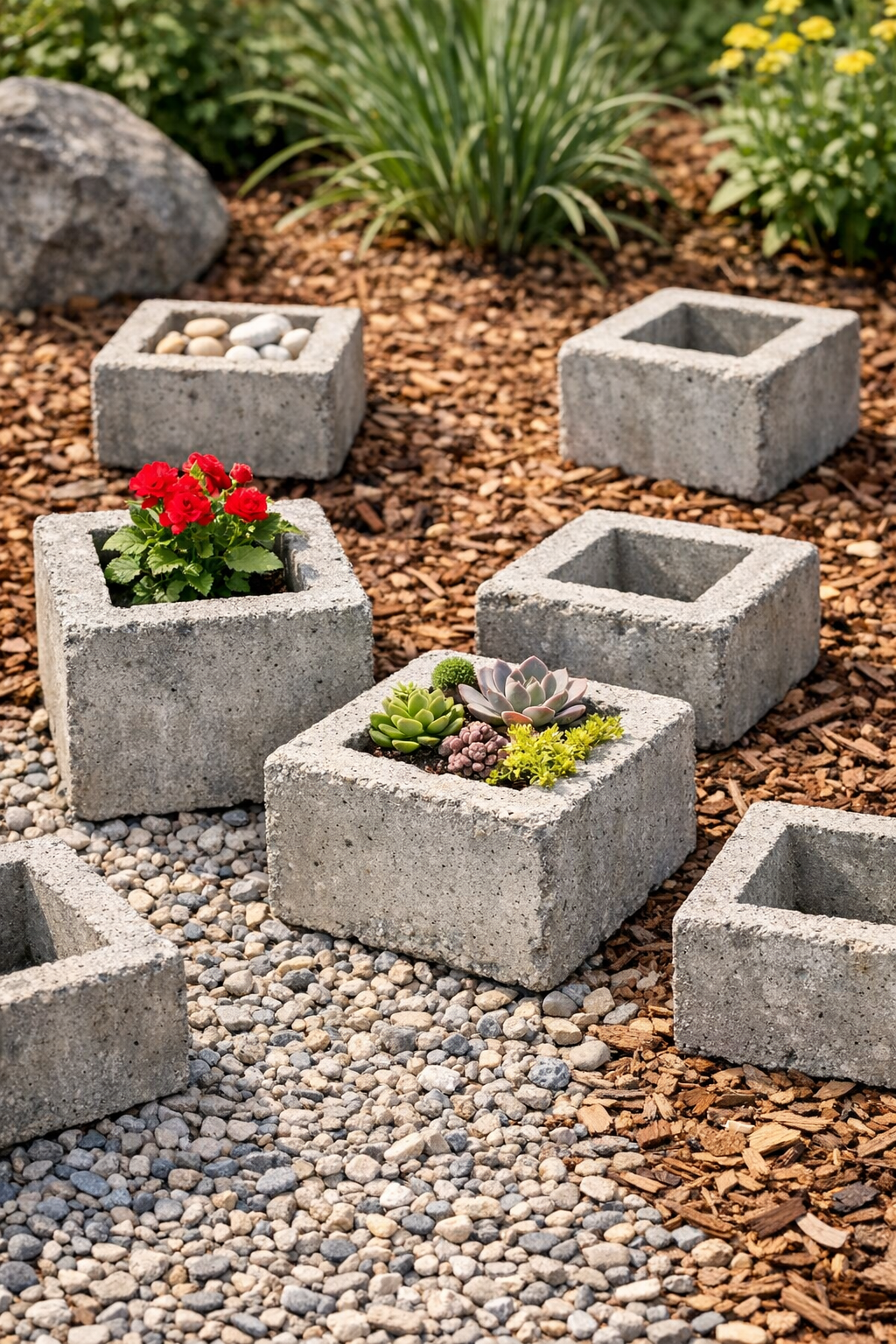
Variations & Tips
Use them as mini planters: Fill the center pockets with potting soil and tuck in succulents, herbs, or small annuals. I especially like this look near a patio where the concrete gives a clean, modern contrast to greenery.
Add color: You can mix concrete pigment into the batch before pouring if you want charcoal, terracotta, or sandy tones. Start small so the color stays consistent from block to block.
Create a border: Make a full organizer’s worth and line the blocks along a flower bed or walkway. Because they’re heavy, they stay put much better than lightweight plastic edging.
Try embedded accents: Press small pebbles, sea glass, or tile pieces around the top edge before the concrete fully sets. Keep decorations away from the center cavity so the pocket stays usable.
Work in batches: If you’re short on time, mix and fill one row of pockets at a time instead of rushing through the whole organizer. That’s usually how I handle bigger DIYs on a busy weeknight.
Keep the organizer level: This matters more than it seems. If the surface slopes even a little, your blocks can cure unevenly and the center pockets may end up off-center.
Seal for longer outdoor life: Once fully cured, brush on a concrete sealer if the blocks will live outdoors year-round. It helps reduce staining and weather wear, especially in freeze-thaw climates.