
I love a backyard project that delivers a big visual payoff without asking me to build furniture or pour concrete, and these oversized decorative pineapples do exactly that. By painting stacked terracotta pots in warm pineapple tones and topping them with long green plastic agave leaves, you can create bold garden accents that look playful, sculptural, and surprisingly polished.
This is a good project for anyone who wants statement décor for a patio, pool area, porch, or garden bed and prefers something sturdy enough to handle outdoor display. I’m always drawn to projects that borrow shapes from food and produce, so this one especially charms me—it has that same cheerful abundance I admire when styling a table with citrus or fresh herbs, only here it works on a grand backyard scale.
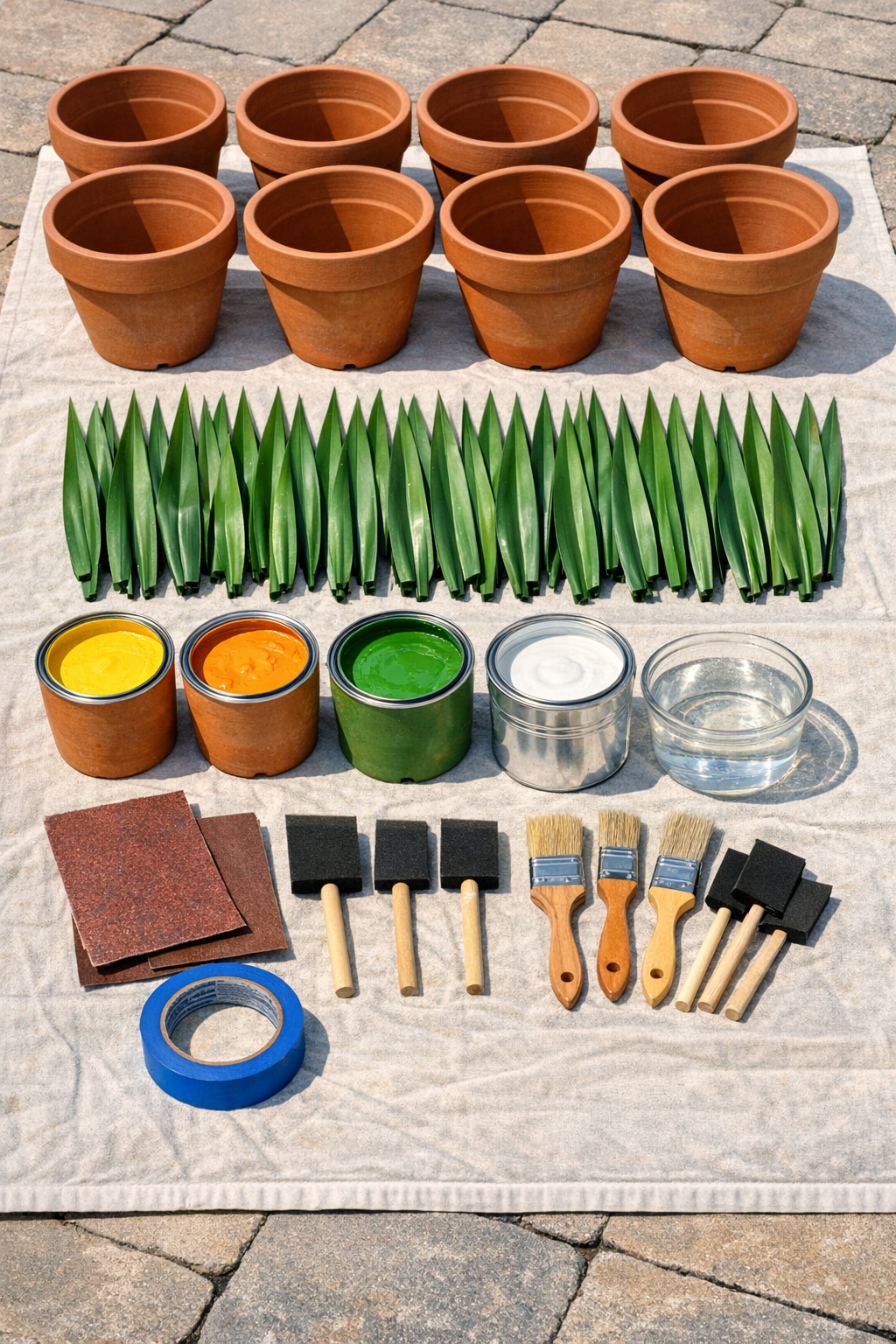
Materials
Instructions
1. Wash all 10 terracotta pots with water and a stiff brush to remove dust and clay residue, then let them dry completely for several hours.
2. Lightly sand the outside of each pot with 120-grit sandpaper to smooth rough spots and help the primer grip better.
3. Set the pots on drop cloths in a well-ventilated outdoor work area, and tape off the inside rim if you want to keep the interior unpainted.
4. Apply one even coat of outdoor bonding primer to the outside of all 10 pots, covering the rim and upper lip, and let it dry according to the manufacturer’s time.
5. Paint the body of each pot with two coats of bright yellow exterior paint, allowing the first coat to dry fully before adding the second.
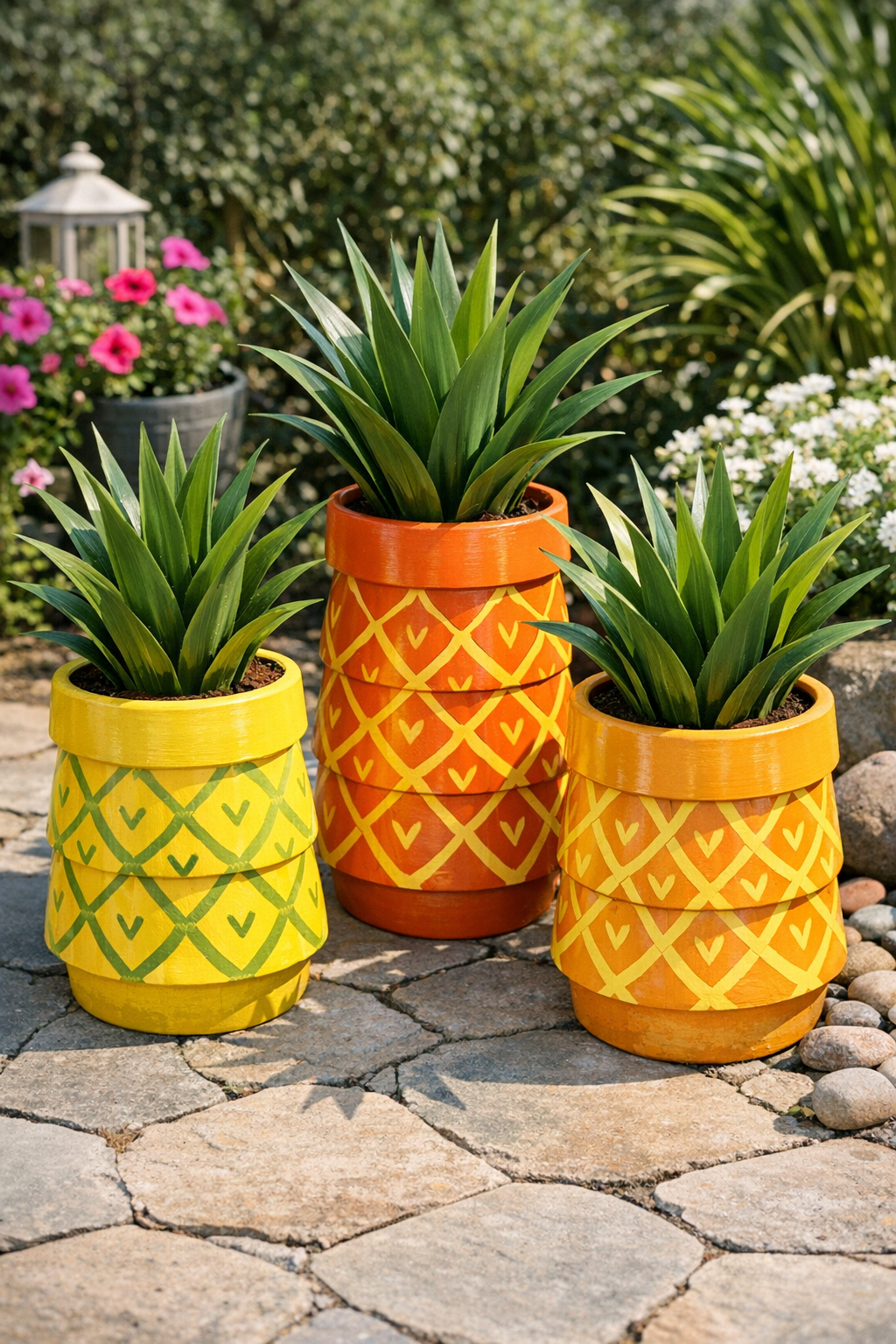
6. Add a soft diamond pattern to mimic pineapple skin by brushing diagonal golden-orange lines across each yellow pot in one direction, then crossing them in the opposite direction.
7. Blend a little darker orange or extra golden paint at some of the line intersections to give the pots more depth and a more natural pineapple look.
8. Paint the upper rim of each pot green, or alternate medium and dark green around the rim for a leaf-base effect, and let the paint dry fully.
9. Seal all painted surfaces with one to two coats of clear outdoor sealer to protect the finish from moisture and sun exposure.
10. Decide how many pineapples you want to make from the 10 pots; for example, make 5 large pineapples by stacking 2 pots per piece, or 10 single-pot pineapples for a simpler display.
11. For each pineapple, add weight to the bottom pot with gravel or a few inches of mixed fast-setting concrete, keeping the center open if you plan to insert leaves there.
12. If stacking two pots, center a small plastic grower pot or a ring of adhesive between them as a spacer and support, then place the second pot securely on top so the shape reads as one tall pineapple.
13. Bundle 4 plastic agave leaves for each finished pineapple, arranging them in a radiating crown so the tallest leaves stand in the center and shorter angles spread outward.
14. Insert each leaf bundle into a nursery pot, packed gravel, or partially set concrete, and use a wooden dowel or stake in the center if the leaves need extra support.
15. Adjust the angle of the leaves until each crown looks balanced from all sides, then secure them with adhesive or additional filler if anything shifts.
16. Place the finished decorative pineapples in the backyard, along a walkway, or beside a patio seating area where their scale and color can really stand out.
Variations & Tips
Single-pot version: If you want a faster build, use one painted terracotta pot per pineapple and place all 40 leaves across 10 separate pieces with 4 leaves in each crown.
Stacked statement version: For a taller, more dramatic look, use 2 pots per pineapple and make 5 oversized decorations that read more like sculptural yard art.
Color variation: A base of buttery yellow with touches of burnt orange gives a ripe pineapple look, while a more muted ochre and olive palette feels sophisticated on a modern patio.
Weather resistance: Exterior primer, exterior acrylic paint, and a proper sealer matter here; terracotta is porous, and skipping those layers usually shortens the life of the finish.
Leaf stability: Plastic agave leaves can catch wind, so I like to set them into a weighted inner pot first and then tuck that pot inside the terracotta container for easier adjustments later.
Placement tip: These look best where you can view them slightly from below, such as beside steps, at the edge of a deck, or flanking a garden gate.
Design balance: Before securing the leaves permanently, step back 10 to 12 feet and rotate the pot; it’s the easiest way to spot an uneven crown.